Cart
0
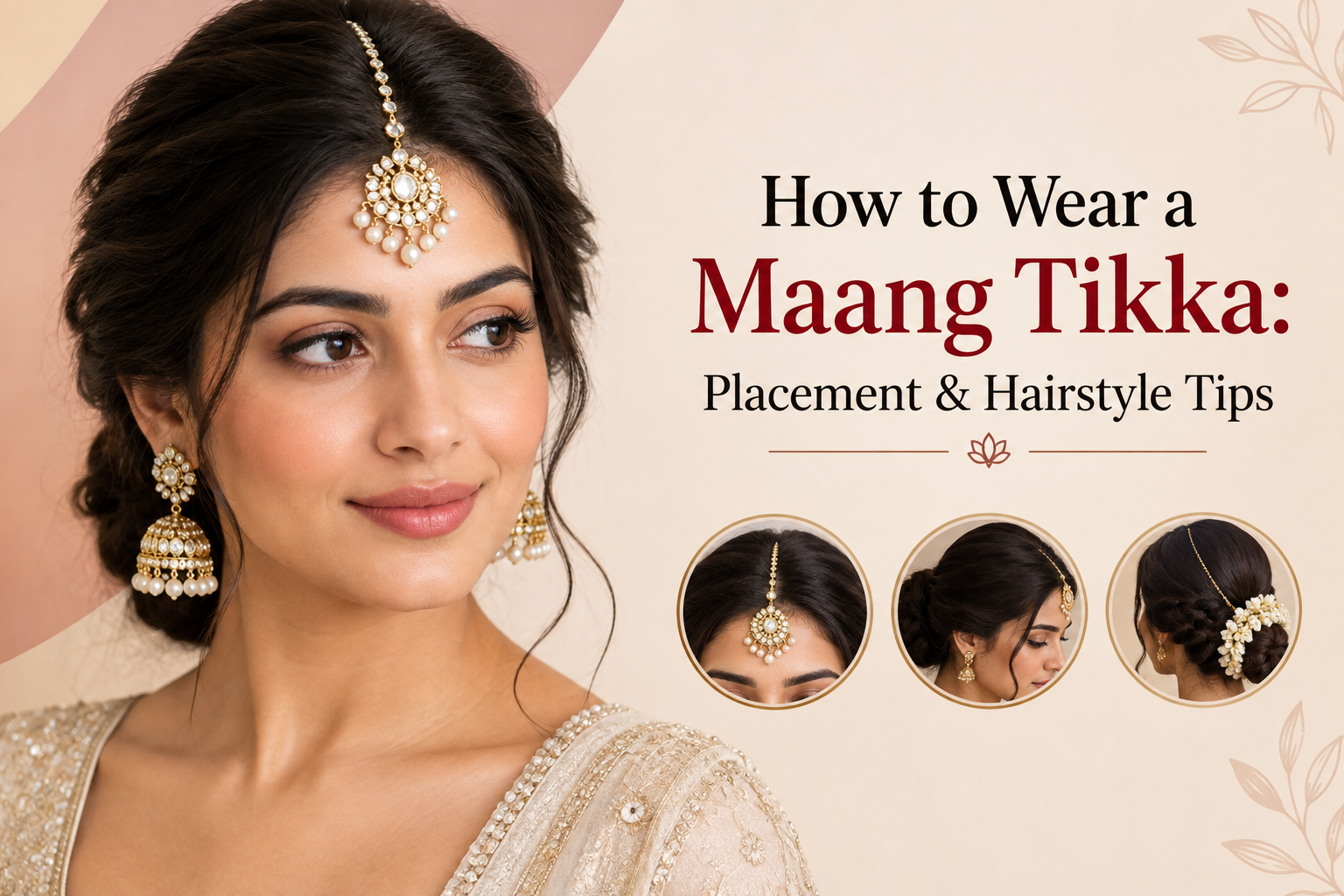

A maang tikka is placed by hooking its chain into a centre hair parting and letting the pendant rest roughly one to two inches above the eyebrows, then securing the hook at the back of the parting with a bobby pin so it doesn't shift. The exact adjustments from there — how much hair to gather, whether the chain shows, how much extra support is needed — depend on hair length, texture, and whether the parting is centre or side.
Step-by-Step: How to Place a Maang Tikka
-
Create a clean centre parting. A traditional maang tikka's hook needs a defined part to grip; comb a straight line down the middle of the hair before doing anything else.
-
Position the pendant. Lay the chain along the parting and let the pendant settle roughly one to two inches from the hairline — low enough to sit naturally on the forehead, not so low it looks costume-like.
-
Secure the front. Slide a bobby pin through the hook at the point where the chain meets the hairline, angling the pin into the hair rather than straight down, so it holds without showing.
-
Secure the back. Take the chain's other end (or the back hook, depending on design) and pin it into the hair at the crown or back of the parting, so the tikka has two points of contact rather than one.
-
Set with hairspray. A light pass of hairspray along the parting helps keep flyaways from disrupting the tikka's line, particularly for fine or freshly washed hair.
Adjusting for Hair Type

-
Long, straight hair holds a centre parting cleanly but can also be the most prone to sliding, since there's less natural texture for the hook to grip. A light texturising spray at the parting before placing the tikka helps it stay put.
-
Curly or voluminous hair has more natural grip, which means the tikka's own weight matters more than the securing method — a heavier, multi-tiered, or bohemian-style piece generally reads better against natural volume than a very delicate single-strand design, which can get visually lost.
-
Short or pixie-length hair relies more on precise placement than on hair structure for support: centre the pendant carefully at the midpoint of the forehead using a mirror, since there's less hair on either side to visually correct an off-centre placement.
-
Wavy or textured hair generally holds a maang tikka well without much extra securing, though a light hold product at the crown keeps the parting from drifting as the day goes on.
Placement with a Side Parting

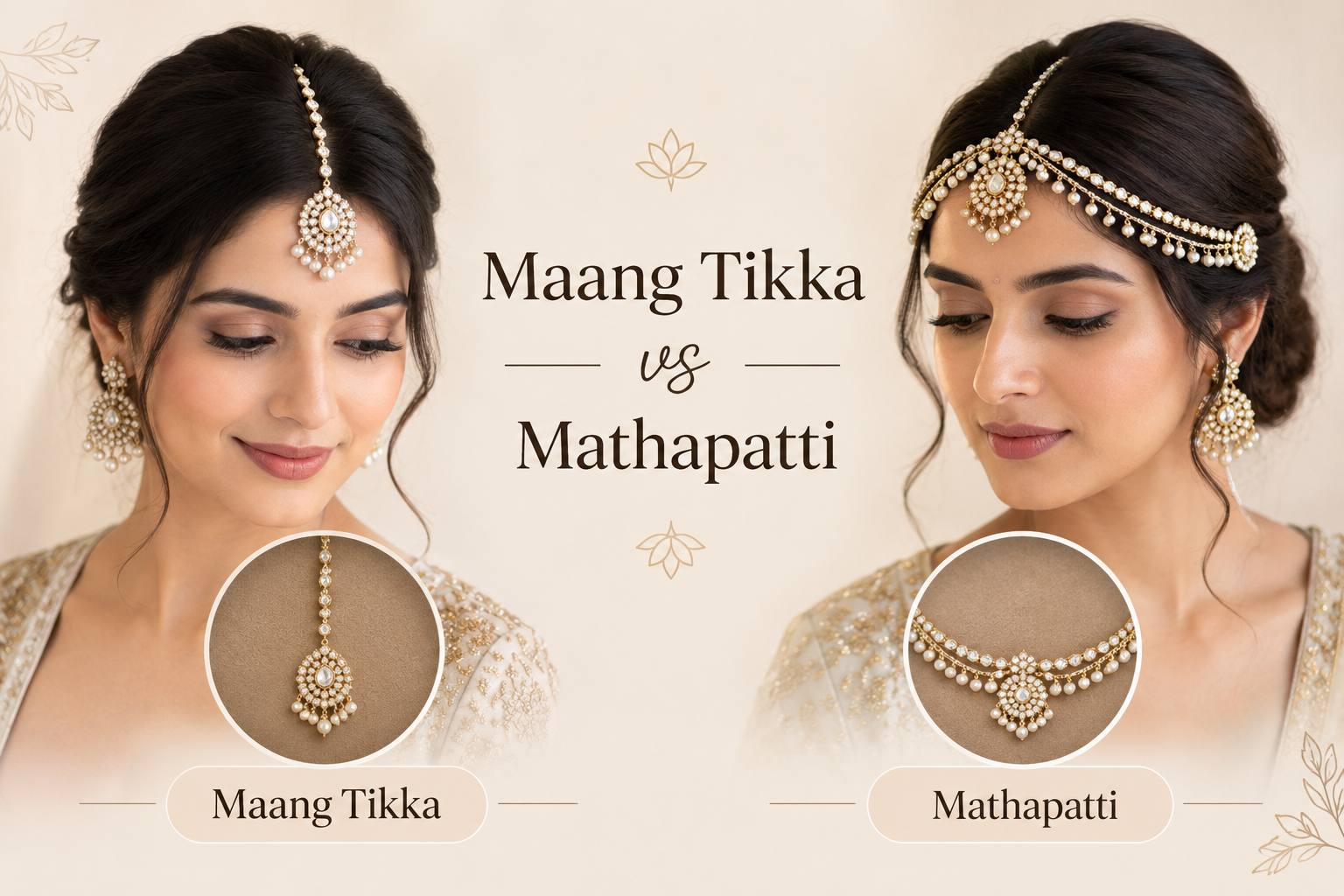
A maang tikka is traditionally designed for a centre parting, but it can be adapted to a side part: the chain runs along the part and is tucked under the top layer of hair so only the pendant shows on the forehead, rather than displaying the full chain. This works best with lighter, single-strand designs — a full mathapatti's side chains are harder to conceal this way, since they're meant to be visible along the hairline rather than tucked under.
Placement with Open, Unpinned Hair

Open hair can carry a maang tikka, but it needs a small amount of structure to hold the piece securely — a subtle puff or a small braid at the crown gives the hook something firm to anchor into, rather than relying on loose strands alone. Without that extra support, open hair is the styling option most likely to let a tikka slip out of place over the course of an event.
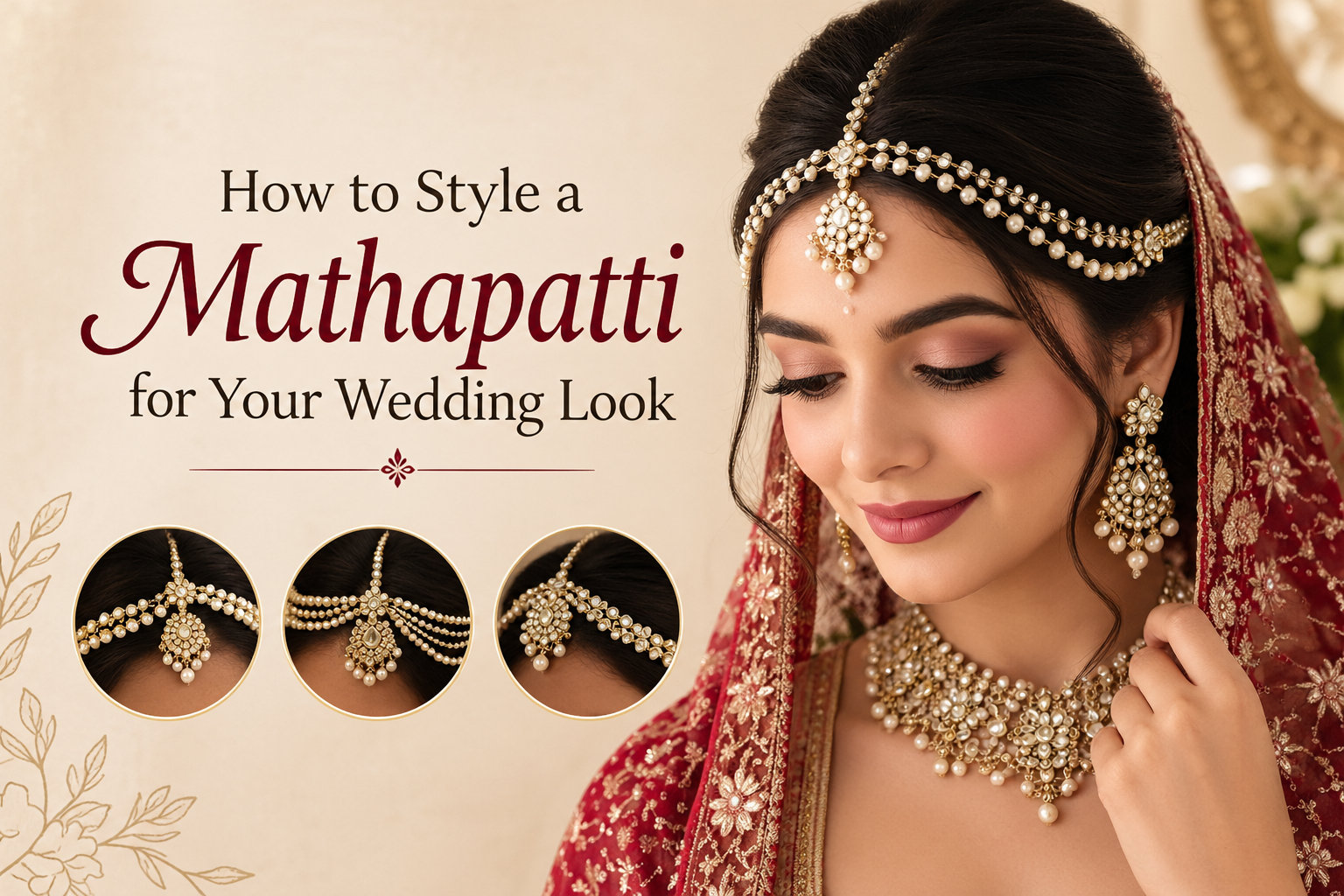
For occasion-specific hairstyle pairings — which style of bun, braid, or curl suits mehendi versus the wedding ceremony itself — see how to style a mathapatti for your wedding look.
Common Placement Mistakes
-
Sitting too low on the forehead. A tikka placed too far down reads as costume-like rather than intentional; the pendant should sit close to the hairline, not midway down the forehead.
-
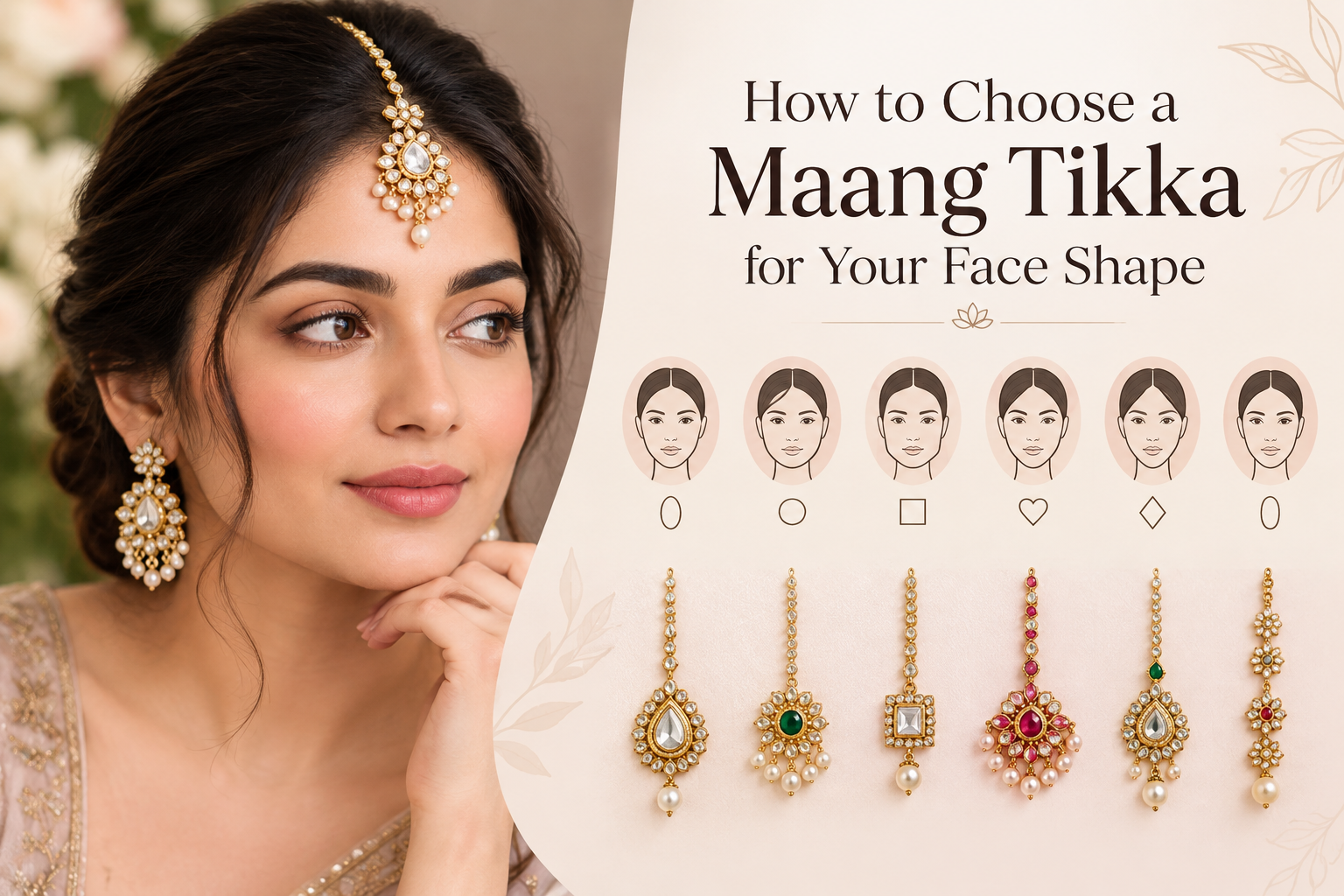
Ignoring proportion to face size. A very large pendant on a smaller face, or a very delicate one on a larger face, throws off the balance a well-chosen tikka is meant to create — a factor covered in more depth in choosing a maang tikka for face shape.
-
Metal mismatch with other jewellery. A gold tikka paired with silver-toned earrings or a necklace creates a visible clash; keeping metal tone consistent across the tikka, earrings, and necklace avoids this.
-
Only one securing point. Pinning the front hook but skipping the back or crown pin leaves the tikka more likely to shift with movement, especially over a long event.
Testing Before the Event
Once the tikka is placed and pinned, it's worth moving around before committing to the look — bending forward, turning the head, and testing how the piece holds up to the kind of movement an actual event involves. This is a simple way to catch a placement or pinning issue before, rather than during, a ceremony where re-fixing it isn't practical.
Frequently Asked Questions
Can a maang tikka be worn without a centre parting?
A traditional single-chain tikka is designed to hook into a centre parting; with a side parting, the chain can be tucked under the top layer of hair so only the pendant shows.
How do you keep a maang tikka from sliding on straight hair?
A light texturising spray at the parting before placing the tikka gives the hook more to grip than perfectly smooth, freshly washed hair does.
Where exactly should the pendant sit on the forehead?
Roughly one to two inches from the hairline, close enough to read as intentional rather than hanging halfway down the forehead.
Does short hair limit maang tikka styling?
Not significantly — short or pixie-length hair works well with a maang tikka, but placement needs to be centred carefully since there's less hair on either side to visually balance an off-centre piece.
Styles suited to different hair types and partings are available within the mathapatti and maang tikka collection.