Cart
0
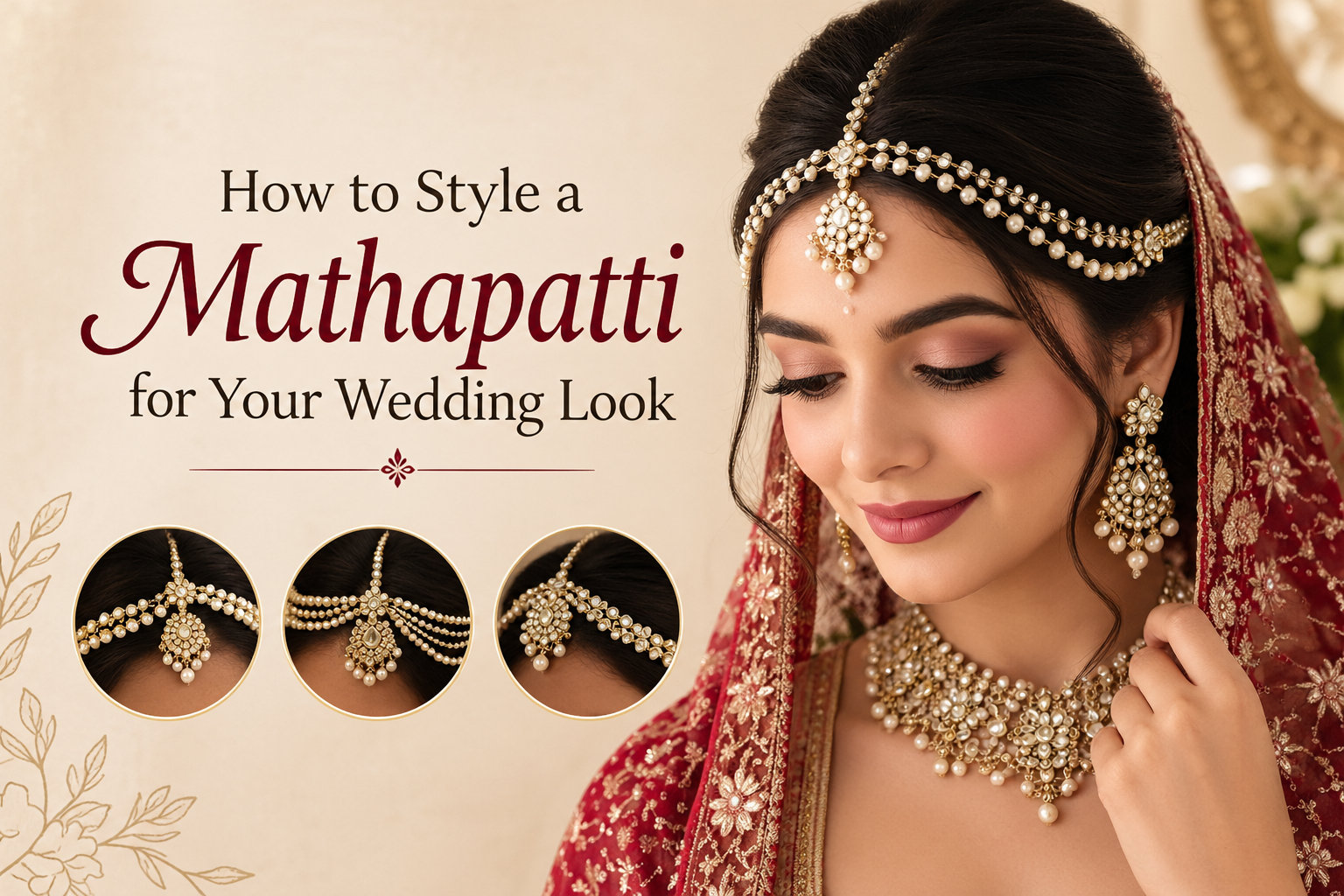

A mathapatti should change across an Indian wedding's functions rather than staying fixed for the whole event — lighter and more delicate for mehendi and haldi, bolder for sangeet, structured and secure for the wedding ceremony itself, and often swapped for a different, lighter piece at the reception. Getting the styling right comes down to four things moving together: the mathapatti's weight and finish, the hairstyle securing it, the dupatta or veil draped around it, and the rest of the jewellery it needs to coordinate with.
Placement and Pinning Basics
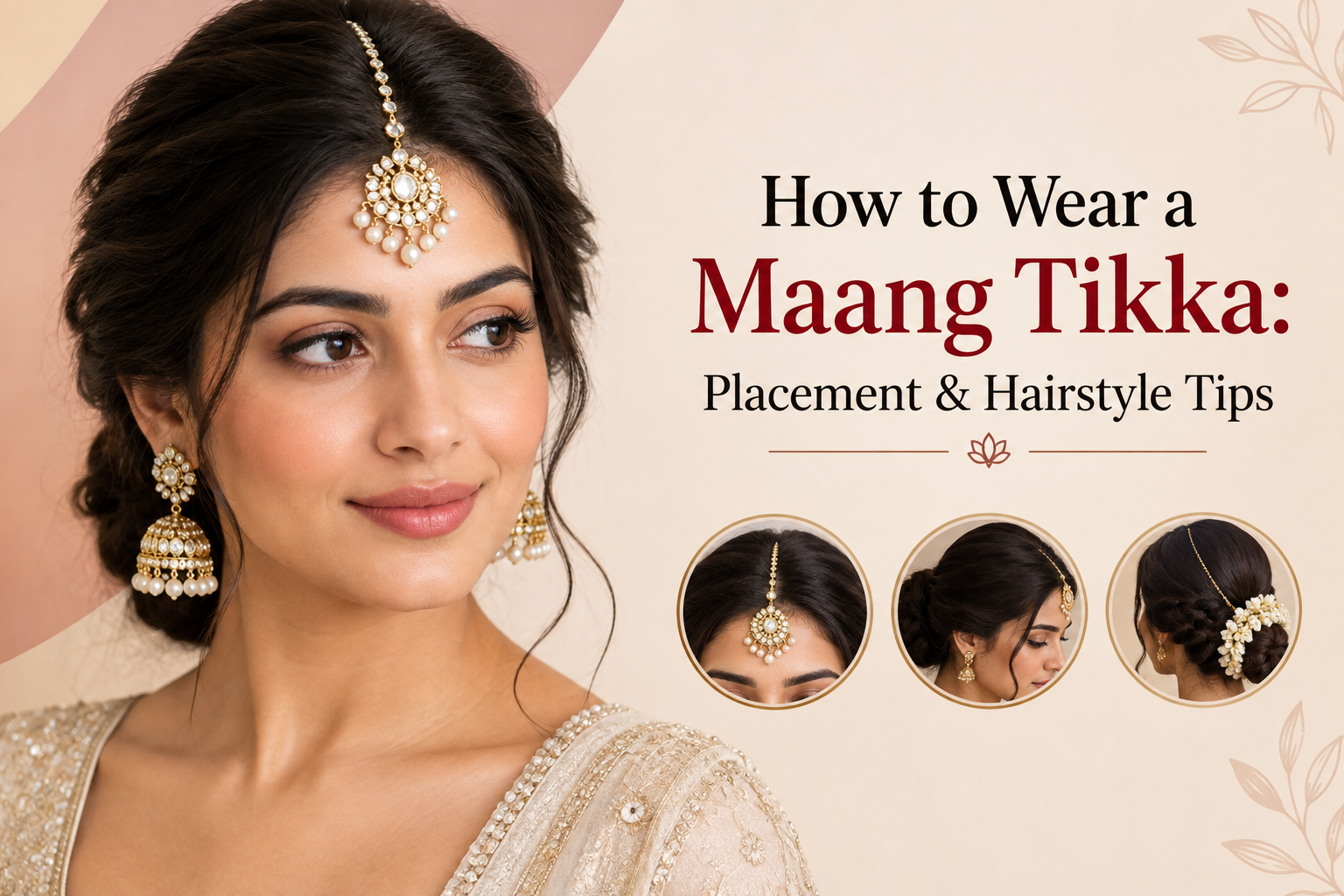
A mathapatti's central pendant hooks into the hair at the centre parting, the same anchor point used by a single-chain maang tikka. From there, the side chains run along the hairline toward the temples and need their own securing — small hidden pins placed near where each chain meets the hairline keep them from shifting through hours of movement, dancing, or a dupatta being repositioned. A clean, firm centre parting gives the central hook something to grip; very fine or freshly washed hair may need light texturising spray so the hook doesn't slide.
Mehendi and Haldi

These functions call for the lightest end of the mathapatti range. Floral mathapattis, oxidised silver designs, or a kundan-and-pearl piece with minimal side chains suit the more relaxed, daytime nature of mehendi and haldi. Loose curls, a side braid, or a simple blow-dry pair naturally with these lighter designs, since the hairstyle doesn't need to lock down a heavy piece the way it does for the main ceremony. This is also where colour has the most room to play — yellow, green, and floral-toned mathapattis coordinate with the traditional colour palette of these functions more than they would at the wedding ceremony itself.
Sangeet
Sangeet is generally where a mathapatti can be at its boldest without competing with the wedding ceremony's own look. A dramatic, fully embellished mathapatti with pearls, kundan, or coloured stonework suits the more theatrical, evening nature of the event, and pairs well with a side braid or a fishtail plait for a look with movement — practical, too, given how much dancing a sangeet typically involves. Because sangeet outfits are often heavily embellished lehengas, the mathapatti's weight is usually matched to the outfit's own density, following the same balance principle covered in styling jhumkas with sarees and lehengas.
Wedding Ceremony

This is where a mathapatti is typically at its heaviest and most secure, since the ceremony runs longest and involves the most movement — pheras, seated rituals, and photography from every angle. A structured low bun or a tightly secured braid gives the piece the most stable base, and heavier mathapattis specifically benefit from this kind of anchored hairstyle rather than loose waves, which give the pins less to hold onto. Dupatta placement matters here too: pins securing the dupatta should sit clear of the mathapatti's side chains, since dupatta movement is one of the more common ways a mathapatti gets pulled out of position during a long ceremony.
Reception

Receptions tend to call for a lighter, more modern mathapatti, or a switch to a single-chain maang tikka altogether, especially if the outfit itself is lighter than the main wedding lehenga. Soft curls styled half up and half down, or a clean centre-parted updo, both work well here and let a more delicate piece read clearly against a simpler hairstyle. Since reception photography is often close-up and camera-facing, a design that sits flat and doesn't shift with head movement tends to photograph more consistently than a heavier, looser-fitting piece.
Function-by-Function Summary
|
Function |
Mathapatti Style |
Hairstyle |
Notes |
|
Mehendi / Haldi |
Floral, oxidised, or light kundan-pearl |
Loose curls, side braid, blow-dry |
Colour palette can match the function |
|
Sangeet |
Bold, fully embellished |
Side braid or fishtail plait |
Weight matched to outfit density |
|
Wedding ceremony |
Heaviest, most structured piece |
Low bun or tight braid |
Keep dupatta pins clear of side chains |
|
Reception |
Lighter piece or single tikka |
Half-up curls or clean updo |
Prioritise a flat, camera-stable fit |
Coordinating with the Rest of the Look
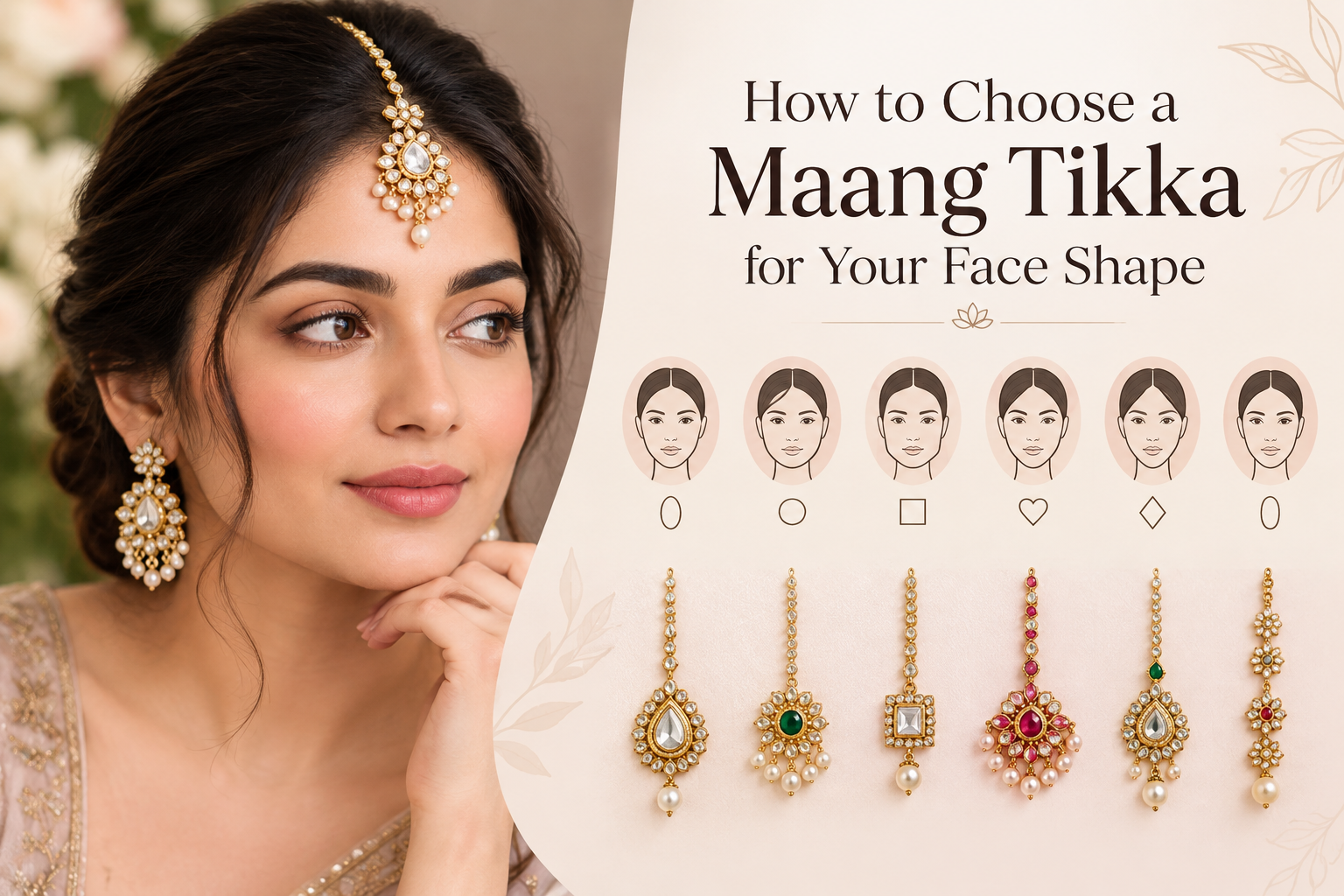
A mathapatti's metal tone and stone type generally need to match the jhumka earrings and necklace worn alongside it — a detail covered in more depth in building a bridal jewellery set. Face shape also plays into which mathapatti style and pendant size actually suit a given bride, covered separately in choosing a maang tikka for face shape — a wide mathapatti that photographs beautifully on one face shape can crowd another.
Frequently Asked Questions
Should the same mathapatti be worn for every wedding function?
Not necessarily — many brides use a lighter mathapatti or a single maang tikka for mehendi and reception, and reserve the heaviest, most structured piece for the wedding ceremony itself.
What hairstyle is most secure for a heavy mathapatti?
A low bun or a tightly secured braid gives pins the most to hold onto and is generally more stable through a long ceremony than loose waves.
How do you keep a mathapatti from shifting when wearing a dupatta?
Secure the dupatta with pins placed clear of the mathapatti's side chains, and check that the central hook has a firm grip on the hair parting before the dupatta is draped.
Can a mathapatti be worn with open, unpinned hair?
It's possible with a lightweight design, but the hair generally needs enough structure — even a soft half-up style — to keep the piece from sliding out of place.
Styles suited to each function above sit within the mathapatti and maang tikka collection, alongside the wider wedding jewelry range for a coordinated look.