Cart
0
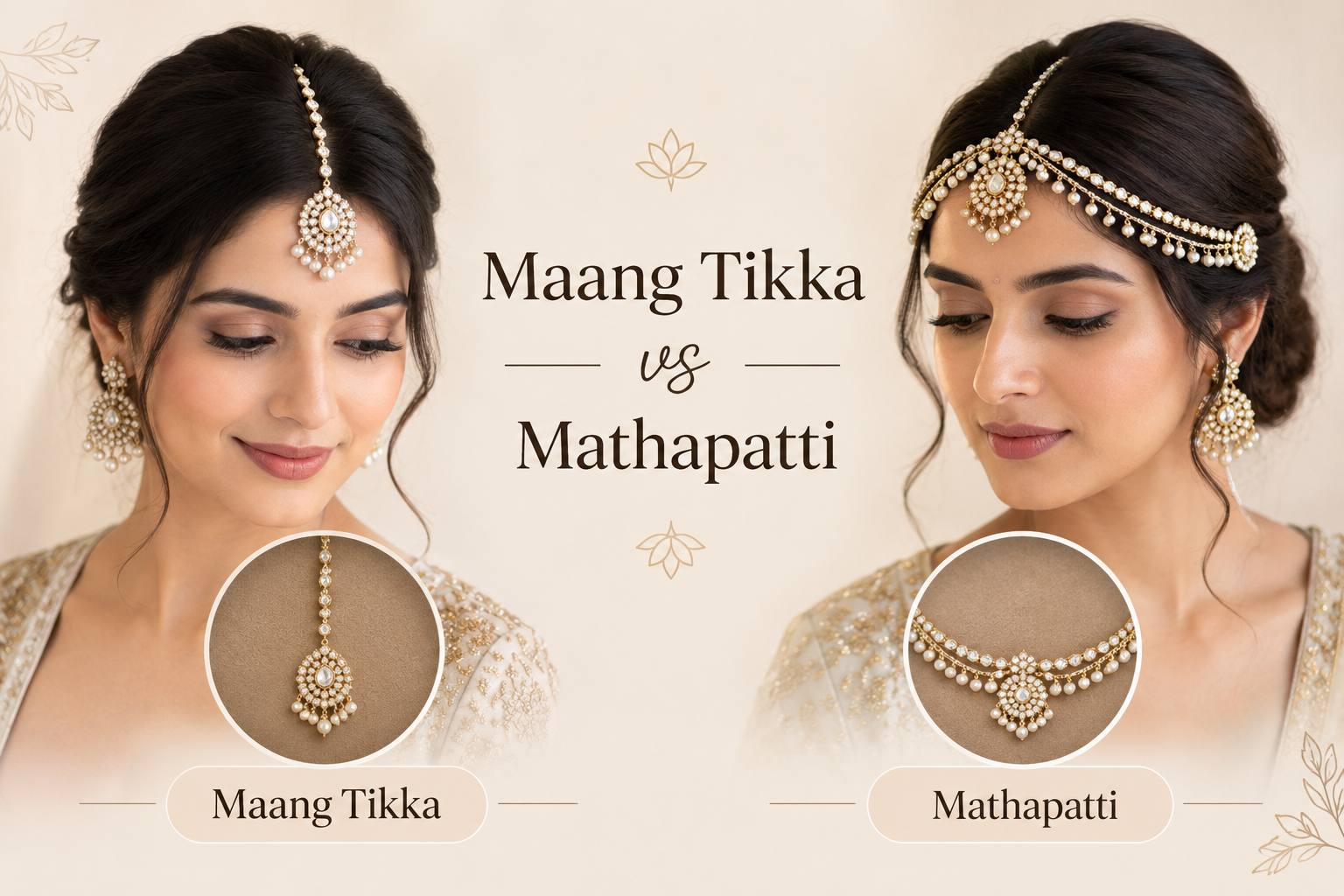

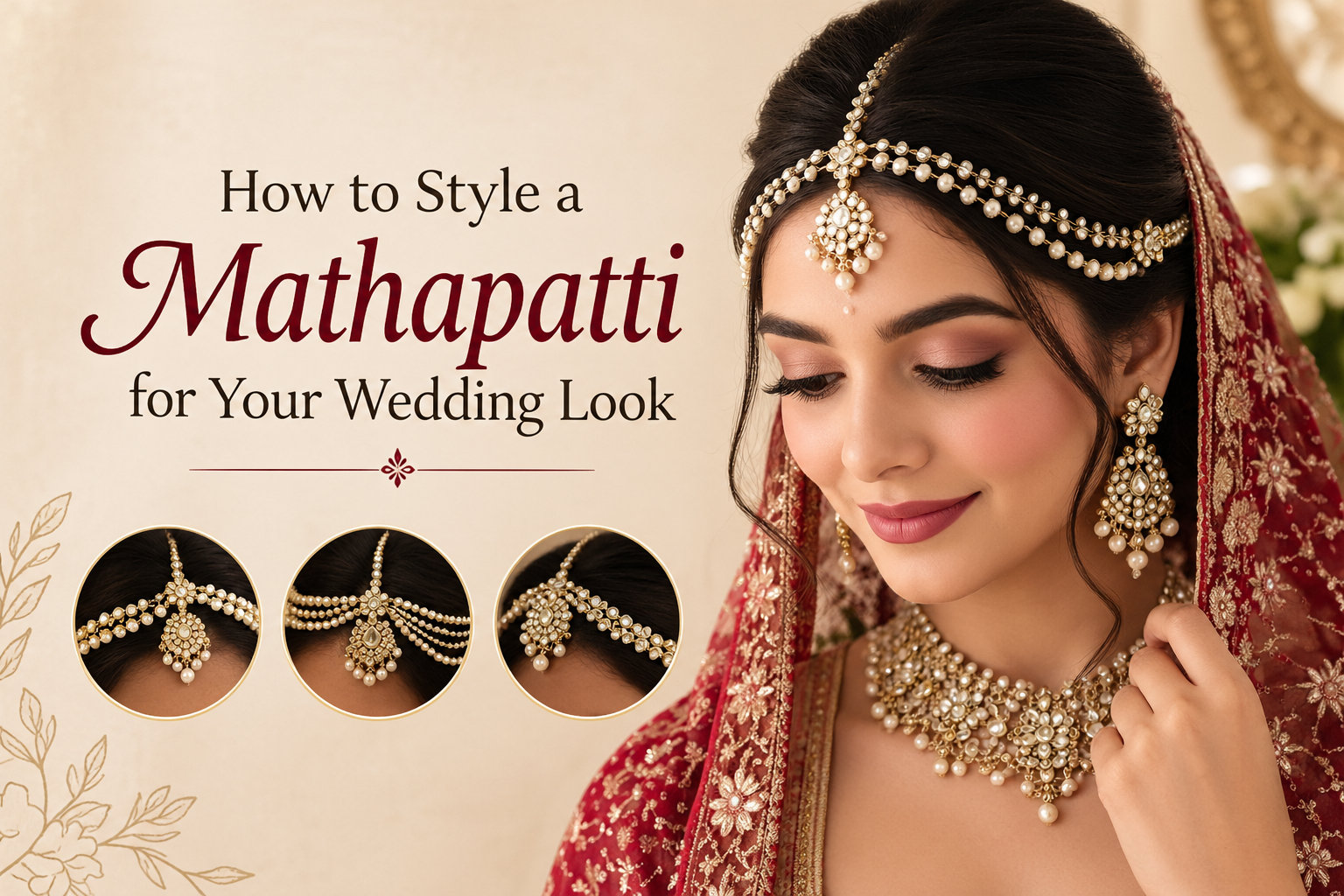
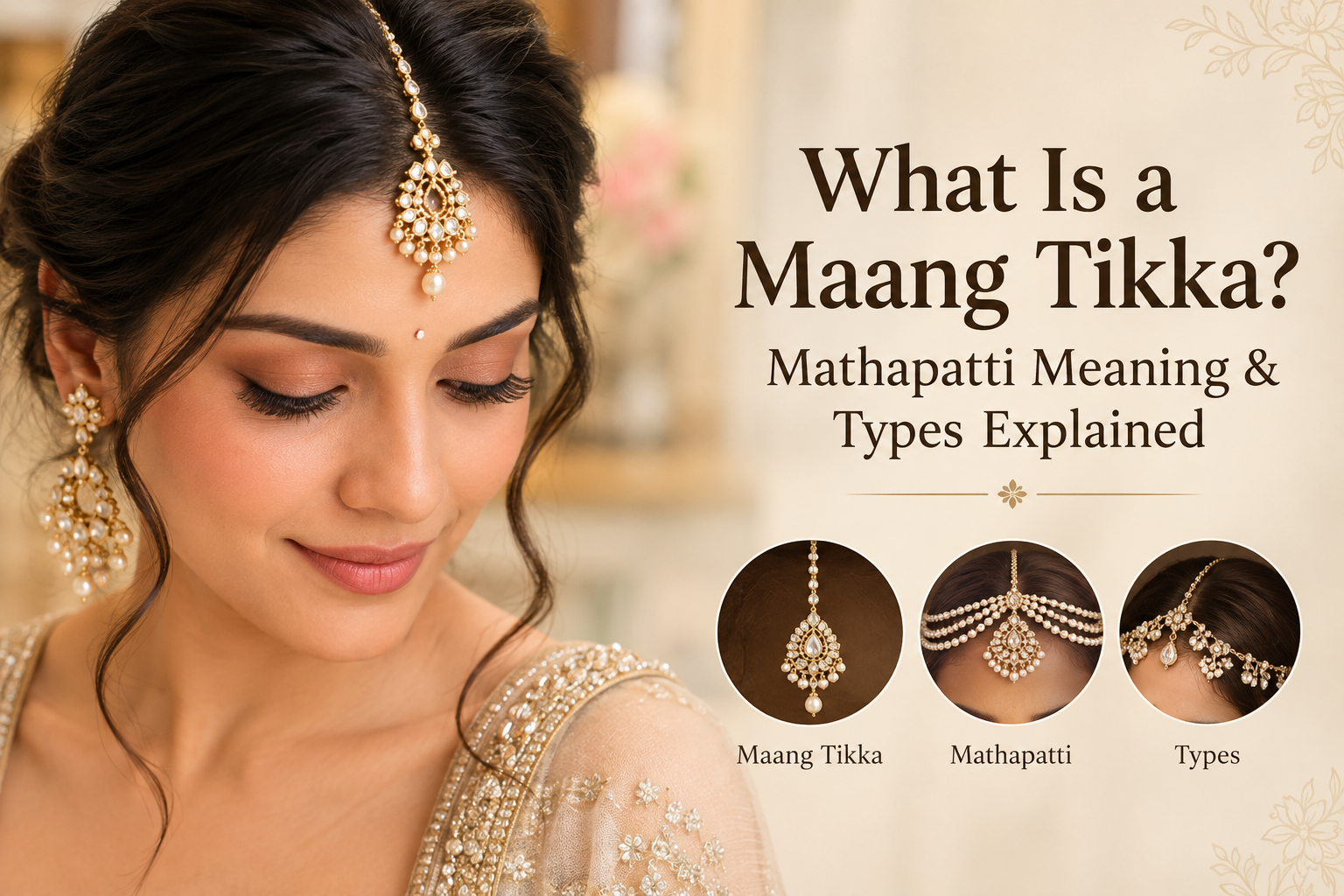
A maang tikka is a single chain and pendant worn at the centre hair parting; a mathapatti is the same central pendant extended with side chains that frame the hairline toward the temples. The structural difference — one point of contact versus a full hairline frame — is what drives every other difference between them: weight, comfort, occasion fit, and how each interacts with hairstyle and dupatta draping. The choice between the two comes down to how much of that framing effect an occasion and outfit actually call for.
Weight and Comfort
A maang tikka's single chain and pendant sit lightly at the centre parting, making it the more comfortable option for events that run long — mehendi, haldi, sangeet, or any daytime function where hours of wear matter. A mathapatti's side chains add both weight and additional points of contact near the temples, which gives it a more secure, "locked in" feel once pinned, but also makes it the heavier of the two to wear through a full day. Anyone choosing a mathapatti for an extended ceremony benefits from checking that the side chains sit close and don't pull at the temples — the same comfort logic that applies to heavier jewellery worn over long events more generally.
Occasion Fit
A maang tikka works across almost every function — mehendi, haldi, sangeet, daytime weddings, and as a wedding guest — because its lighter, more contained profile doesn't compete with a wide range of outfit formality. A mathapatti is generally reserved for occasions where the outfit and setting can support a stronger jewellery moment: the bride's own wedding or reception look, close family members, or bridesmaids at a formal evening event. As a rule, wedding guests are usually better served by a maang tikka, while the bride and her immediate circle at a grand function have more room to choose a mathapatti.
Face Shape and Face Size

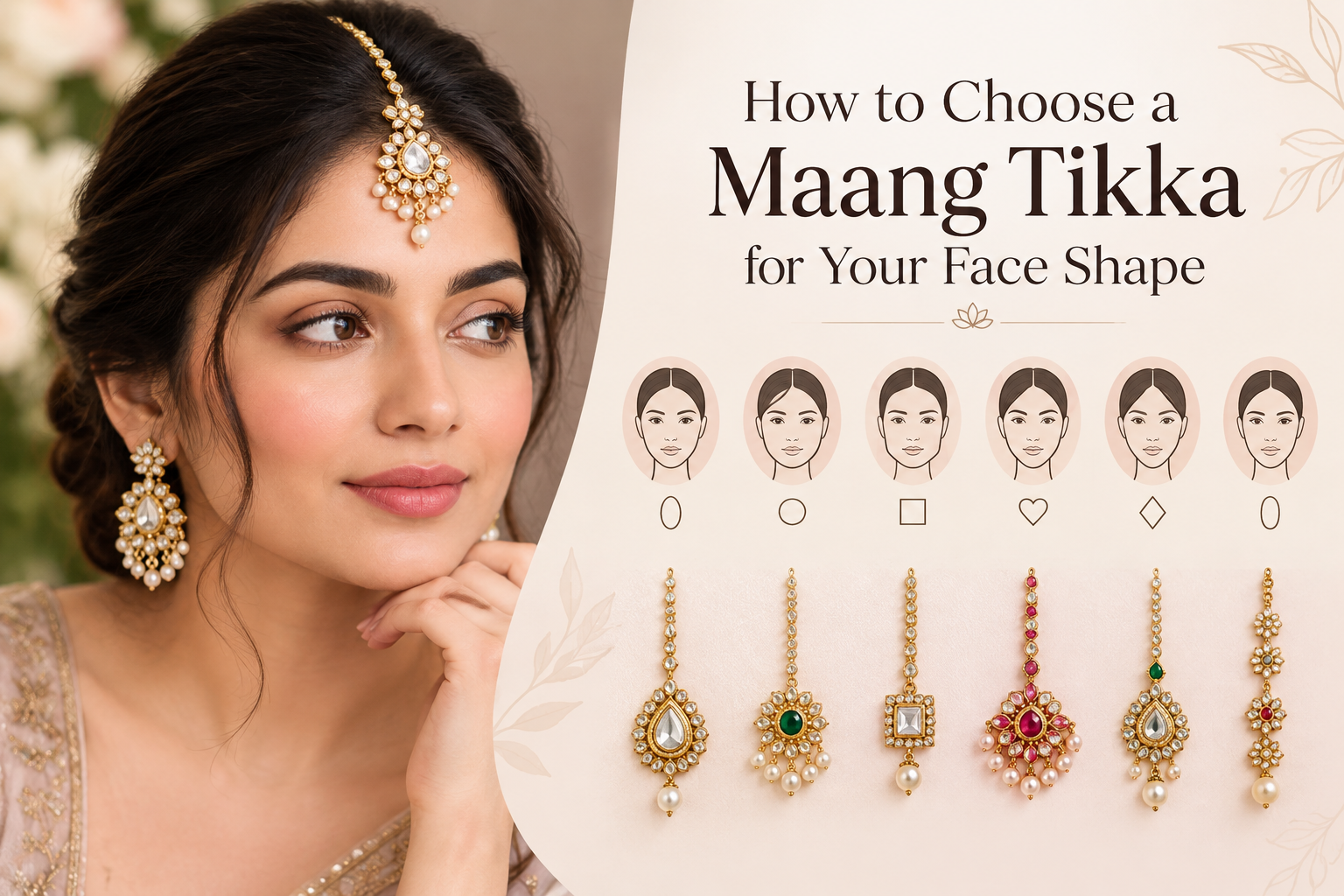
Face shape affects which style reads as balanced rather than overwhelming, following the same logic covered in choosing jhumka earrings for face shape: a piece that contrasts the face's dominant proportion tends to flatter more than one that repeats it.
-
Smaller or narrower faces generally suit a maang tikka better — a mathapatti's wider hairline coverage can visually overwhelm a smaller face.
-
Larger foreheads or fuller faces often carry a mathapatti's fuller framing more comfortably, since the added width has proportion to work with.
-
Round or heart-shaped faces tend to benefit from a mathapatti's vertical-and-horizontal frame, which can balance width at the cheeks or jaw.
Hairstyle and Hair Type
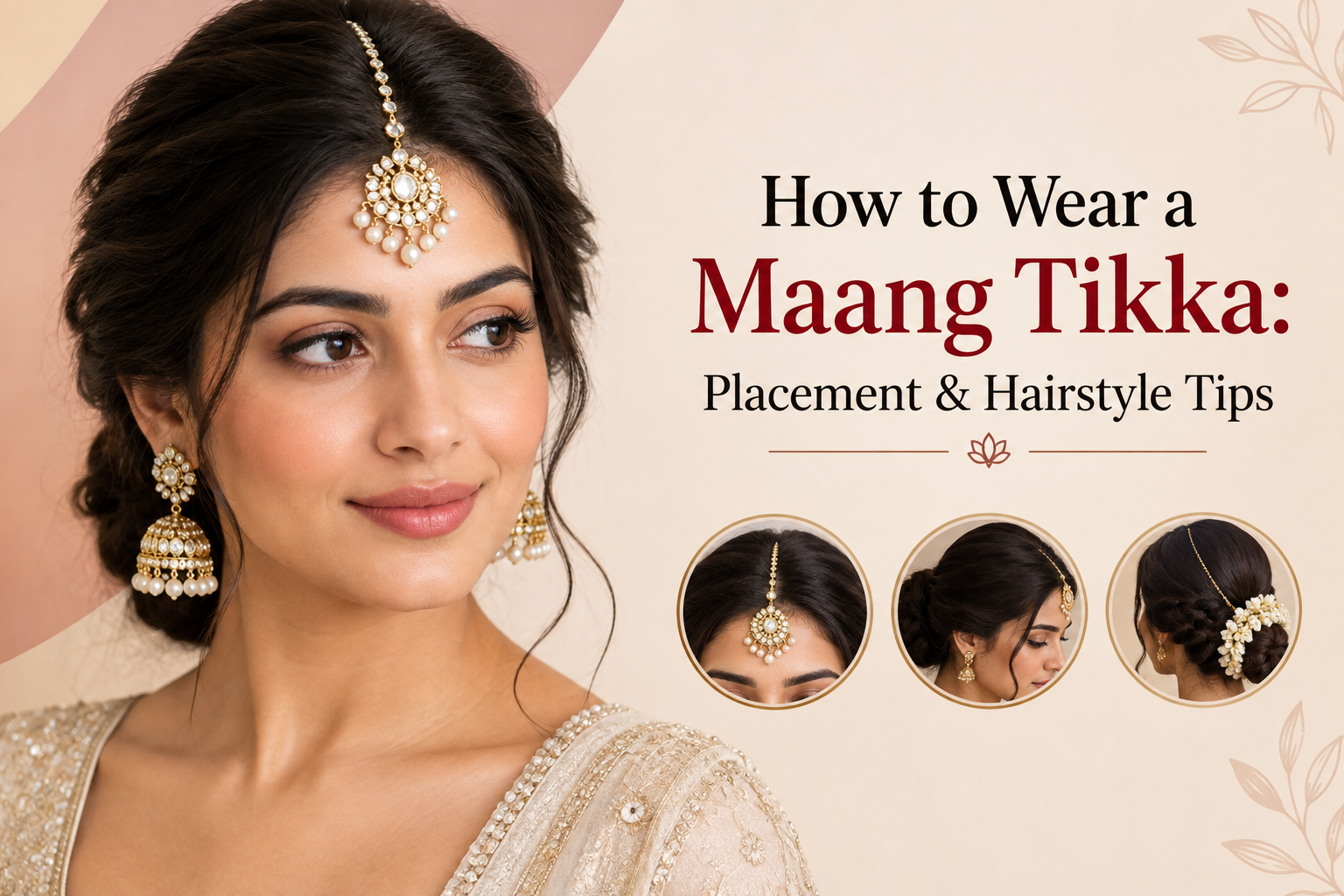
Both pieces hook into the hair at the centre parting, so hairstyle and hair texture affect how securely either sits:
-
Centre-parted buns or braids are the most reliable base for both styles, since the hook has a fixed point of grip.
-
Very straight or fine hair can cause a tikka or mathapatti to slide; texturising spray or a more secure hook mechanism helps either style stay in place through a full event.
-
A mathapatti's side chains need pins secured near the temples in addition to the central hook — one more step than a maang tikka, which only needs the central point secured.
Dupatta Draping

How a dupatta is draped changes which style shows to best effect. A centred dupatta pairs naturally with either a maang tikka or mathapatti, since both are symmetrical around the centre parting. An off-centre or one-sided dupatta drape can partially cover a mathapatti's side chains on the draped side — in that case, a single maang tikka, or a passa worn on the exposed side only, tends to read more cleanly in photos and in person.
Can You Wear Both Together?

Yes — pairing a maang tikka with a mathapatti is a recognised layering choice for grand, heavily embellished bridal looks, particularly for events like the baraat where a fuller jewellery moment suits the occasion. This combination is generally reserved for the most formal bridal functions rather than everyday festive wear, since it adds both visual weight and physical weight beyond either piece worn alone.
Quick Decision Summary
|
Choose a Maang Tikka if... |
Choose a Mathapatti if... |
|
You're a wedding guest, not the bride |
You're the bride or in her immediate bridal party |
|
The event runs for several hours |
The event is a shorter, formal occasion |
|
Your outfit or dupatta drape is off-centre |
Your dupatta is centred and symmetrical |
|
You have a smaller or narrower face |
You have a larger forehead or fuller face |
|
You want a subtle, versatile piece |
You want a fuller, more regal framing effect |
Frequently Asked Questions
Is a mathapatti heavier than a maang tikka?
Generally yes — the additional side chains add both material and points of contact near the temples, making a mathapatti heavier than a single-chain maang tikka of similar craftsmanship.
Which is better for a wedding guest, maang tikka or mathapatti?
A maang tikka is usually the safer choice for guests, since it's lighter, more versatile across outfits, and less likely to compete with the bride's own jewellery.
Can a maang tikka and mathapatti be worn at the same time?
Yes, though this combination is typically reserved for grand bridal occasions rather than everyday festive wear, since it adds noticeably more weight and visual detail than either piece alone.
Does hair type affect the choice between the two?
It affects styling more than the choice itself — very straight or fine hair may need extra securing for either piece, and a mathapatti requires securing the side chains in addition to the central hook.
Both structures are represented within the mathapatti and maang tikka collection, alongside coordinating pieces from the wider wedding jewelry range.