Cart
0
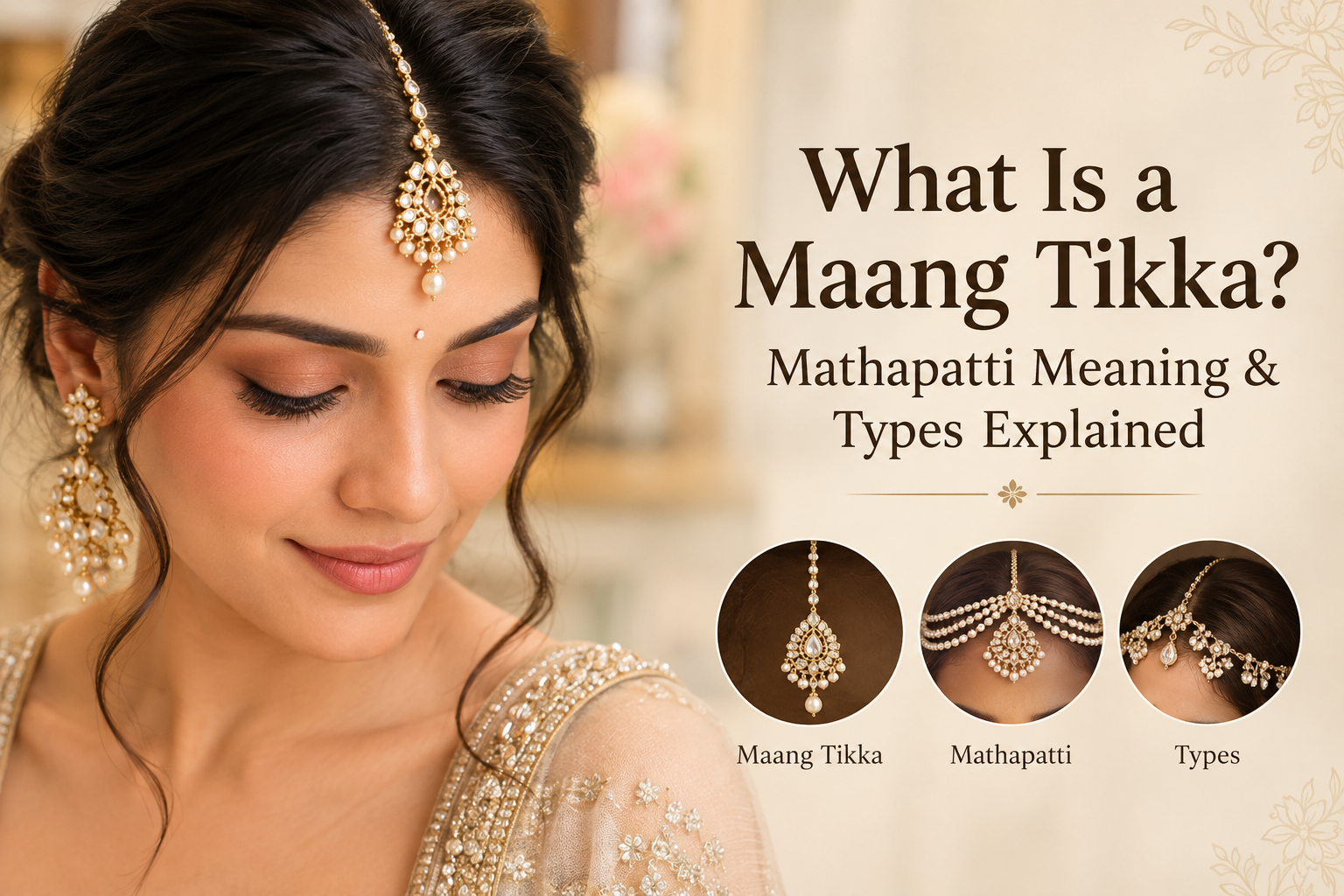

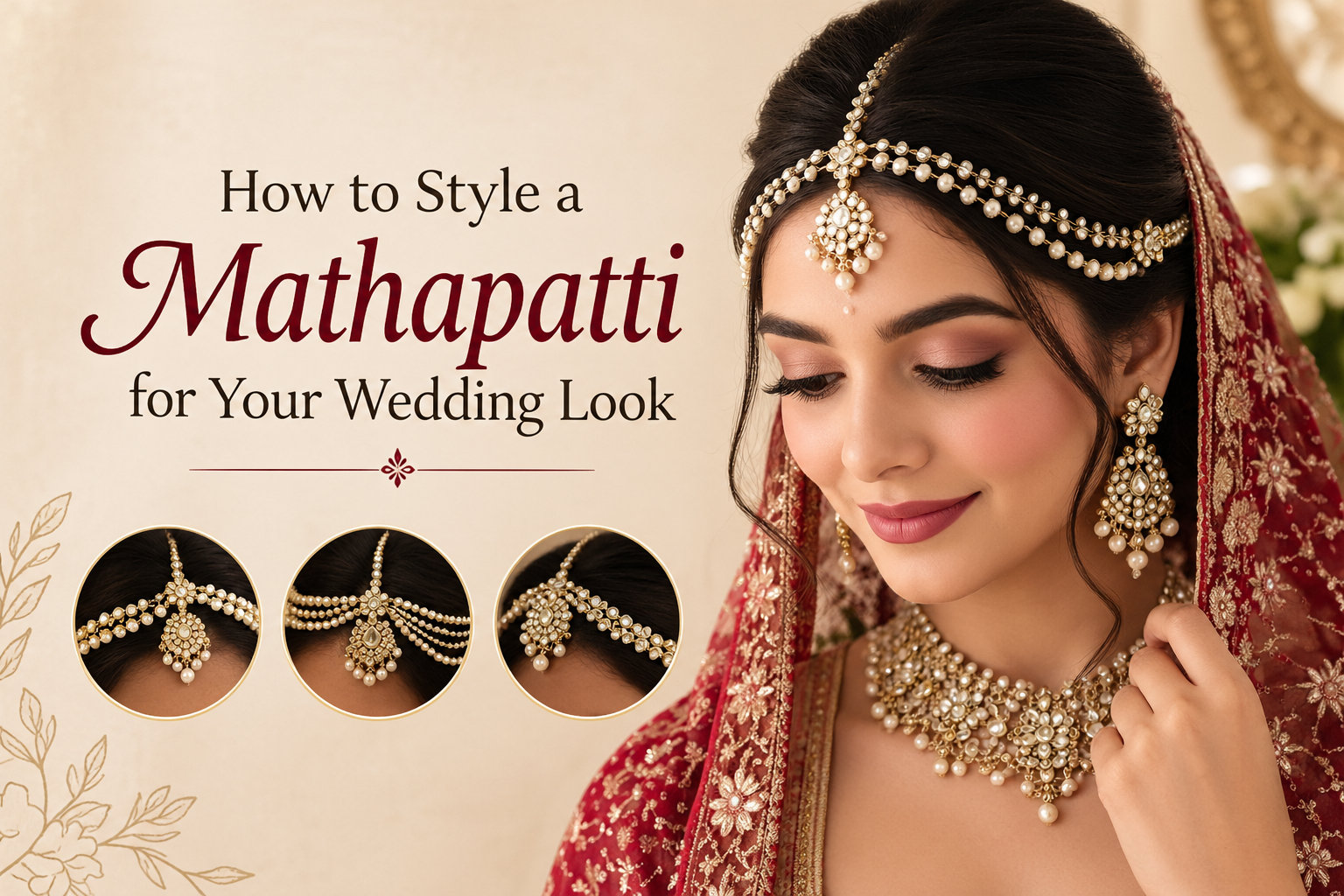
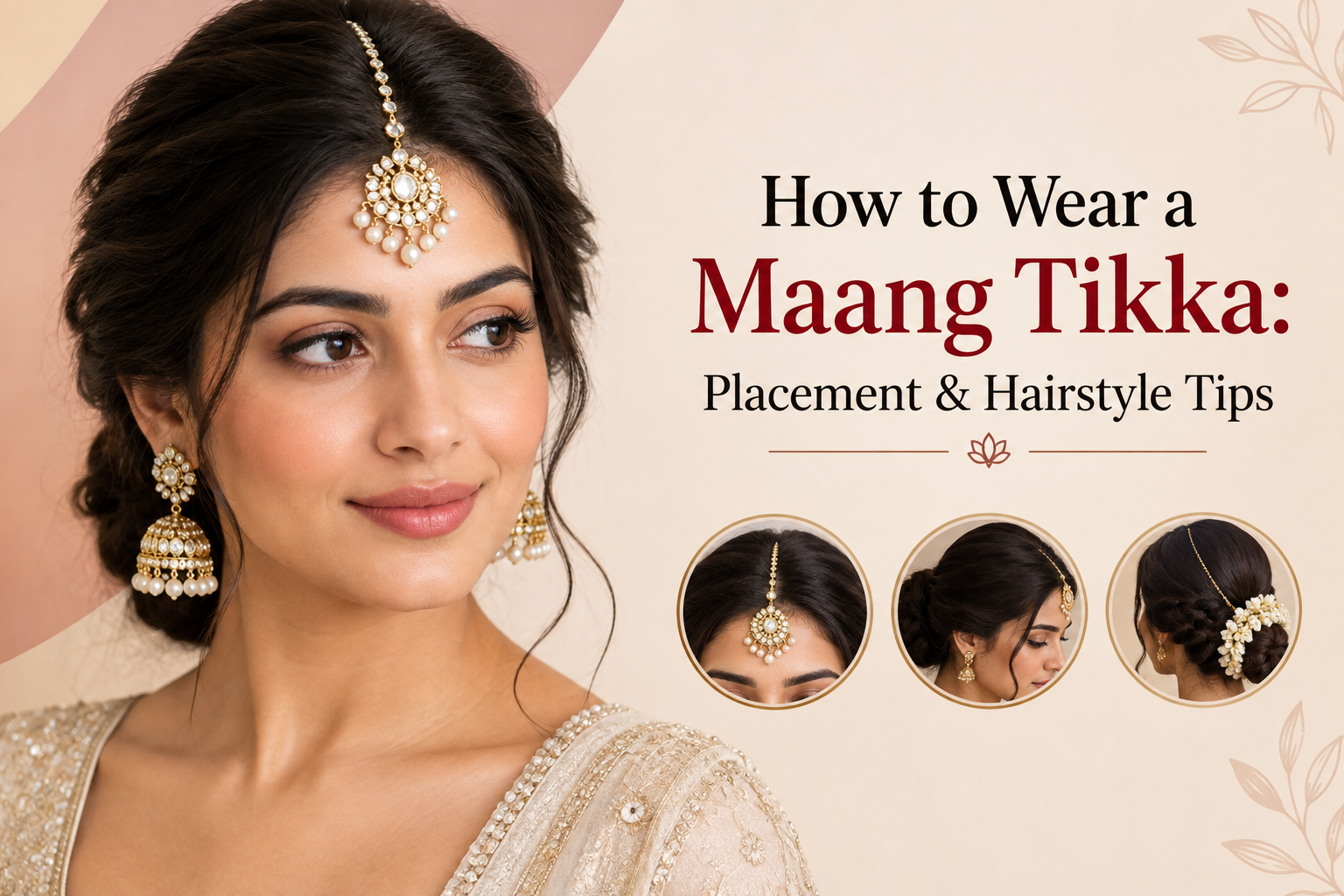
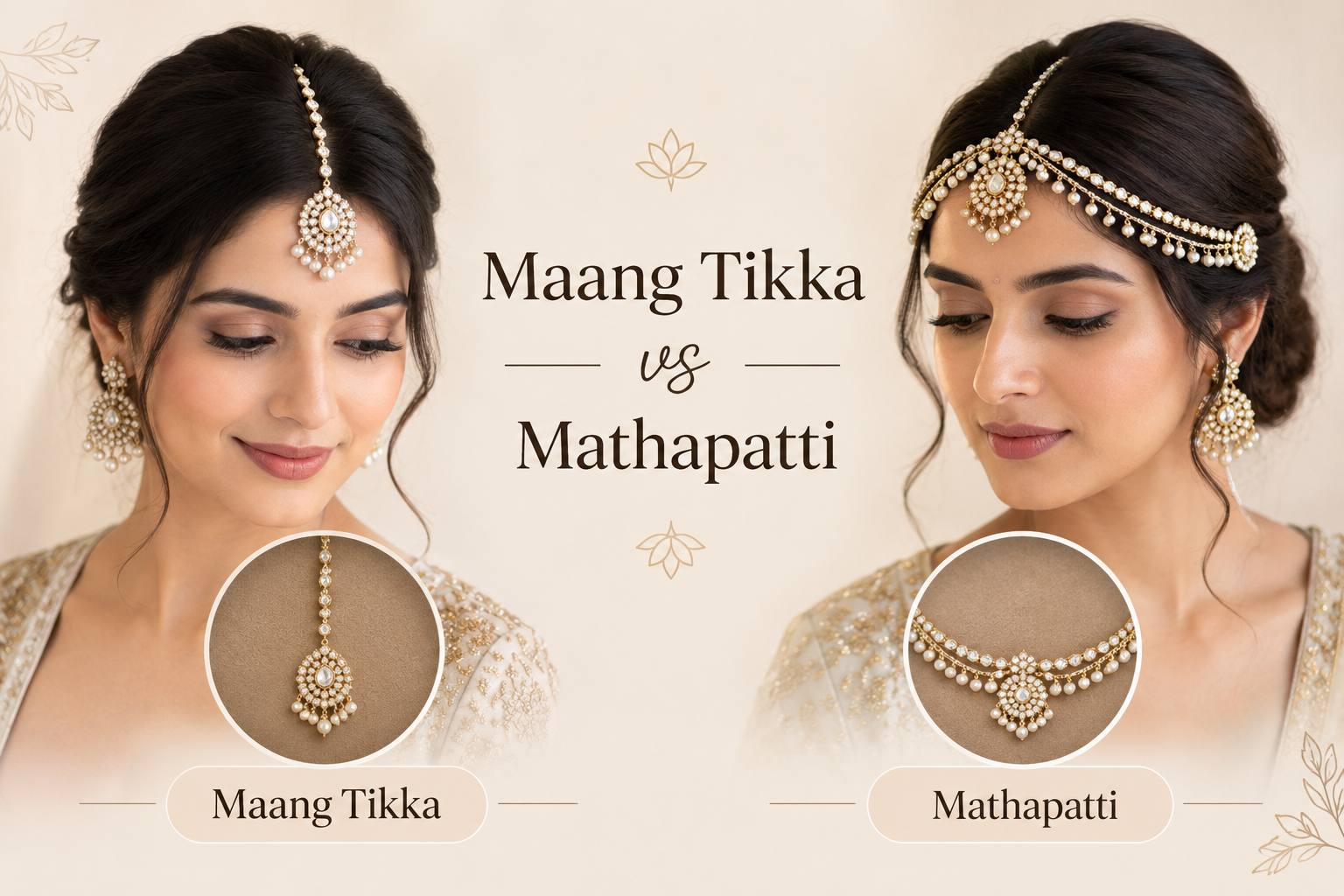
A maang tikka is a piece of Indian bridal and festive head jewellery consisting of a chain that hooks into the hair at the parting and a pendant that rests at the centre of the forehead. A mathapatti is the extended version of the same ornament — it keeps the central pendant but adds chains that run along the hairline toward the temples, framing the face rather than marking a single point on it. Every other name attached to this category of jewellery — passa, jhoomar, borla, chand tikka — describes a regional or structural variation on that same core idea: a chain-and-pendant ornament worn along the hair parting or hairline.
Where the Name Comes From
Maang is the Hindi word for the parting of the hair, and tikka refers to the pendant or mark itself — so "maang tikka" literally describes a pendant worn at the hair parting. Mathapatti combines matha (forehead) and patti (band or strip), describing the band-like effect created when chains extend across the hairline rather than staying centred at one point.
Maang Tikka vs. Mathapatti: The Core Difference
|
Maang Tikka |
Mathapatti |
|
|
Structure |
Single chain, single central pendant |
Central pendant plus side chains along the hairline |
|
Coverage |
One point on the forehead |
Full hairline, temple to temple |
|
Visual effect |
Subtle, delicate |
Fuller, crown-like framing |
|
Typical use |
Guests, smaller face shapes, everyday festive wear |
Brides, statement bridal looks |
A mathapatti is best understood as a maang tikka with the coverage extended outward — every mathapatti includes a central tikka-style pendant, but not every maang tikka has the additional side chains that define a mathapatti.
The History and Symbolism of the Maang Tikka

The maang tikka is traditionally counted among solah shringar, the set of sixteen adornments associated with a Hindu bride. Its placement at the centre of the forehead is often linked in tradition to the ajna chakra, the point associated in some schools of thought with focus and inner awareness — a cultural and symbolic association rather than a scientific claim, and one that varies by region and belief system. What stays consistent across regions is the ornament's role in marking a face as ceremonially significant, whether for a wedding, a festival, or another milestone occasion.
Bridal versions of the maang tikka historically used kundan and polki work — the same gold-foil-set stone techniques refined during the Mughal era and seen across other traditional Indian jewellery forms, including the kundan and meenakari detailing found on jhumka earrings.
Regional and Structural Types
-
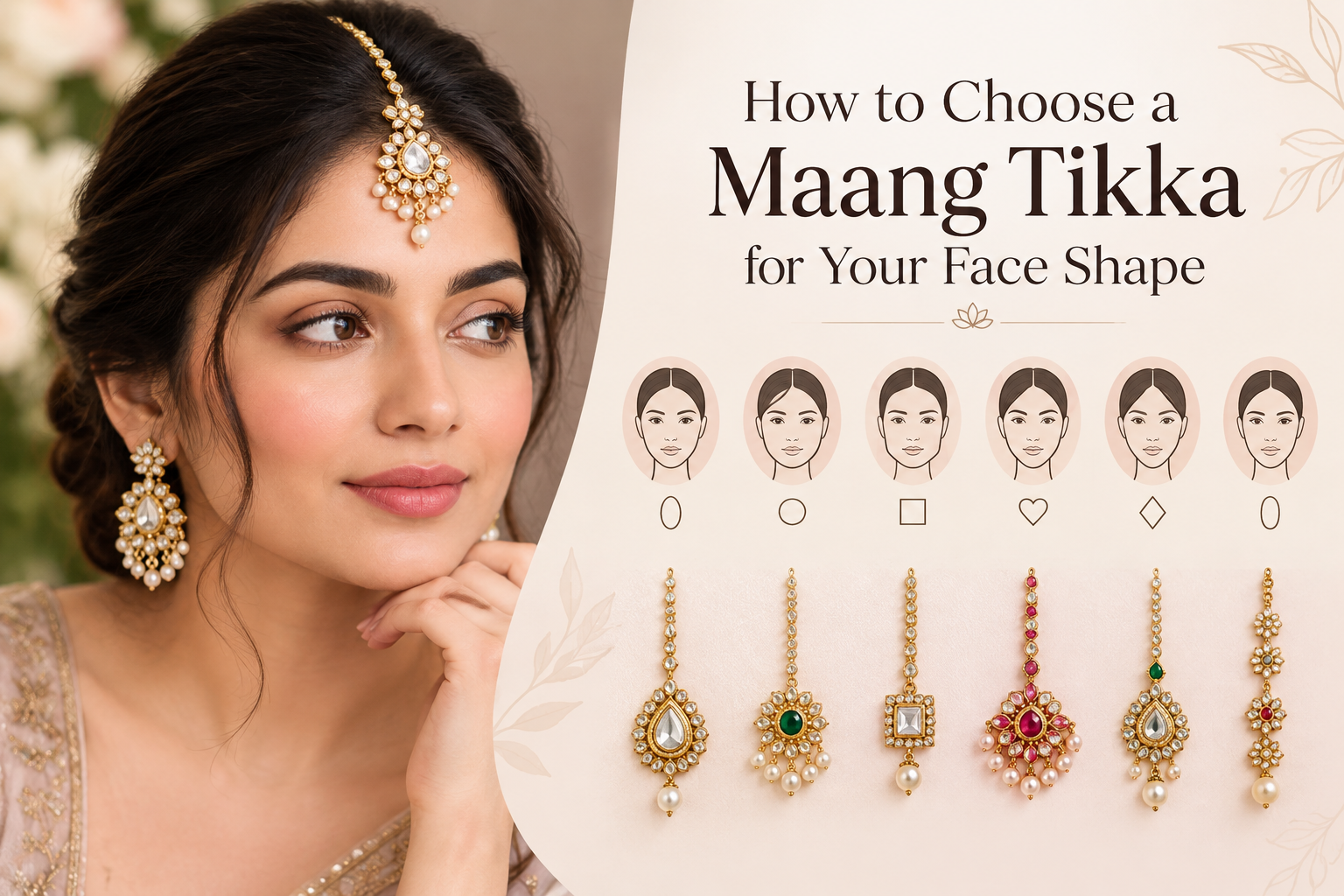
Classic maang tikka — a single chain and pendant, the most common and versatile form, suited to nearly any face shape and outfit.
-
Mathapatti — the central pendant plus side chains extending across the hairline; the standard choice for full bridal looks.
-
Passa — a side ornament worn near the temple rather than centred on the forehead, often paired with a central tikka for additional framing.
-
Jhoomar — a side-worn piece, historically associated with Hyderabadi, Nizami, and Punjabi traditions, that sits at an angle near the temple rather than centred like a tikka.
-
Borla — a round, dome-shaped pendant style associated with Rajasthani bridal jewellery, typically in gold with a central gemstone.
-
Chand tikka — a crescent-moon-shaped pendant, named for its shape rather than a distinct structural category; it can appear on either a maang tikka or a mathapatti.
-
Nethi chutti — a South Indian style, often a smaller pendant worn along the hair parting or braid rather than framing the full hairline.
How a Maang Tikka or Mathapatti Fits a Complete Look

A maang tikka or mathapatti is rarely worn in isolation — it's typically one part of a coordinated head-to-neckline set. Metal tone and stone type are usually matched across the tikka, jhumka earrings, and necklace so the pieces read as one look rather than separate accessories, a coordination detail also covered in styling jhumkas with sarees and lehengas. For a full breakdown of how head jewellery fits alongside earrings and necklaces in a bridal set, see building a bridal jewellery set.
Frequently Asked Questions
Is a mathapatti the same as a maang tikka?
Not exactly — a mathapatti includes a central pendant like a maang tikka, but adds side chains along the hairline. A maang tikka on its own doesn't include those side chains.
What does "maang tikka" literally mean?
Maang refers to the hair parting, and tikka refers to the pendant — so the name describes a pendant worn at the hair parting.
Is a jhoomar the same as a maang tikka?
No. A jhoomar is worn at the side of the head near the temple, while a maang tikka is centred on the forehead along the hair parting.
Can a maang tikka be worn without a mathapatti?
Yes — a classic single-chain maang tikka is a complete piece on its own and doesn't require side chains to be worn correctly.
What's the difference between a chand tikka and a regular maang tikka?
A chand tikka simply describes a crescent-moon-shaped pendant; it's a shape variation that can appear on a standard maang tikka or as part of a mathapatti, not a separate category of headpiece.
The full range of styles described above sits within the mathapatti and maang tikka collection.