Cart
0

Choker vs Necklace: What's the Difference?
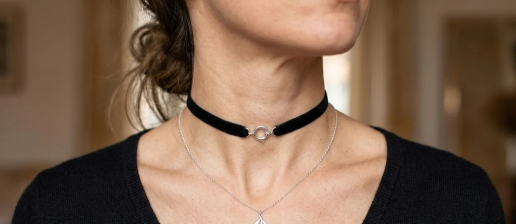
A choker is a type of necklace, not a separate category of jewellery — every choker is a necklace, but not every necklace is a choker. The distinction that actually matters isn't a specific measurement, though length is part of it. It's how the piece behaves once it's on: whether it hugs the neck with essentially no drop, or whether it creates any downward line at all, however slight.
This guide breaks down what genuinely separates the two, why length alone is an incomplete answer, and how the difference affects styling, fit, and construction.
Quick Definitions
-
Necklace: the umbrella term for any jewellery worn around the neck — this includes chokers, pendant necklaces, layered pieces, and long strands. When someone says "necklace" without qualification, they could mean almost anything in this broad category.
-
Choker: a necklace that sits close against the base of the neck with little to no drop, generally in the 12 to 16 inch range depending on the piece and how snugly it's meant to fit.
Why Length Alone Doesn't Fully Explain It
Two necklaces can measure almost identically and still read completely differently once worn. What actually determines whether a piece functions as a choker or as a short necklace is behavior, not the number on a spec sheet:
-
If it sits flush against the neck with no perceptible drop, it reads as a choker, regardless of the exact measurement
-
If it has even a slight downward line — enough to trace toward the collarbone rather than sit flat — it functions as a necklace, even at a fairly short length
Clasp type, band structure, the presence of a pendant, and overall design volume all affect this more than the length figure alone. This is why two pieces described with the same measurement can feel like entirely different categories once you actually put them on.
How Each Behaves When Worn
A choker:
-
Sits close and firm against the neck, with minimal margin for error in fit
-
Concentrates visual attention on the neck, collarbone, and face rather than creating length
-
Requires more precise sizing — a choker that's slightly too large or too tight is noticeable immediately, in a way a necklace's fit issues often aren't
-
Reads as more of a statement or defining piece for an outfit, even in a simple design

A necklace (non-choker lengths):
-
Descends from the neck, creating a visible downward line that moves naturally with the body
-
Generally more forgiving in fit there's margin between "correct" and "slightly off" that a choker doesn't have
-
Works more naturally with pendants and central motifs, since there's room for a piece to hang and settle rather than sit fixed against the neck
-
Tends to visually elongate the upper body, rather than concentrating attention in one area
Neither behavior is better they create different effects, and the right choice depends on what you actually want the piece to do for a given outfit.
Construction Differences
-
Chokers are more likely to use rigid or semi-rigid bands, in addition to chain or beaded construction, and can be built from a wider range of materials including fabric, cord, or leather-style finishes since a close, structured fit matters more than flexible drape
-
Necklaces more commonly rely on flexible construction chains, strands, or articulated links since flexibility is what allows the piece to fall and move naturally
For the fuller breakdown of choker construction types specifically chain, collar, beaded, and layered see our guide on what a choker necklace is.
A Note on Other Length Terms
You may occasionally come across other traditional length categories princess, matinee, opera used in some jewellery contexts to describe increasingly longer necklace lengths beyond the choker range. These are less commonly used in everyday shopping than the simpler choker/short/long framework, but it's worth knowing they exist if you come across them elsewhere.
Which Should You Choose?
-
Want to concentrate attention on your neckline and collarbone, with a piece that reads as intentional even when simple? A choker does this more effectively than any other necklace length.
-
Want something that moves naturally, elongates, and gives you more margin in fit? A standard necklace length short or long is the more forgiving choice.
-
Not sure which effect you want? Consider the neckline you're pairing it with open, off-shoulder necklines tend to suit chokers particularly well, while necklaces generally work across a broader range of necklines.
FAQs
Is a choker a type of necklace?
Yes ,a choker is a specific fit category within the broader necklace category, not a separate type of jewellery. Every choker is a necklace, but not every necklace is a choker.
How do you tell if something is a choker or a short necklace just by looking?
Behavior is the clearest sign: if the piece sits flush against the neck with no visible drop, it reads as a choker. If it has any downward line, however slight, it functions as a necklace.
What length is considered a choker?
Generally 12 to 16 inches, though the exact measurement matters less than how snugly and flush the piece sits once worn.
Why does choker fit matter more than necklace fit?
A choker sits in a highly visible area directly against the neck, so even small sizing issues — too loose, too tight — are immediately noticeable in a way they often aren't with a longer, more forgiving necklace.
Can a choker have a pendant?
Yes, though it's less common than with longer necklaces, since a choker's close fit leaves less room for a pendant to hang and move naturally.
Which is more versatile, a choker or a necklace?
They serve different purposes rather than one being more versatile — a choker concentrates attention and pairs well with open necklines, while a standard-length necklace offers more flexibility across necklines and can be layered more easily.
Explore both: choker necklaces for a close, defined fit, and short or long necklaces for more traditional length and drape, at Mine of Design.