Cart
0
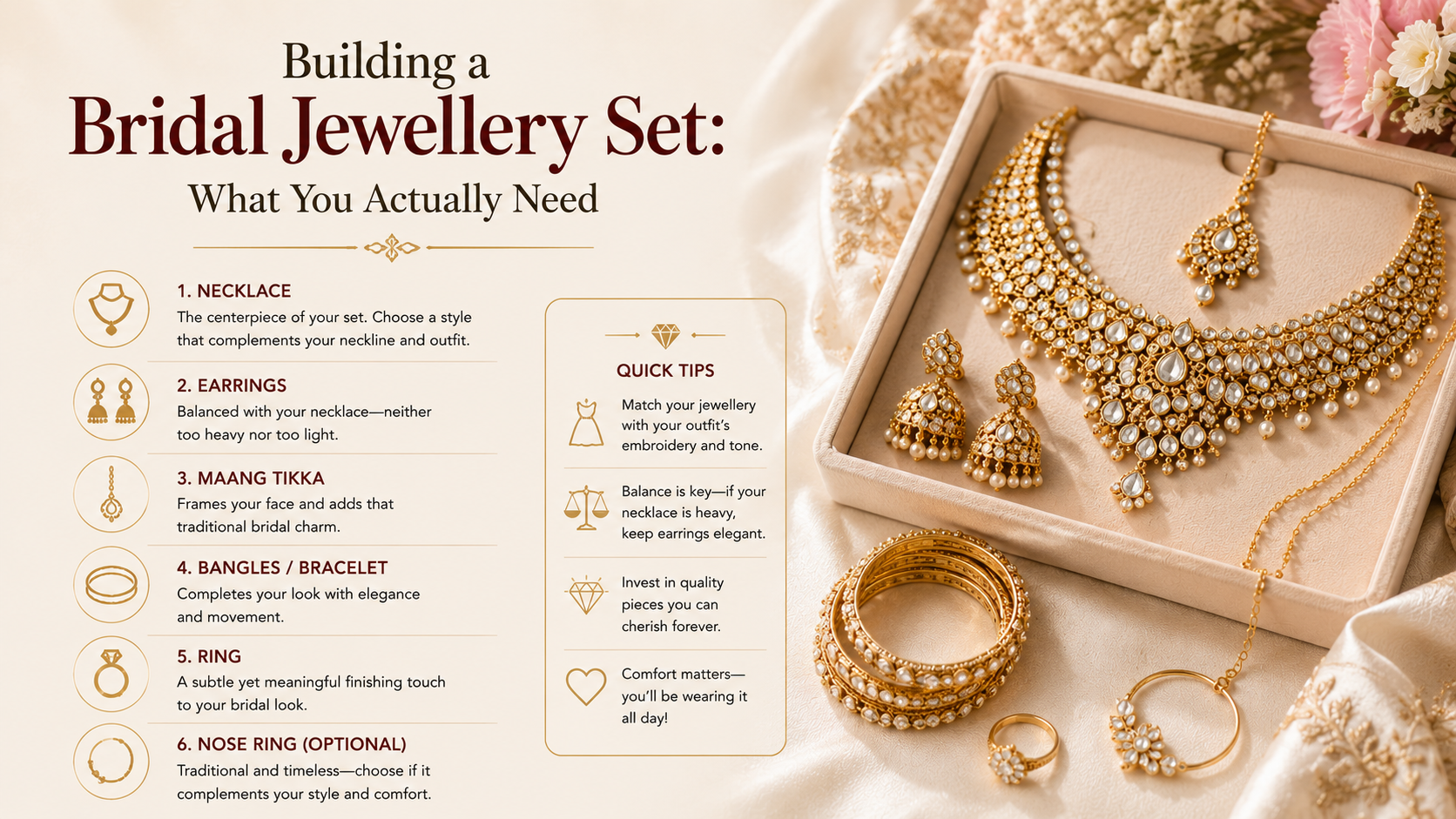

A complete bridal jewellery set isn't defined by how many pieces you own — it's defined by whether the pieces work together and cover each function of a multi-day wedding. Most brides genuinely need a curated set per ceremony, coordinated by craft and metal tone, rather than one enormous, undifferentiated jewellery collection. Balance matters more than volume.
This guide covers the core jewellery categories in a traditional bridal set, what falls inside versus outside typical jewellery shopping, how to think about building sets by function rather than by type, and where Mine of Design's own range fits into that picture.
What "Complete" Actually Means
A useful way to reframe the question: you need enough to create a complete, balanced look for each function you're dressing for — not the maximum number of pieces you can acquire. This is the same underlying principle behind building any jewellery wardrobe deliberately, whether it's a capsule earring rotation or a full bridal trousseau: each piece should earn its place by solving a specific styling need, rather than simply adding to the pile.
The Core Jewellery Categories in a Bridal Set

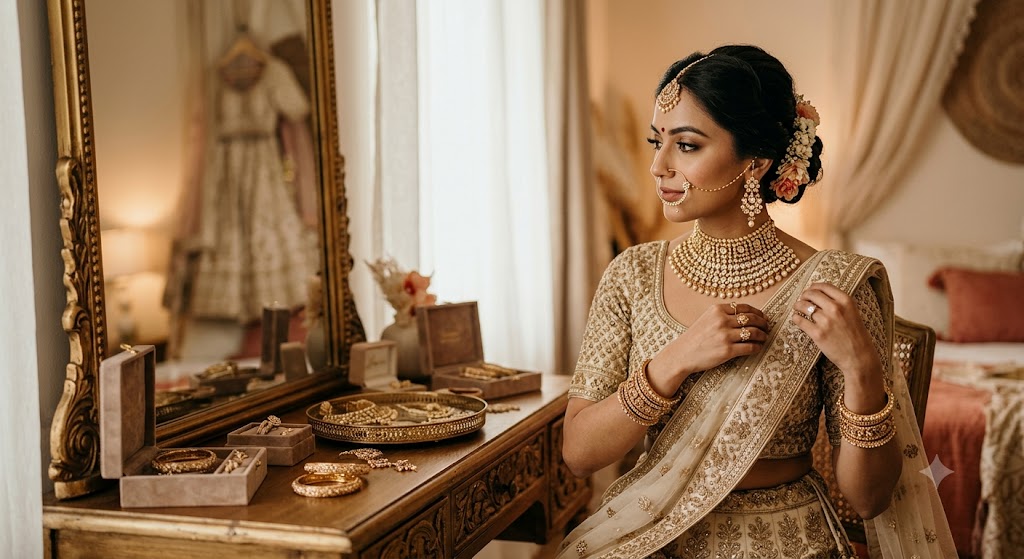
- Necklace or haar — the anchor of the bridal look, often the first piece chosen and the one everything else coordinates around
- Earrings — jhumkas, chandbalis, and balis are the classic choices, though contemporary and fusion options are increasingly common too
- Bangles — including regional traditions like the chooda (a bridal bangle set, particularly associated with Punjabi weddings) and kalire (ornamental pieces attached to the chooda)
- Maang tikka — a forehead ornament worn along the hairline's centre parting
- Nose ring or nath — traditionally regional in origin, now commonly worn across bridal styles nationally
- Rings — beyond the engagement ring itself, a heavier statement ring is often chosen specifically for the wedding day
- Anklets and toe rings — toe rings in particular carry traditional significance as a marker of married status in several regional customs
Which of these matter most to your own look depends heavily on regional tradition and personal preference — this list represents the fuller traditional range, not a mandatory checklist every bride needs to complete in full.
Necklaces: The Anchor of the Bridal Look
Many brides layer a short and long necklace together for a fuller bridal silhouette — we cover this combination, along with the classic choker-and-rani-haar pairing specifically, in our guide on long necklace vs. rani haar and our broader guide on layering necklaces of different lengths. South Indian bridal looks often add a vaddanam — a waist belt — as part of the necklace-adjacent jewellery, though this sits outside a typical necklace collection. Matching your necklace choice to both your blouse neckline and your outfit's embroidery detail keeps the overall look cohesive rather than competing.
Earrings: Matching Craft and Hairstyle

Coordinate earring detailing with your necklace's craft style — Kundan with Kundan, temple jewellery with temple jewellery — for a set that reads as intentional rather than assembled piecemeal. We cover how Kundan craftsmanship specifically works in our guide on what Kundan jewellery is. Hairstyle also matters more here than people expect: an updo leaves room for longer, more dramatic earrings, while an open hairstyle generally suits studs or smaller drops better, both for visibility and comfort — the same logic we cover in more depth in our guide on styling statement earrings.
Rings for the Occasion
Beyond the engagement ring, many brides choose a separate, heavier statement ring specifically for the wedding day itself — often with a larger central stone and supporting detail, worn alongside the rest of the bridal set rather than replacing everyday rings entirely. If you're building toward this kind of piece, our guides on what makes a ring handmade and how to stack rings the right way are worth reading before you shop.
What Falls Outside Jewellery Proper, But Often Gets Grouped In
A few traditional bridal essentials are typically sourced separately from earrings, necklaces, and rings, worth knowing about even if they're not part of a typical jewellery collection:
- Chooda and kalire, generally sourced from bangle specialists rather than general jewellery retailers
- Maang tikka, sometimes sold alongside necklace sets, sometimes separately
- Nose rings and nath, often a distinct category of their own
- Anklets and toe rings, frequently grouped with foot and hand accessories rather than main jewellery collections
- Bindis,which aren't jewellery in the traditional sense but are commonly included in bridal accessory checklists
Building Sets by Function, Not Just by Type
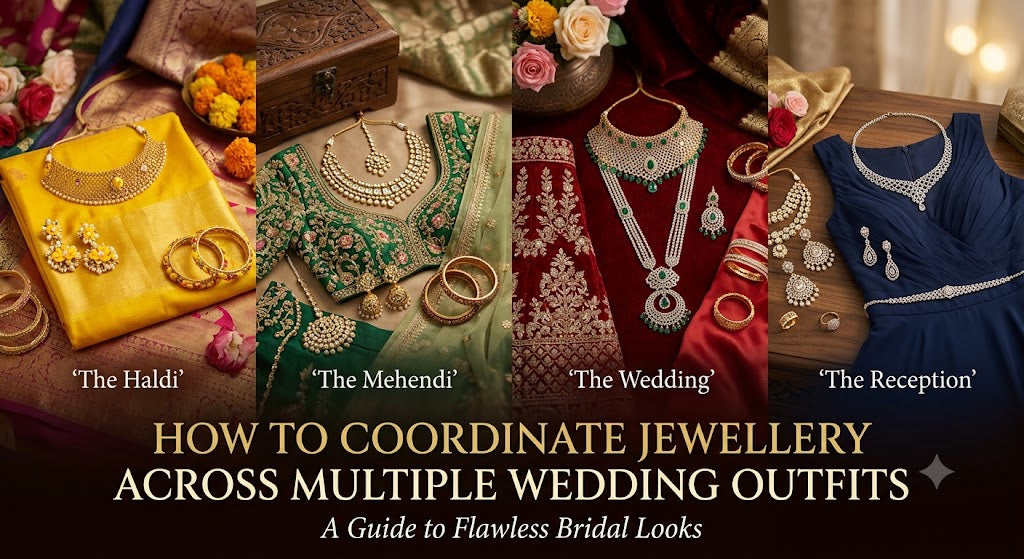
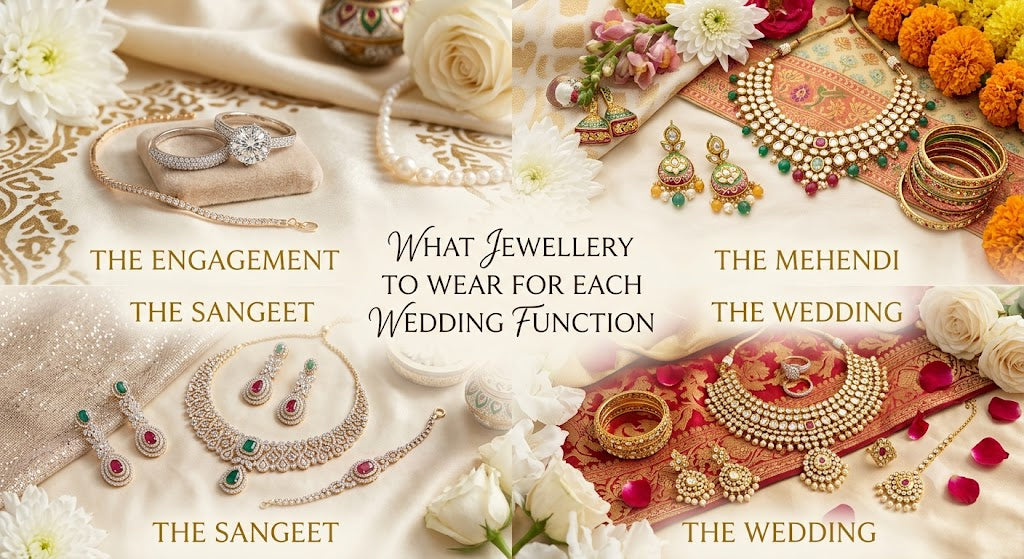
A multi-day wedding rarely calls for one jewellery set worn throughout. Different functions typically call for different scale and detail:
- Haldi and mehendi generally suit lighter, more colourful jewellery, since these functions are informal and often involve more movement
- Sangeet allows for bolder, more festive pieces — this is where a statement necklace or elaborate earrings genuinely earn their place
- The main ceremony is where the heaviest, most traditional jewellery — a full Kundan or temple set, potentially a rani haar — belongs
- The reception often allows for a more contemporary or fusion-leaning look, giving room to step outside strictly traditional pieces
This function-first approach, rather than trying to select one "bridal jewellery set" to cover everything, tends to produce a more coherent and comfortable result across a multi-day event.
Storage and Organization During a Multi-Day Wedding
- Organize by ceremony rather than by piece type, so each function's jewellery is grouped and ready together rather than scattered across multiple containers
- Use cushioned, lined storage for delicate or heirloom pieces specifically, particularly if travelling between venues
- Avoid packing duplicate or unnecessary pieces — a curated set per function is easier to manage than an overpacked collection you won't have time to sort through between events
Where Mine of Design Fits In
Our range covers earrings, necklaces, and rings specifically the core jewellery categories most central to a bridal look — including Kundan-style, moti, and layered necklace pieces, statement and Kundan-style earrings, and handmade rings. Bangles, nose rings, anklets, and bindis fall outside our current collection and are worth sourcing from specialists in those specific categories as part of building your complete bridal look.
FAQs
What jewellery does a bride actually need for an Indian wedding?
At minimum, a coordinated necklace and earring set, plus rings for the day itself. A fuller traditional set can include bangles, a maang tikka, a nose ring, and anklets, depending on regional tradition and personal preference.
Do I need different jewellery for each wedding function?
Generally yes, lighter, colourful pieces for haldi and mehendi, bolder festive pieces for sangeet, the heaviest traditional set for the main ceremony, and often a more contemporary look for the reception.
How many necklaces should be in a bridal jewellery set?
Many brides layer a short and long necklace together for a fuller look, sometimes combined with a rani-haar-length piece for the main ceremony specifically.
Should earrings match the necklace exactly?
They don't need to match exactly, but coordinating craft style and detailing — Kundan with Kundan, for instance — creates a more cohesive overall look than mismatched styles worn together.
What ring should I wear on my wedding day besides my engagement ring?
Many brides choose a separate, heavier statement ring specifically for the day, worn alongside the rest of the bridal set.
Where can I find bangles, nose rings, or anklets to complete my bridal look?
These typically come from specialists outside general jewellery collections — bangle and chooda specialists, and accessory-specific retailers for nose rings and anklets.
Explore our bridal-ready pieces in the Wedding Jewellery collection at Mine of Design.