Cart
0
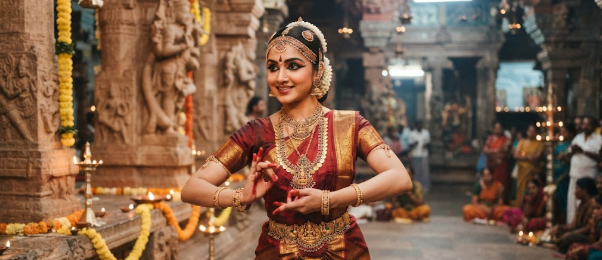

Festive jewellery is jewellery worn specifically for festivals, celebrations, and ceremonial occasions positioned between everyday wear and full bridal-scale jewellery in both size and construction. It isn't a single style. It spans several distinct regional and craft traditions, each carrying its own history, motifs, and occasion-specific conventions, unified mainly by the role they play: marking a celebration rather than blending into an ordinary day.
This guide covers the major styles that fall under the festive umbrella, what different festivals traditionally call for, what the category represents culturally, and how festive jewellery fits into a broader jewellery collection alongside everyday and bridal pieces.
What Actually Separates "Festive" From Everyday or Bridal
- More detail and scale than everyday jewellery — festive pieces are built to be noticed, generally with more craftsmanship, stone-set detail, or elaborate design than a daily-wear piece
- Less scale than full bridal jewellery — a rani haar or the heaviest ceremonial sets are reserved specifically for bridal wear and principal ceremonies, which we cover in our guide on long necklace vs. rani haar; festive jewellery sits below that in both weight and occasion significance
- Still needs to be wearable for long days — festivals often involve hours of standing, dancing, and moving between events, which means comfort matters here nearly as much as it does for daily wear, despite the increased visual detail
The Major Styles Within Festive Jewellery
Temple Jewellery

Originating in South India particularly Tamil Nadu, Andhra Pradesh, Kerala, and Karnataka temple jewellery was first created to adorn temple deities, later worn by classical dancers as part of performance attire, and eventually adopted into bridal and festive wear more broadly. It's characterized by large, gold-toned pieces featuring deity motifs, lotus flowers, peacocks, and other traditional South Indian design elements.
Kundan and Polki

Rooted in Rajasthan and Mughal-era craftsmanship, Kundan and Polki jewellery use a distinctive gold-foil stone-setting technique, giving festive pieces their characteristic refined, layered look. We cover this craft tradition — including the real technical distinction between the two — in our guide on what Kundan jewellery is.
Regional Beaded and Gemstone Pieces

Certain festivals, particularly harvest celebrations, lean toward vibrant beaded necklaces and coloured gemstone pieces — rubies, emeralds, turquoise — chosen for the energy and colour they bring to an outfit, rather than the more structured Kundan or temple aesthetic.
What Different Festivals Traditionally Call For
Festive jewellery conventions vary meaningfully by occasion:
Navratri and Dussehra lean toward vibrant, colourful pieces — jhumkas with intricate detailing, bangles in auspicious colours like red and green, and often a bold necklace or maang tikka to complete the look
Diwali traditionally centres gold as the dominant material, reflecting the festival's association with prosperity and new beginnings
Harvest festivals like Makar Sankranti, Pongal, and Lohri each carry their own regional emphasis — heavier traditional gold pieces for Lohri, intricate temple jewellery for Pongal, and bright, colourful designs incorporating gemstones for Makar Sankranti
None of these conventions are strict rules today, but understanding them helps explain why certain jewellery styles feel more "right" for a specific festival than others, even when the reasoning isn't consciously spelled out.
What Festive Jewellery Traditionally Represents
Beyond aesthetics, certain materials and colours carry traditional symbolic meaning within Indian festive jewellery. Gold is traditionally associated with prosperity, purity, and good fortune. Red is traditionally linked to auspiciousness and energy. Temple jewellery's deity motifs are traditionally understood to invoke blessings. These are cultural associations passed down through generations of festive dressing, worth knowing as context rather than as claims about what any specific piece does — they're part of why festive jewellery carries more emotional weight than a simple fashion choice for many wearers.
Modern Festive Jewellery: What's Changed
Festive jewellery has shifted noticeably in recent seasons toward comfort and versatility without abandoning tradition. Lighter, hollow-construction festive pieces are increasingly common, replacing some of the weight traditionally associated with elaborate festive design. The colour palette has also broadened beyond the classic gold-and-red combination to include softer tones — pastel enamel work, muted greens, and pearl-toned finishes. Fusion styling, pairing traditional festive pieces with contemporary silhouettes, has also become more common, alongside a general shift toward jewellery designed to transition between multiple occasions rather than being worn once and set aside.
![]()
![]()
![]() Styling Principles for Festive Jewellery
Styling Principles for Festive Jewellery
Choose one hero element — a choker, a pair of statement earrings, or a tikka — and let that piece lead the look, rather than layering everything at full intensity at once
Match jewellery to neckline — structured chokers generally suit deeper, more open necklines, while chandbalis and jhumkis complement higher or more closed necklines particularly well
Scale to the time of day — lighter festive pieces suit daytime rituals and functions, while richer, more detailed designs are better suited to evening celebrations
Balance rather than layer everything — pairing one strong piece with more understated supporting jewellery tends to look more considered than maximum detail everywhere at once
Comfort for Long Festival Days
Festivals often mean many consecutive hours of wear, which makes comfort a genuine practical consideration rather than an afterthought. This is particularly true for heavier earring styles, where backing type and construction make a real difference over a long day we cover this in detail in our guide on how to wear heavy earrings without ear pain. The same logic extends to festive jewellery generally: a piece that looks stunning for the first hour but becomes genuinely uncomfortable by the third isn't serving the occasion well, however striking it looks in photos.
Where Festive Jewellery Fits in Your Collection
Festive jewellery occupies the middle tier of a well-rounded jewellery wardrobe — more detailed and occasion-specific than everyday earrings or daily-wear necklaces, but less elaborate than the pieces reserved specifically for wedding jewellery and principal bridal ceremonies. Building a collection with this tier in mind — a few festive pieces for regular celebration wear, distinct from both daily basics and full bridal sets — tends to serve a busy festival calendar better than owning only one end of that spectrum.
FAQs
What counts as festive jewellery?
Jewellery worn specifically for festivals, celebrations, and ceremonial occasions — more detailed than everyday jewellery, but generally less elaborate than full bridal-scale pieces.
What's the difference between temple jewellery and Kundan jewellery?
Temple jewellery originated in South India as deity adornment, characterised by large gold-toned pieces with deity and nature motifs. Kundan uses a specific gold-foil stone-setting technique rooted in Rajasthan and Mughal craftsmanship — they're distinct traditions with different regional origins and visual characteristics.
Does festive jewellery have to be gold?
No — while gold is traditionally central to festivals like Diwali, other festivals lean toward vibrant beaded pieces or coloured gemstones, and modern festive jewellery increasingly includes softer palettes beyond gold and red.
How is festive jewellery different from bridal jewellery?
Festive jewellery generally sits below bridal jewellery in scale and weight — bridal-specific pieces like a rani haar are reserved for principal wedding ceremonies, while festive jewellery covers the broader range of celebrations throughout the year.
How many festive jewellery pieces should I own?
There's no fixed number, but a few versatile festive pieces — distinct from both daily-wear basics and full bridal sets — generally serve a regular festival calendar better than relying on either extreme alone.
Is festive jewellery comfortable to wear for a full day?
It depends on construction. Well-made festive pieces with secure backings and thoughtful weight distribution can be worn comfortably for hours, which matters given how long festival celebrations typically run.
Explore our festive collection at Mine of Design.