Cart
0
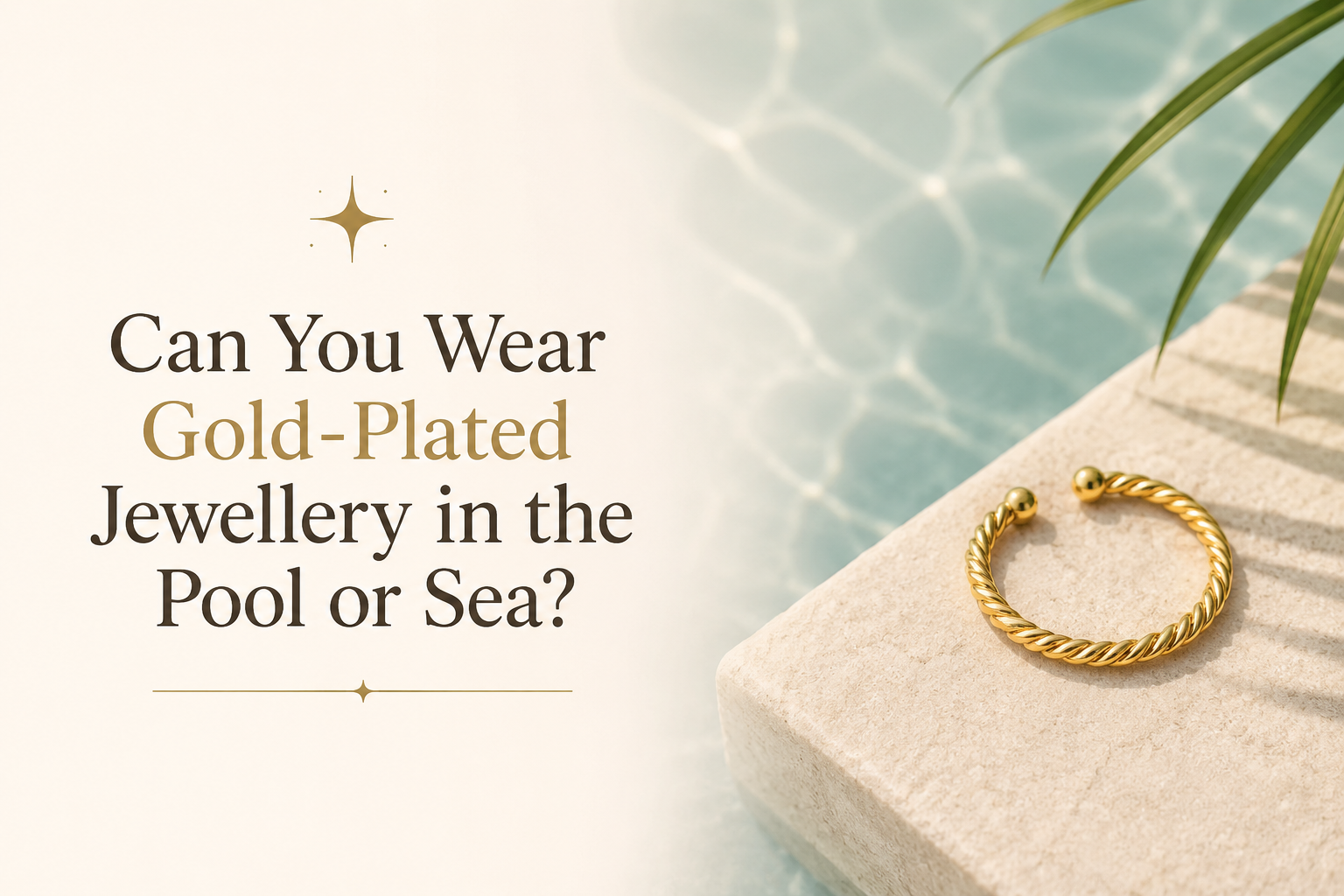
Can You Wear Gold-Plated Jewellery in the Pool or Sea?
The direct answer: it's best to remove gold-plated jewellery before swimming, whether in a pool or the sea. It's not that a single quick dip will ruin a piece instantly — but prolonged or repeated water exposure is one of the most common causes of plating wear over time, and a beach or pool day typically involves exactly that kind of exposure, often combined with sun, sweat, and sunscreen at the same time.
This isn't a reason to avoid gold-plated jewellery on a trip. It just means treating "swim time" and "everything else" as two different modes, and planning around that rather than assuming any gold-plated piece is fine to leave in.
Why Water Affects Plating

Gold plating is a thin surface layer bonded to a base metal underneath. Water on its own doesn't dissolve gold, but repeated water exposure gradually affects the bond between the plating and the base metal, and accelerates general surface wear — especially when combined with the friction, chemicals, and temperature changes that come with actually swimming rather than just getting caught in rain.
-
Chlorine in pools is a mild chemical irritant to plated surfaces, and repeated exposure over a trip adds up
-
Salt water carries its own abrasive and chemical effects, and salt residue left to dry on a piece without rinsing makes this worse
-
Sun and heat don't directly damage plating, but combined with water exposure, they add another layer of stress the piece has to tolerate
-
Friction from swimming itself — strokes, currents, contact with pool walls or sand — adds physical wear on top of the chemical exposure
None of these factors ruin a piece in a single afternoon. It's the cumulative pattern across a trip, or across many trips, that determines how visible the wear becomes.
What About a Quick, Accidental Splash?
A brief, one-off splash — getting caught in rain, a quick hand-wash without thinking, a few unexpected drops from a pool splash — isn't something to panic about. The real risk comes from sustained submersion: actually swimming, showering with jewellery on, or leaving a piece in a damp environment for an extended period. If a quick accidental splash happens, drying the piece promptly is a reasonable response, not a cause for concern.
Does Base Metal Make a Difference?

Yes, significantly — but this is exactly where "gold-plated" alone isn't specific enough to answer the question reliably. Some base metals, like certain grades of stainless steel, tolerate water exposure considerably better than others, like brass or standard alloy blends. Since base metal varies by product and isn't always disclosed, the safer general approach — for any gold-plated piece, from any seller — is to assume water exposure will accelerate wear unless you've specifically confirmed otherwise.
What to Do Instead on a Beach or Pool Day
-
Remove earrings, rings, and other gold-plated pieces before swimming, rather than assuming a specific piece will be fine
-
Apply sunscreen and tanning products before putting jewellery on, following the same logic as perfume and skincare — direct, prolonged contact with these products affects plating over time
-
Dry off fully before putting jewellery back on after a swim or shower, rather than putting pieces on while still damp
-
Pack a small, dry pouch separate from swimwear and wet items, so jewellery isn't sitting in a damp bag between activities
-
Rinse and dry pieces promptly if they do get an accidental splash of chlorine or salt water, rather than leaving residue to dry on the surface
Building This Into Your Trip
The easiest way to handle this practically: treat pool or beach time as a jewellery-off window, the same way you might already treat a workout or a shower at home. Put jewellery back on once you're dry and dressed for the rest of the day, rather than trying to remember mid-swim. For the fuller picture on what to actually pack for a trip, see our guide on the best earrings to pack for travel.
FAQs
Will gold-plated earrings be ruined if I swim in them once? Not typically from a single instance — the real risk comes from repeated or prolonged water exposure, not one occasion. That said, it's still the safer habit to remove them before swimming.
Is salt water worse than pool water for gold-plated jewellery? Both affect plating over time, though salt water residue left to dry without rinsing can be particularly abrasive if it's not cleaned off promptly.
Can I shower with gold-plated jewellery on? It's better to remove it first. Showering involves the same kind of prolonged water and product exposure that accelerates plating wear.
Does sunscreen affect gold-plated jewellery even without swimming? Yes — prolonged contact with sunscreen or tanning products can affect plating over time, so applying these before putting jewellery on is the safer order.
Is any gold-plated jewellery actually water-safe? It depends heavily on the base metal underneath the plating, which varies by product and isn't always disclosed. Without specific confirmation, it's safer to assume standard water-exposure precautions apply.
What should I do if my gold-plated piece gets accidentally splashed? Dry it promptly. A brief, accidental splash isn't generally cause for concern — it's sustained exposure that causes the real cumulative wear.
Plan your trip's jewellery with our vacation earrings collection at Mine of Design.