Cart
0
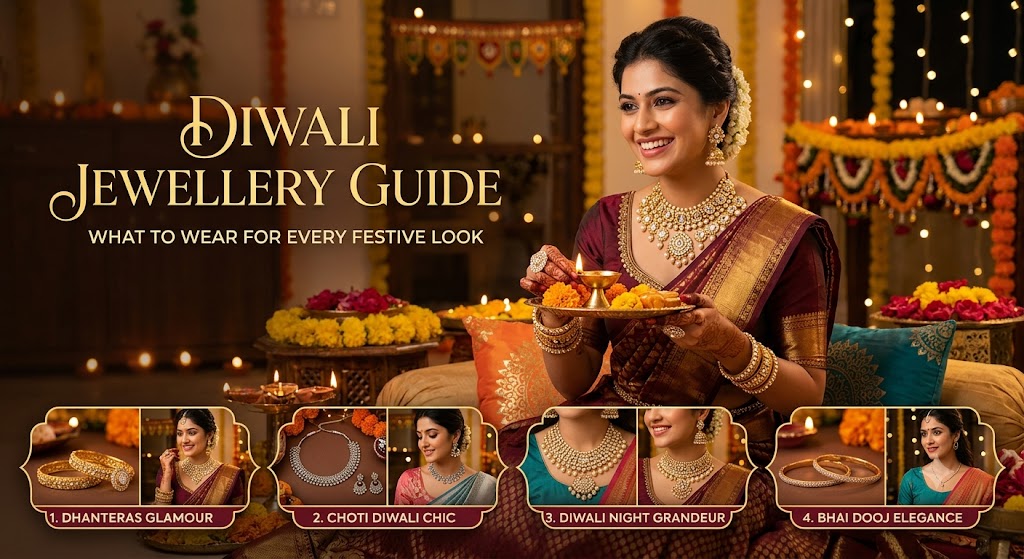

For Diwali, choose one focal piece that suits the occasion and the outfit, and keep the rest of the jewellery quiet. Jhumkas and kundan-style pieces suit Lakshmi Puja and family rituals. Studs and light drops suit daytime visits and the office. Statement earrings and ear cuffs suit parties. The outfit's neckline decides the necklace, and the length of the day decides how heavy the earrings can be.
This guide sets out the jewellery for each Diwali look, how to pair it with sarees, lehengas and kurtas, and how to keep gold-plated pieces looking good through a long festive week.
What Diwali Jewellery Is
Festive jewellery is jewellery chosen for celebrations: traditional in shape, rich in colour and detail, and worn to complement festive clothing. Diwali is one of the biggest occasions for wearing it, because the festival covers several different occasions in a few days. A puja at home, a visit to relatives, a party and a workplace celebration each call for a different level of dress.
The three decisions below shape every Diwali look:
-
The occasion: how formal, how long, and how much you will move around.
-
The outfit: the colour, the neckline and how much embellishment it already has.
-
The focal piece: the one earring or necklace that carries the look.
Diwali Jewellery by Look
|
Look |
Typical outfit |
Jewellery to wear |
Why it works |
|
Lakshmi Puja at home |
Saree, lehenga or traditional suit in red, maroon, gold or yellow |
Jhumkas or kundan-style earrings with a traditional necklace |
The look is formal and traditional, and the jewellery matches |
|
Family visits and lunch |
Kurta set, anarkali or a simple saree |
Small jhumkas, studs or light drops |
Easy to wear for hours and keeps the look balanced |
|
Diwali party or card night |
Indo-western outfit, crop top with skirt, or a jacket with palazzos |
Statement earrings, ear cuffs or a bold necklace |
The look is modern, so one bold piece stands out |
|
Office Diwali celebration |
Kurta with trousers, a simple saree or an indo-western set |
Studs, small hoops or minimal drops |
Understated but festive |
|
Bhai Dooj and later festival days |
Kurta sets and lighter sarees |
Light earrings or pendants, or gemstone jewellery |
Shorter events need less, and colour from a gemstone adds interest |
Lakshmi Puja Look

Lakshmi Puja is the most traditional look of the festival. Red, maroon, gold and yellow are the classic colours, and the clothing is usually a saree, a lehenga or a traditional suit.
-
Earrings: jhumka earrings are the natural choice because they match the traditional silhouette and frame the face during the ritual.
-
Necklace: a long necklace with a saree suits the draped line, and a shorter necklace suits a high-neck blouse.
-
Detail: kundan jewellery and Mughal kundan-style pieces bring the colour and detail that traditional outfits are made for. The Mughal kundan collection is where that style sits.
-
Comfort: the puja can run long, so choose earrings you can wear comfortably, and see how to wear heavy earrings without pain if you plan to wear a larger pair.
Family Visits and Lunch Look
Family visits mean standing, sitting, hugging and travelling, so the jewellery needs to be comfortable and secure.
-
Earrings: small jhumkas, studs or light drops suit this look, because they stay comfortable for hours.
-
Necklace: a single pendant or a short necklace works with a kurta set, and a long necklace works with a saree.
-
Balance: the outfit is often already detailed, so one piece is enough.
Diwali Party Look
A party look is the moment to be bold. Indo-western outfits have simpler lines, which leaves room for a stronger piece.
-
Earrings: statement earrings work best when the neckline is simple and the hair is up or off the shoulder.
-
Ear cuffs: ear cuffs add a modern edge without needing a second piercing.
-
Necklace: if the earrings are bold, wear a simple necklace or none. If the necklace is bold, choose studs.
Office Diwali Look

Office celebrations ask for a festive look that still reads as professional.
-
Earrings: minimal earrings, small hoops and studs keep the look neat.
-
Necklace: a short pendant or a fine chain.
-
Colour: let the outfit carry the festive colour and keep the jewellery light. The difference between the two styles is covered in statement vs everyday earrings.
Pairing Jewellery With Your Diwali Outfit
|
Outfit |
Earrings |
Necklace |
|
Saree |
Jhumkas or chandelier drops |
A long necklace, or a shorter one with a high-neck blouse |
|
Lehenga |
Statement earrings, with a lighter necklace or a choker |
A choker or short necklace, since the dupatta covers the chest |
|
Kurta set |
Studs, small jhumkas or drops |
A pendant, or none |
|
Anarkali |
Drops or jhumkas |
A short necklace or a pendant |
|
Indo-western |
Statement earrings or ear cuffs |
A simple chain, or none |
The neckline decides the necklace. A deep neckline leaves room for a longer necklace, and a high or embellished neckline asks for earrings alone. The guide to necklace length for your neckline explains the match in detail.
Choosing Jewellery by Colour
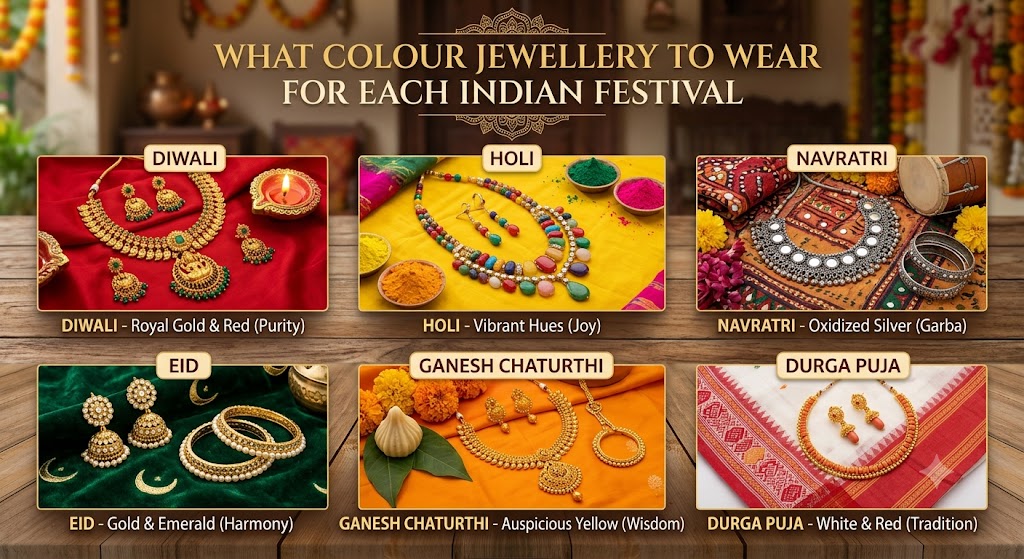
Traditional Diwali colours are red, maroon, gold and yellow, and many people also wear green, blue, pink, ivory and pastels. Gold-toned pieces are the usual choice with all of them.
-
Rich, saturated outfits such as red, maroon and deep green take detailed, warm-toned jewellery.
-
Pastels and ivory take lighter pieces with softer colour touches.
-
Heavily embroidered outfits need simpler jewellery so the two do not compete.
-
Plain outfits take a stronger piece.
The One-Focal-Piece Rule
The easiest way to get a Diwali look right is to choose one piece to be the focus and let everything else support it.
-
Bold earrings with a simple neckline, and no necklace or a fine one.
-
A bold necklace with studs.
-
Matching sets suit the most formal looks, but even then, the earrings usually carry the face.
Why Gold-Plated Jewellery Suits Festive Wear
Diwali involves several occasions in a short time, and each one calls for a different outfit. Gold-plated earrings suit this pattern, because plating allows detailed designs at an accessible price, so you can wear a different piece for each occasion. Festive wear also means occasional wear, which is the pattern that keeps a gold-plated finish looking good longest.
Keeping Gold-Plated Jewellery Looking Good Through the Festival
A festive week is a busy one, so build a short routine:
-
Put jewellery on last, after perfume, hairspray and make-up.
-
Take it off before bathing or sleeping.
-
Wipe each piece with a soft, dry cloth when you take it off.
-
Store each piece separately so the pieces do not scratch each other.
The jewellery care page has the quick reference, and the guide to caring for gold-plated earrings has the full routine.
Festive Jewellery Checklist
-
Pick the occasion, then the outfit, then the focal piece.
-
Match the necklace to the neckline.
-
Choose earrings you can wear comfortably for the full event.
-
Keep the other jewellery lighter than the focal piece.
-
Wipe and store each piece after wearing.
Frequently Asked Questions
What jewellery should I wear for Diwali puja?
Wear traditional pieces such as jhumkas or kundan-style earrings with a necklace that suits your neckline. Choose earrings that stay comfortable through a long ritual.
What earrings go with a Diwali saree?
Jhumkas and chandelier-style drops suit a saree well. If the blouse is heavily embroidered, choose earrings that are not too large.
Can I wear statement earrings with a lehenga?
Yes. Pair them with a simple necklace or a choker, since the dupatta and blouse already add detail.
What is the best jewellery for a Diwali party?
One bold piece, either statement earrings or an ear cuff, with a simple neckline.
What colour jewellery goes with red, maroon and green outfits?
Gold-toned jewellery is the usual choice with all of these colours. Let the outfit carry the colour, and keep the jewellery supporting it.
How many pieces of jewellery should I wear for Diwali?
One focal piece and one or two supporting pieces are enough. Wearing a bold necklace and bold earrings together can compete.
Choose Diwali jewellery by occasion first, then by outfit. Jhumkas and kundan-style pieces suit puja, studs and light drops suit family visits and the office, and statement earrings or ear cuffs suit parties. Let the neckline decide the necklace, wear one focal piece, and wipe and store gold-plated pieces after wearing. Gold-plated festive earrings and necklaces cover every look above, from jhumkas to ear cuffs.