Cart
0
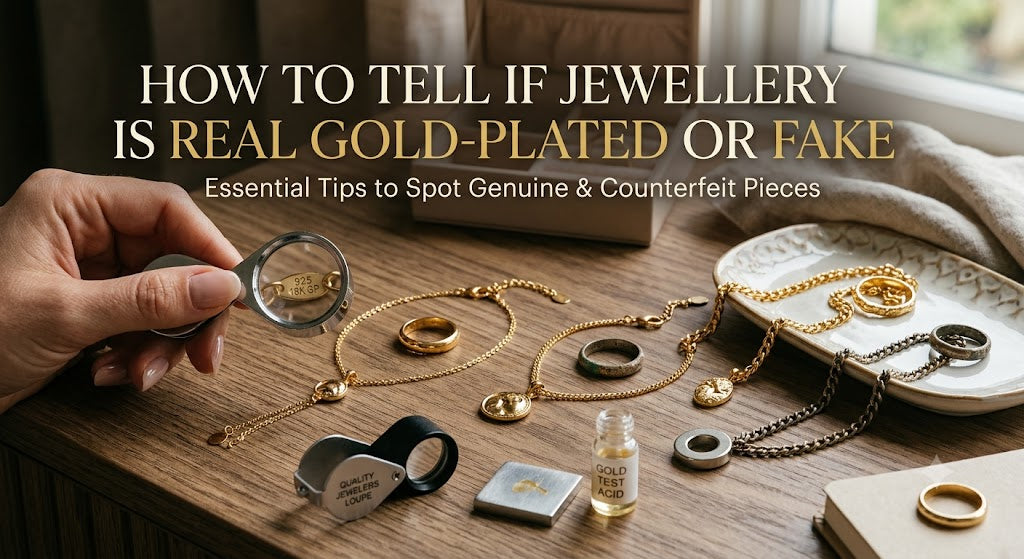

Real gold-plated jewellery is a base metal with a genuine layer of gold on the surface, sold as gold-plated. Fake jewellery is one of two things: a piece that only looks gold, such as gold-tone or painted metal, sold as if it had a gold layer, or a plated piece sold as solid gold. No simple home test can confirm a gold layer or measure its thickness. What you can do is check the label, the stamp, the price, the wear pattern and the seller's answers, and use a professional test when the piece is valuable.
This guide covers which checks give useful evidence, which ones mislead, and what a seller should be able to tell you.
What Real Gold-Plated Jewellery Is
Gold plating is the process of depositing a thin layer of gold onto a base metal such as brass, copper or sterling silver. Real gold-plated jewellery has that gold layer and is described as gold-plated. It is not solid gold, and it is not meant to be.
Three different things get confused with it:
|
Term |
What it means |
Gold content |
|
Gold plated |
A thin gold layer over a base metal |
A thin layer of real gold |
|
Gold tone, gold finish, gold colour |
The piece looks gold. The term describes appearance only |
Not defined, and may be none |
|
Solid gold |
Gold alloy all the way through |
Gold throughout, at the stated karat |
A seller who is honest about a plated piece calls it gold-plated. The problem cases are a gold-tone piece described as plated, and a plated piece described as solid gold.
Checks That Give Useful Evidence
These checks do not prove anything alone, but together they show whether the claim holds up.
|
Check |
What it tells you |
How much weight to give it |
|
Product description |
Whether the seller says plated, gold-tone, vermeil or solid |
High. A clear, specific description is the first sign of an honest seller |
|
Stamp or marking |
Whether the piece carries a plating or karat mark |
Medium. Stamps can be missing, misleading or false |
|
Price |
Whether the price fits the claim |
Medium. A low price for a piece sold as solid gold is a warning sign |
|
Wear pattern |
Whether a different colour shows at worn edges |
Medium. Worn plating shows the base metal at contact points |
|
Seller transparency |
Whether the seller names the base metal and finish |
High. Vague answers are a warning sign |
|
Return and care information |
Whether the seller explains care and returns |
Medium |
What Common Markings Mean
Markings give clues about what you are holding. The definitions below follow the US Federal Trade Commission's Jewelry Guides, which are guidelines for the US market and not an Indian standard.
-
GP, Gold Plated or Gold Electroplate means a thin gold layer applied over a base metal.
-
Vermeil, often with a 925 stamp, means gold over sterling silver. The gold vermeil standard requires a sterling silver base and a thicker gold layer than basic plating.
-
1/20 14K Gold Filled or GF means gold bonded to a base metal, with gold making up at least 1/20 of the weight.
-
A karat stamp such as 14K or 18K is meant to show solid gold. Karat stamps can appear on plated pieces, so a stamp alone does not prove solid gold.
Many genuine plated pieces carry no stamp at all, so a missing stamp does not make a piece fake. What matters is that the stamp, the price and the description agree with each other.
Tests That Mislead
Several popular home tests give results that look meaningful but are not.
-
The magnet test. Gold is not magnetic, so a piece that clings to a magnet is not solid gold. But many base metals are also non-magnetic, so a piece that does not cling is not proven to be gold or even plated. A strong pull is a clue. No pull proves nothing.
-
The skin test. A dark mark or a green mark on skin is not proof of fake gold. Cosmetics, sweat and some alloys can cause marks, and a real plated piece can mark skin once the gold wears thin.
-
The float or sink test. Many base metals sink in water, and hollow construction changes how a piece behaves. It cannot show gold content.
-
Weight and feel. A light piece may be hollow or small. Weight only means something against a genuinely similar piece.
-
Brightness. Plated gold often looks bright, but brightness is not a reliable sign of anything.
Tests That Can Damage the Piece
-
Acid testing. The acid reaches only the surface layer. Thick plating can pass it, and the acid can mark or damage the coating, settings and other parts. It is not suitable at home for a piece you want to keep.
-
Scratch testing. Scratching shows the metal underneath, but it damages the surface.
Neither test measures plating thickness in a way that is useful to a buyer.
When Professional Testing Makes Sense

A jeweller or testing lab can use X-ray fluorescence, usually called XRF. It reads the metals present at the tested spot without damaging the piece. It is the best option when a piece is expensive or sold as solid gold.
XRF has limits. It reads the surface and a limited depth, so coatings can affect the result, and a good tester checks several spots on the piece. For low-cost fashion jewellery sold plainly as gold-plated, testing usually costs more than the piece is worth.
Questions to Ask a Seller
A seller of real gold-plated jewellery should be able to answer plainly:
-
Is the finish gold plating, gold vermeil, gold-filled or gold-tone?
-
What is the base metal?
-
Is the plating applied by electroplating?
-
How should the piece be cared for so the finish lasts?
-
What is the return policy if the piece does not match the description?
A seller who avoids these questions, or answers with only words like "gold finish", is a warning sign. The answers also tell you what you are paying for, which is the core difference covered in gold-plated vs solid gold earrings.
Warning Signs of a Fake or Misleading Listing
-
The piece is called solid gold but priced like fashion jewellery.
-
The listing says only "gold" with no mention of plating, finish or karat.
-
The description changes between the listing, the label and the invoice.
-
The seller cannot name the base metal.
-
There is no return policy and no seller information.
Frequently Asked Questions
How can I tell if my jewellery is gold plated at home?
You cannot measure plating at home. Check the stamp, the description, the price and the worn areas, and compare them. If the piece is valuable, use a professional test.
Does a magnet prove jewellery is fake?
No. A strong pull suggests the piece is not solid gold, but a piece that does not cling is not proven to be gold or gold-plated, because many base metals are non-magnetic.
Is gold plating fake gold?
No. Gold plating is a real layer of gold on a base metal. It becomes misleading only when it is sold as solid gold.
What does gold tone mean?
Gold tone describes the colour of the finish. It does not say the piece contains any gold.
Can a green mark on my skin tell me the piece is fake?
Not by itself. It usually shows that the gold layer has worn thin and the base metal is reacting with sweat and moisture, which can happen on a genuine plated piece.
Should I test an inexpensive plated piece professionally?
Usually not. For fashion jewellery sold as gold-plated, a clear description from the seller and a fair price are the practical checks.
Real gold-plated jewellery has a genuine gold layer over a base metal and is sold as plated. Fake jewellery is either gold-tone metal sold as if it were plated, or a plated piece sold as solid gold. No home test measures plating, and the magnet, skin and float tests mislead, so rely on the description, the stamp, the price, the wear pattern and the seller's answers. Plated designs sold plainly as gold-plated, for festive, wedding and everyday wear, are what the gold-plated earrings collection is built around.