Cart
0
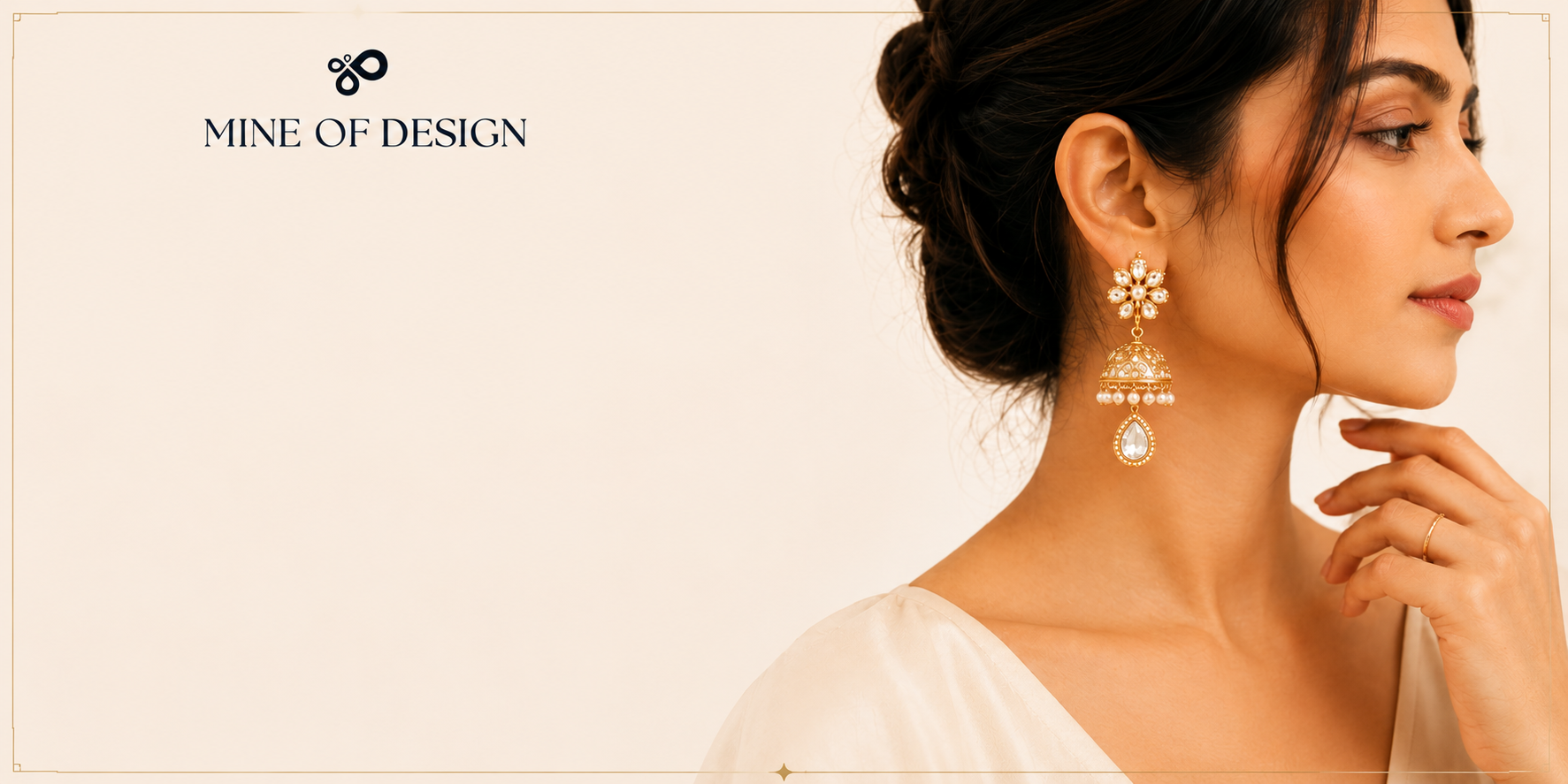
How to Style Statement Earrings for Any Occasion

Picking a bold pair of earrings is the easy part. The actual skill is in everything built around it — face shape, hairstyle, outfit, and the rest of your jewellery all determine whether a statement earring reads as intentional or like it's competing with the rest of the look. Get those four things right, and almost any statement design works. Get them wrong, and even the best earring can feel like too much.
This guide covers how to choose and wear statement earrings across face shapes, hairstyles, outfits, and occasions, so the earring stays the focal point rather than one of several things fighting for attention.
Choosing by Face Shape
-
Round faces are generally balanced best by earrings with some length or elongation — teardrops, longer dangles, or vertical drop shapes — since they add definition the roundness doesn't have on its own
-
Oval faces suit the widest range of statement shapes without much restriction, which makes this the easiest face shape to experiment with
-
Square or angular faces tend to look better with rounded or curved shapes — hoops, rounded dangles, soft geometric forms — which soften a strong jawline rather than echoing its angles
-
Heart-shaped faces are generally flattered by teardrop or chandelier shapes that add width near the chin, balancing a narrower lower face
-
Longer faces tend to suit wider, more horizontal statement shapes better than long vertical drops, which can add further length rather than balancing it
None of this is a fixed rule — it's a starting point for figuring out why some statement shapes feel instantly right on you and others don't, which is often more about proportion than personal taste alone.
Choosing by Hairstyle

-
Updos and short hair show off statement earrings fully, since nothing is covering the ear — this is where the boldest designs get the most visual payoff
-
Long, loose hair tends to hide smaller or more delicate statement pieces, so a larger design or one with brighter colour or texture holds up better against the hair covering part of the ear
-
Side-swept styles create an opportunity for an asymmetrical look — sweeping hair to one side and letting a single statement earring show on the exposed ear, while the other stays more covered
-
Half-up, half-down styles offer a middle ground, keeping the ears visible enough for a statement earring to register without needing hair fully off the face
If a statement pair keeps getting lost or feels underwhelming, it's often a hairstyle mismatch rather than a problem with the earring itself.
Choosing by Outfit
-
Bold, patterned, or colourful outfits generally call for a simpler statement earring, since two competing focal points tend to fight each other rather than complement
-
Minimalist, solid-colour outfits are where a dramatic earring gets to do the most work — this pairing is the classic "let the accessory lead" combination
-
Casual outfits — jeans, simple tops — suit hoops or playful dangles that add flair without tipping into full evening-glam territory
-
Evening and formal wear is where the boldest, most detailed designs — chandeliers, drop earrings with more sparkle or movement — earn their place
The general rule holds across all of these: let one element lead. If the outfit is already busy, the earring should be simple. If the outfit is simple, the earring can carry more visual weight.
Coordinating the Rest of Your Jewellery

-
Necklaces: skip entirely, or keep it to a delicate chain — a statement earring and a statement necklace worn together usually compete rather than complement
-
Rings and bracelets: fine to wear, but keep them understated so attention stays on the earrings
-
Watches: a sleek, minimal design works better alongside statement earrings than a bold or oversized watch face
-
Anklets or toe rings: a reasonable way to add a small extra detail elsewhere without pulling focus from the ears
The overall principle is the same one that applies to outfit pairing: statement earrings work best when they're the one clearly dominant piece, not one of several competing for attention.
Layering a Statement Earring Within an Ear Stack
A statement piece doesn't have to stand entirely alone. A common approach is to lead with the bold earring in your primary piercing and keep any additional pieces — small hoops, simple studs — deliberately understated, with enough spacing between pieces to keep the look clean rather than cluttered. An asymmetrical approach, with more detail on one ear and a simpler look on the other, is another way to let a statement piece stand out without needing to repeat it.
For a fuller breakdown of ear stacking and current trend combinations, see our guide on types of lightweight earrings and current trends, and for how statement pieces fit into a broader earring wardrobe, see statement vs. everyday earrings.
Quick Occasion Guide
-
Weddings and festive events: this is statement earrings' natural home — lean into scale and detail
-
Evening dinners and events: a slightly scaled-back statement piece, paired with a simple outfit, works well
-
Casual outings: hoops or playful dangles rather than full chandelier designs
-
Office and daytime settings: generally the one context where statement earrings need the most restraint, if worn at all — a smaller statement piece with simple styling elsewhere is the safer choice
FAQs
How do I know if a statement earring suits my face shape?
As a general guide, elongating shapes suit rounder faces, rounded or curved shapes suit angular faces, and wider shapes suit heart-shaped faces by adding balance near the chin.
What hairstyle shows off statement earrings best?
Updos and short hair show them off most fully, since nothing covers the ear. Long hair works better with larger or bolder designs that hold up against partial coverage.
Can I wear a necklace with statement earrings?
It's generally better to skip the necklace or keep it minimal, since a statement earring and a statement necklace tend to compete rather than complement each other.
Are statement earrings appropriate for the office?
Generally, statement earrings suit evening and occasion settings better than office environments. If wearing one at work, choose a smaller, simpler statement design and keep the rest of the styling minimal.
Can I wear statement earrings with a casual outfit?
Yes — hoops or playful dangles work well with casual outfits like jeans and simple tops, without needing to go as bold as a full evening look.
Is it okay to wear different earrings in each ear with a statement piece?
Yes — an asymmetrical approach, with a statement piece on one ear and something simpler on the other, is a common and effective way to style a bold earring without repeating it.
Find your next occasion piece in our statement earrings collection at Mine of Design.