Cart
0
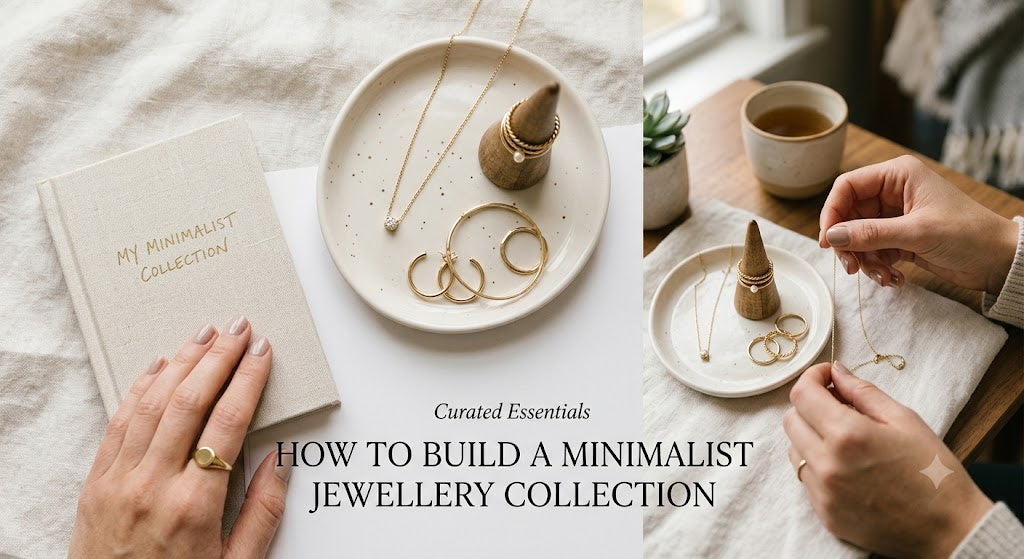

The most common way people end up with a disorganised minimalist jewellery collection is by buying pieces one at a time because each one individually looked simple and small — without any plan for how they'd work together. The result, a year later, is often a drawer of a dozen "minimal" pieces in three different metal tones that don't actually layer or rotate well as a system. Building a minimalist collection properly means applying real design criteria to every purchase from the start, not just favouring smaller, quieter pieces as they happen to catch your eye.
Start With Design Principles, Not a Shopping List
Before choosing individual pieces, it helps to filter every potential purchase through the actual characteristics that define minimalist jewellery: geometric, deliberate form; negative space used intentionally; little to no dense ornamentation; a restrained metal palette. A piece that's simply small isn't automatically a good fit for a minimalist collection — it needs to follow this design language, or it will read as a different, unrelated style sitting oddly next to the rest of your pieces, regardless of size.
Commit to One Metal Tone First

This is the single decision that affects everything else in the collection. Minimalist jewellery's core advantage — that every piece works with every other piece — depends heavily on metal consistency. Mixing gold-toned and silver-toned pieces within a small collection undermines exactly the effortless interchangeability that makes a minimalist wardrobe work in the first place. Pick the metal tone you already reach for most, and build the entire collection around it before considering a second tone as a deliberate addition later, not a default.
Build by Role, Not by Category Checklist
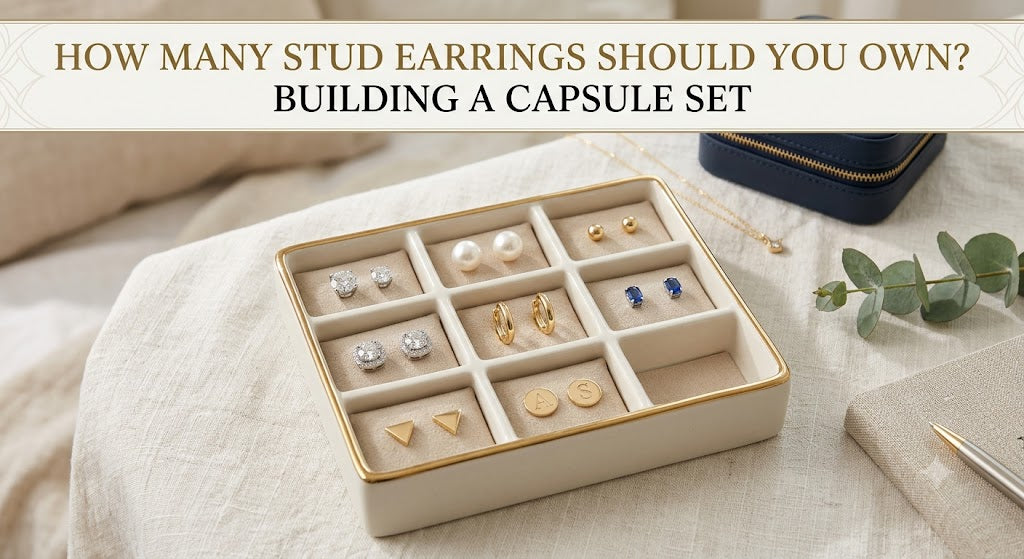
Rather than working through a generic list — "a necklace, a bracelet, a ring, some earrings" — think in terms of the roles each piece needs to fill in your actual routine, the same logic covered for earrings specifically in how many stud earrings should you own. A minimalist collection generally needs:
-
A daily-wear earring — a small geometric stud or thin hoop, worn most days without a second thought.
-
An anchor necklace — a simple chain or bar pendant that can be worn alone or layered under other pieces.
-
A stacking piece — a thin ring or bracelet designed to be worn alongside others rather than as a standalone statement.
-
One slightly dressier option per category — a marginally more detailed earring or necklace for days that call for a touch more polish, still within the same design language and metal tone.
Not every category needs multiple pieces immediately. Earrings, being worn most consistently, are usually worth the most initial investment in variety; a single well-chosen necklace and bracelet can often cover their category for a long time before a second piece becomes genuinely necessary.
How Many Pieces You Actually Need
There's no fixed number, but most well-built minimalist collections land somewhere around six to ten pieces total across all categories once each one is filling a genuine, distinct role rather than duplicating something already owned. This is meaningfully fewer than most people initially assume a "collection" requires — the discipline is in choosing pieces that each do real work, not in accumulating a complete set of every possible category and size.
Layering Within a Minimalist Collection

Minimalist pieces are specifically well suited to layering, and this is one of the more practical reasons the aesthetic has stayed popular: because each piece is restrained in form and consistent in metal tone, adding a second or third piece rarely creates visual clutter the way layering more ornate pieces can. Two or three thin necklaces of varying lengths, or a few slim stacking rings, read as one considered look rather than competing elements — see our comparison of minimal versus lightweight earrings for how this same restraint plays out specifically in earring pairing.
Building It Over Time, Not All at Once
As with any capsule approach, there's no need to buy a complete minimalist collection in one purchase. Starting with the daily-wear earring and anchor necklace — the two pieces that will get the most consistent use — and adding a new role only once an actual gap appears in your routine tends to produce a more genuinely useful collection than buying several pieces upfront based on guesswork.
Quality Considerations for a Collection Meant to Last
Because a minimalist collection is built around a small number of pieces worn repeatedly, each one gets proportionally more wear than it would in a larger, more varied jewellery box. This makes finish and construction quality worth paying attention to — a well-made gold-plated piece holds up to that repeated daily contact far better than a poorly finished one, regardless of how simple the design itself is.
Frequently Asked Questions
How many pieces does a minimalist jewellery collection need?
Most people land around six to ten pieces total once every piece serves a distinct role, though the right number depends entirely on how many categories and roles your actual routine calls for.
Should a minimalist collection stick to one metal tone?
Generally yes, at least initially — metal consistency is what makes the pieces interchangeable and easy to layer, which is much of the practical appeal of a minimalist collection in the first place.
Can a minimalist collection include statement pieces?
It can include one or two slightly more detailed options within the same design language and metal tone, but true statement pieces — built for visual impact rather than restraint — sit outside the minimalist category by definition.
What's the best first piece to buy for a minimalist collection?
A daily-wear earring or a simple anchor necklace are generally the strongest starting points, since they'll get the most consistent wear of anything you eventually add.
Pieces for building out each role are available within the minimal earrings collection.