Cart
0

A stud earring is a piece of jewellery that sits flush against the earlobe, held in place by a post passing through the piercing and secured from behind by a backing — with no chain, hoop, or hanging element involved. That single design principle, a fixed decorative front with no dangle or movement, is what separates studs from every other earring category: hoops encircle the lobe, drops and dangles hang below it, and ear cuffs skip the piercing entirely. Studs are defined by staying still.
The Anatomy of a Stud Earring
Every stud earring is built from three working parts, and understanding them makes the rest of this guide easier to navigate:
-
The front setting. This is the visible, decorative part of the earring — the stone, shape, or design element facing outward. Everything covered under "types" below is really a variation on this piece.
-
The post. A thin, straight length of metal that passes through the piercing. Post thickness and material matter more for studs than for almost any other earring style, since the post sits in direct, sustained contact with pierced skin.
-
The backing. The small piece that secures the post from behind the ear, stopping the earring from sliding out. Backing type affects comfort and security more than most buyers realise before choosing one.
Types of Backings
-
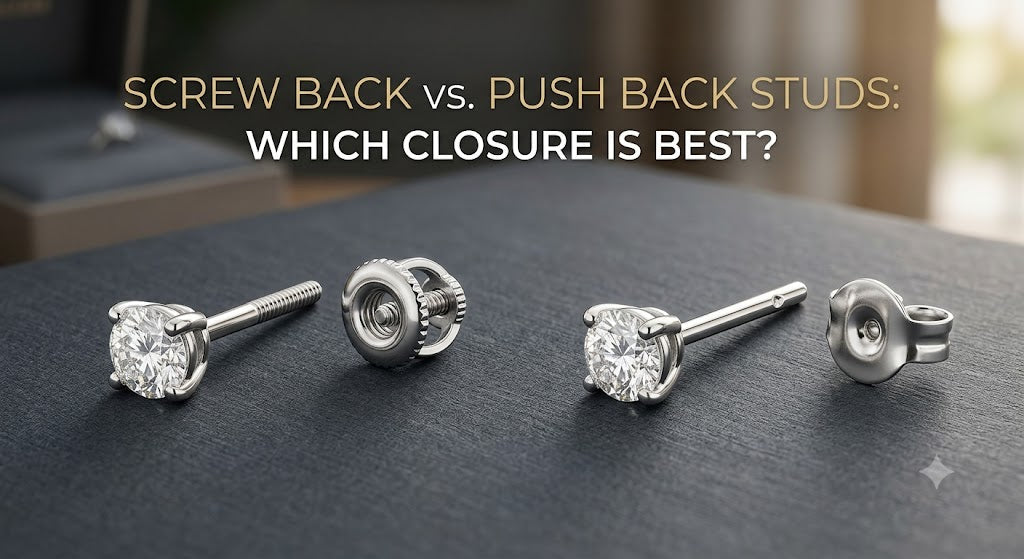
Butterfly (push) backs are the most common backing type — simple to put on and take off by pushing the back onto the post until it clicks into place. They're reliable for everyday wear but can occasionally work loose with heavy movement.
-
Screw backs thread onto the post rather than pushing on, giving a more secure hold. This makes them a common choice for heavier or more valuable studs, where the extra security is worth the slightly slower removal process.
-
Threaded flat backs screw into place and sit completely flush against the back of the ear, making them a comfortable option for sleeping in earrings or for anyone with sensitive ears who finds a protruding backing irritating.
-
Ball backs are soft, rounded backings that sit comfortably against the ear and are generally easy to put on and take off, striking a middle ground between the security of a screw back and the convenience of a butterfly back.
Anyone with a history of reacting to certain metals should pay particular attention to backing and post material, since studs keep metal in constant contact with pierced skin — see earrings for sensitive ears for more detail.
Types of Settings
The setting is how the front piece — a stone, in most cases — is held in place, and it affects both appearance and durability:
-
Prong settings use small metal claws to hold a stone in place, leaving most of the stone's surface visible. This is the most common setting for stone studs, since it maximises how much light and colour the stone shows.
-
Bezel settings surround the stone with a continuous metal rim rather than claws, offering more protection for the stone's edges at the cost of slightly less visible surface area. Bezel-set studs also tend to sit lower and flatter against the ear.
-
Pavé and halo settings use multiple smaller stones set closely together — pavé across a surface, halo specifically ringing a central stone — to add extra sparkle without increasing the size of the central design.
Types of Stud Earrings by Design

Studs come in a wide enough range of designs that most people can build an entire earring wardrobe within the category alone:
-
Solitaire studs feature a single central stone, typically round or another simple cut, and remain the most classic and versatile stud style.
-
Cluster studs group several smaller stones together into one design, creating more visual brilliance and surface area than a single stone of similar overall size.
-
Pearl studs use a single pearl as the front element, prized for their soft, classic look and versatility across both casual and formal wear.
-
Gemstone and birthstone studs use a coloured stone as the central design, often chosen for personal significance — see our birthstone jewellery guide for the full month-by-month list.
-
Crystal and CZ (cubic zirconia) studs use a faceted, colourless or coloured crystal to mimic the sparkle of a fine gemstone at a more accessible price point.
-
Plain metal studs — simple geometric shapes, small discs, or ball studs — rely on form and finish rather than a stone, making them the most minimal and versatile option in the category.
-
Floral studs use a flower-shaped front, ranging from delicate and realistic to stylised and geometric.
-
Halo studs ring a central stone with a border of smaller stones, adding visual size without the weight or cost of a larger single stone.
-
Motif and cultural studs — evil eye designs, symbols, or small charms — carry personal or cultural meaning beyond pure decoration, and have become a popular category of their own.
-
Statement or oversized studs push the scale of the front design well beyond a typical solitaire, offering more visual presence while still sitting flush against the ear rather than dangling.
Stud Earrings vs. Other Earring Styles

Studs are one of four broad earring categories, and understanding where they sit relative to the others helps clarify what makes them distinct. Hoop earrings form a closed or near-closed circular shape that encircles part of the lobe rather than sitting flush against it. Drop and dangle earrings hang below the lobe and move with the wearer, the opposite of a stud's fixed position. Ear cuffs skip the piercing structure altogether, gripping the cartilage through tension rather than a post-and-backing system. Studs are the only one of the four built specifically to sit still and close to the ear, which is exactly why they're so commonly recommended as an everyday, low-maintenance staple.
Choosing the Right Size and Proportion
Stud size is generally chosen based on how noticeable you want the earring to be relative to your ear and face. Smaller studs, in the 3–5mm range for a stone-set design, read as subtle and everyday; larger studs, from around 6mm upward, or statement designs well beyond that, read as more deliberate and occasion-appropriate. Face shape also plays a role: rounder stud shapes tend to soften angular features, while more geometric or pointed shapes add definition to softer, rounder face shapes.
Metal and Comfort Considerations
Because a stud's post sits inside the piercing itself, metal choice matters more here than for earring styles that only contact the outer ear. This is worth factoring in before buying, particularly for anyone building a stud collection meant for daily wear rather than occasional use — again, earrings for sensitive ears covers this in more depth.
Styling and Occasion
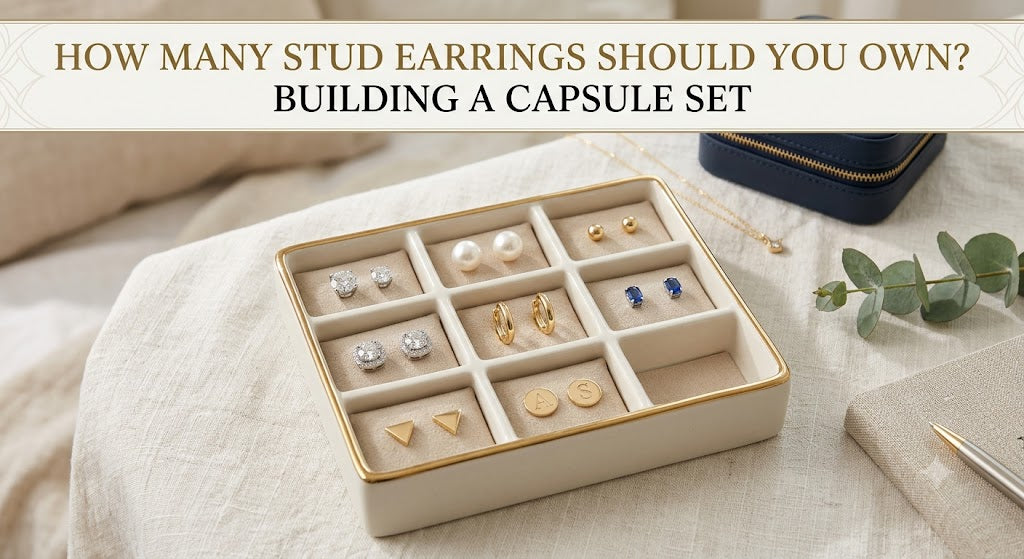
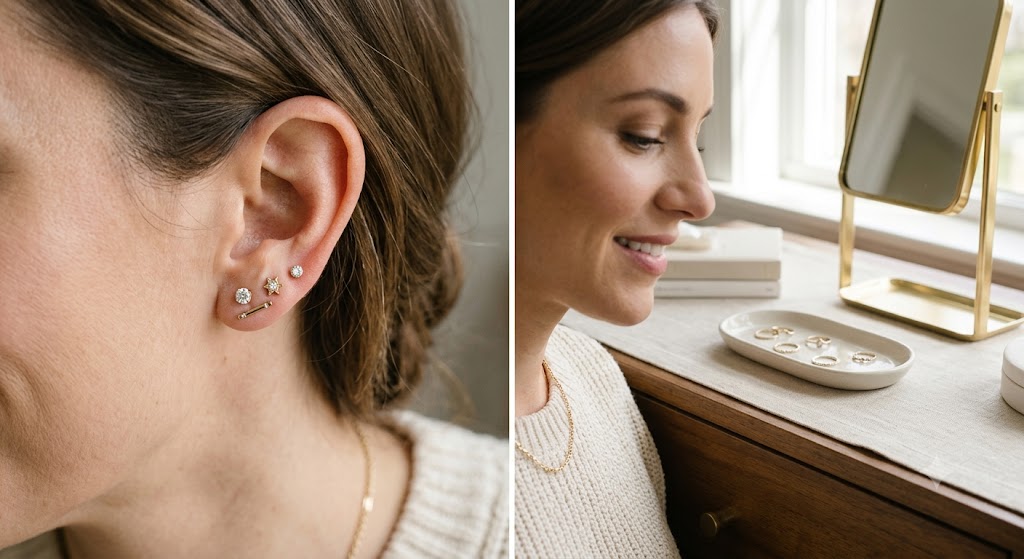
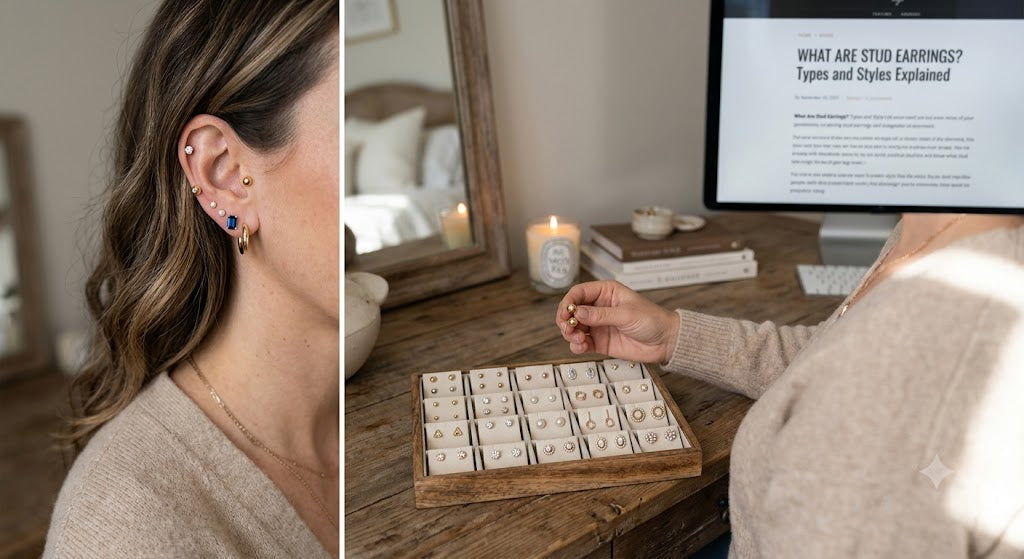
Studs are widely considered the foundational piece of any earring collection, precisely because their fixed, close-to-ear design works across nearly every occasion without competing with an outfit's other details. They're also a natural anchor point for layered ear looks — pairing a simple stud with a cartilage cuff or a small hoop is one of the most common ways to build a fuller "curated ear" without any single piece overwhelming the others. For daily rotation specifically, a small handful of versatile studs tends to get more consistent wear than any other earring category.
Frequently Asked Questions
What makes an earring a "stud" rather than another type?
A stud sits flush against the earlobe with no dangling or hanging element, secured by a post through the piercing and a backing behind the ear — the fixed, close-to-ear structure is the defining feature.
What's the most secure type of stud backing?
Screw backs are generally considered the most secure, since they thread onto the post rather than simply pushing into place, making them a common choice for heavier or more valuable studs.
Are prong or bezel settings better for stud earrings?
Neither is objectively better — prong settings show more of the stone and maximise sparkle, while bezel settings offer more protection for the stone's edges and sit lower against the ear. The right choice depends on priorities around visibility versus durability.
Can stud earrings be worn every day?
Yes — studs are widely considered the most practical, everyday-friendly earring category, largely because their fixed, low-profile design doesn't catch on hair or clothing the way dangling styles can.
The full range of styles described above is available within the studs collection.