Cart
0
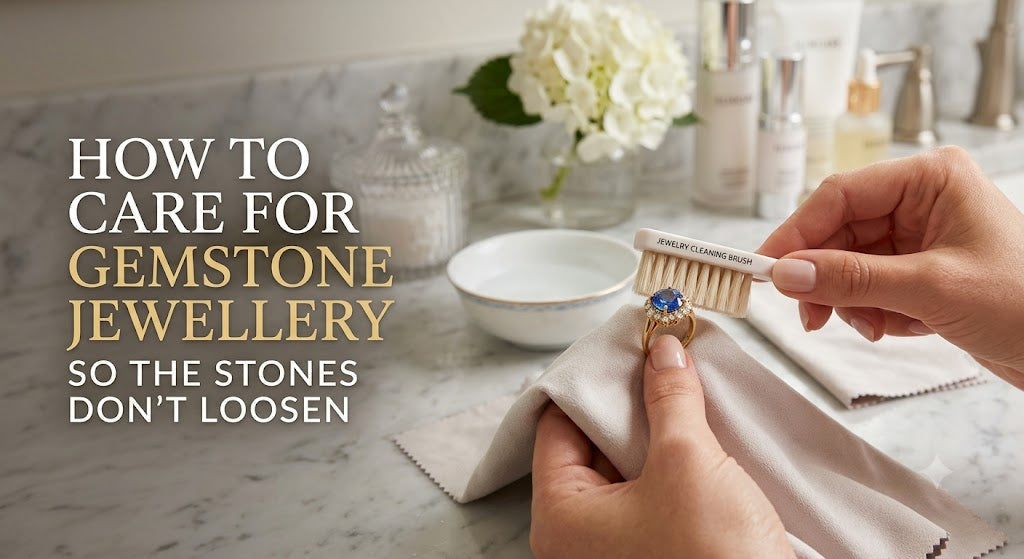

A stone rarely falls out of a piece of jewellery all at once. It loosens gradually, usually over weeks or months, through a combination of small impacts, temperature changes, and everyday contact that most people never connect to the moment they finally notice a stone wiggling — or missing entirely. Understanding what actually causes a stone to loosen, and building a few simple habits around it, is what separates a piece that lasts for years from one that quietly loses a stone within its first season of wear.
Why Gemstones Loosen in the First Place
Several factors contribute to a stone working its way loose, often in combination rather than isolation:
-
Impact. A knock against a hard surface — a countertop, a doorframe, an accidental bump — can shift a stone out of position or bend the metal holding it, even when the impact seems minor at the time.
-
Temperature fluctuations. Metal expands slightly in heat and contracts in cold. Repeated over months of wear, this cycle can gradually loosen the grip a setting has on a stone, even without any single dramatic event causing it.
-
Chemical exposure. Lotions, perfumes, hairspray, and cleaning products can build up around a setting over time, and in some cases actively weaken the adhesive or metal holding a stone in place.
-
Everyday wear and contact. Repeated friction — a ring brushing against fabric, a bracelet knocking against a desk — slowly wears down whatever is securing the stone, whether that's metal prongs or an adhesive bond.
-
Cleaning that's too aggressive for the setting. Scrubbing, soaking, or exposing a piece to an ultrasonic cleaner can dislodge a stone that was already loosening, even when the cleaning method seems gentle enough on the surface.
Fashion Jewellery vs. Fine Jewellery: A Different Setting, a Different Risk

This distinction matters more than most care guides acknowledge. Fine jewellery typically secures stones mechanically — prongs or a bezel gripping the stone directly, a method that fails through metal fatigue: prongs wearing thin, bending, or breaking over years of wear.
Accessible fashion jewellery, including gold-plated pieces with embedded stones, more often uses adhesive-set (glue-set) construction rather than prongs, since it's faster and more cost-effective to produce. This means the failure mode is usually different: rather than metal fatigue, the more common cause of loosening in glue-set fashion jewellery is the adhesive bond weakening over time, particularly from moisture, heat, or chemical exposure. Both types of jewellery benefit from similar preventive habits, but knowing which one you're dealing with helps you understand what's actually happening if a stone starts to feel loose.
Early Warning Signs to Check For
Catching a loosening stone early is almost always the difference between a simple fix and a lost stone:
-
Gentle wiggle. Lightly touch the edge of the stone (never press hard) — if it shifts or rotates slightly rather than sitting completely still, the setting is already compromised.
-
Visible gaps. A small gap between the stone and its setting, where none existed before, is one of the clearest early signs.
-
A dulled or slightly recessed stone. If a stone that used to sit flush now sits slightly lower or at a different angle than the surrounding setting, it's likely shifted.
-
Residue or discolouration around the setting, particularly on glue-set pieces, can indicate the adhesive is breaking down.
Daily Habits That Prevent Loosening

-
Remove jewellery before physical activity, chores, or sports. Impact risk and chemical exposure both spike during these activities, regardless of how the stone is set.
-
Apply lotion, perfume, and hairspray before putting jewellery on, not after. This single habit avoids the majority of chemical buildup around a setting.
-
Avoid extreme or sudden temperature changes where possible — leaving jewellery in a hot car, or moving quickly between very hot and cold environments, adds unnecessary stress to the setting over time.
-
Handle gently, especially around the stone itself. Avoid catching a piece on clothing, hair, or bedding, since snagging is one of the more common everyday causes of a shifted setting.
-
Limit water exposure, particularly for glue-set pieces — prolonged soaking, swimming, or showering with jewellery on isn't ideal for a bonded setting.
Storage Habits That Matter
How jewellery is stored between wears affects setting longevity nearly as much as how it's worn. Store pieces individually, or at least in a way that prevents them from knocking against other jewellery, since accidental contact in a drawer or pouch is a genuinely common, easily avoidable cause of loosened settings. Keep storage somewhere with stable temperature and humidity rather than somewhere prone to swings — a bathroom cabinet, for instance, sees more humidity and temperature variation than a bedroom drawer.
What to Do If a Stone Feels Loose
Stop wearing the piece as soon as you notice a stone wiggling, sitting unevenly, or showing a visible gap — continuing to wear it significantly increases the risk of losing the stone entirely. Rather than attempting a DIY fix, particularly on a glue-set piece where the wrong adhesive can do more harm than good, it's worth reaching out to the jeweller or brand directly; many pieces, gold-plated fashion jewellery included, are covered for exactly this kind of manufacturing concern under warranty.
Routine Inspection
Building a habit of checking frequently worn pieces every few months — a light wiggle test on each set stone, a visual check for gaps — catches most loosening issues well before a stone is actually at risk of falling out. This matters more for pieces worn daily than for those reserved for occasional wear, simply because of the cumulative contact and exposure involved.
For hardness-specific cleaning guidance once you know a stone's setting is secure, our gemstone ring care guide covers which cleaning methods suit which stones, and our general jewellery care page covers care beyond gemstone-specific concerns.
Frequently Asked Questions
Why does my gemstone jewellery keep coming loose?
A combination of impact, temperature changes, chemical exposure, and everyday wear gradually loosens most settings over time — it's rarely a single cause, and glue-set fashion jewellery specifically is more prone to adhesive breakdown than metal fatigue.
How can I tell if a stone is about to fall out?
A gentle wiggle test, a visible gap between the stone and setting, or a stone sitting at a slightly different angle or height than it used to are the clearest early warning signs.
Should I re-glue a loose stone myself?
It's generally safer not to, particularly on fashion jewellery — the wrong adhesive can damage the stone, the plating, or make a professional repair more difficult afterward. Checking the piece's warranty or contacting the seller is usually the better first step.
Is glue-set jewellery less durable than prong-set jewellery?
Not necessarily less durable overall, but the two fail differently — glue-set pieces are more vulnerable to moisture and chemical exposure weakening the adhesive, while prong-set pieces more often fail through metal fatigue from impact and years of wear.
Gemstone-set pieces are available within the Stone Age collection.