Cart
0
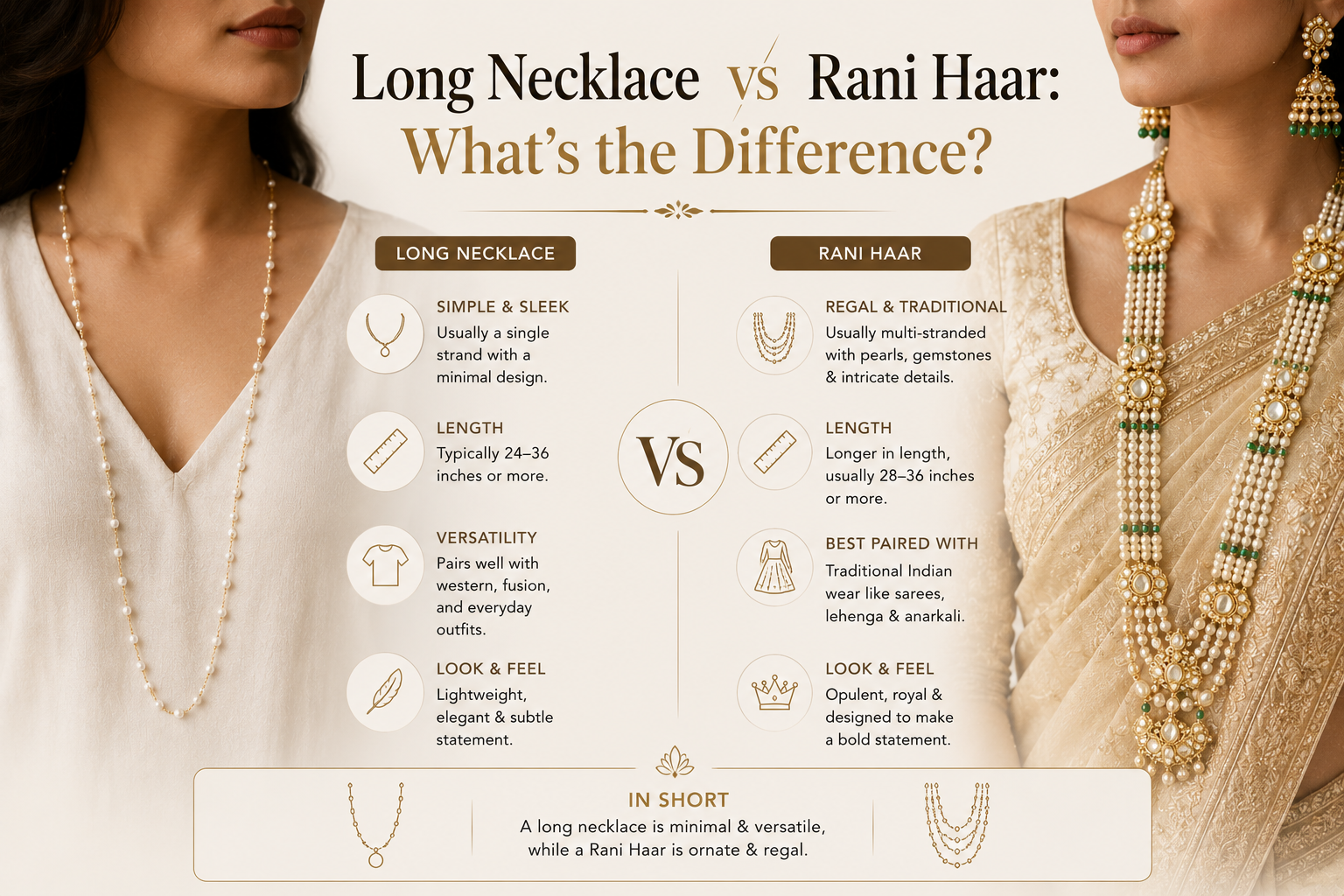
Long Necklace vs Rani Haar: What's the Difference?
A rani haar is not simply a longer long necklace — it's a distinct category with its own length range, construction convention, and cultural weight. A standard long necklace sits at 24 to 36 inches and can be a single strand or multiple. A rani haar sits at 36 to 48 inches and is almost always multi-stranded, carrying the ceremonial significance of North Indian bridal tradition that a standard long necklace doesn't claim.
This guide covers where that distinction actually comes from, what the name means, how a rani haar is traditionally constructed, and how each piece fits into real bridal styling.
What "Rani Haar" Actually Means

The name is literal: "rani" means queen, and "haar" means necklace or garland in Hindi. A rani haar is, by name, a queen's necklace — and the association isn't just decorative language. The style traces back to Rajput and Mughal court jewellery, worn historically as a marker of royal status, which is part of why it carries a level of ceremonial weight that a general "long necklace" as a category doesn't inherently have.
The Length and Construction Difference
- Long necklace: 24 to 36 inches, and can be built as a single strand or multiple strands depending on the design
- Rani haar: 36 to 48 inches, and almost always multi-stranded — a single-strand piece at rani haar length is uncommon, since the visual density of multiple strands is part of what defines the style
This is the practical core of the distinction: length alone would make a rani haar just "a longer necklace," but the near-universal multi-strand construction is what actually separates the category, alongside the cultural context it's worn in.
Panchlada and Satlada: Traditional Rani Haar Sub-Types

Within rani haar styling specifically, two traditional terms describe strand count:
- Panchlada — a five-strand rani haar
- Satlada — a seven-strand rani haar
In both, strand length typically increases slightly from the shortest at the top to the longest at the bottom, sometimes with the shortest strand carrying a larger central pendant and the remaining strands finished with smaller, matching motifs. This graduated strand structure is part of what gives a rani haar its characteristic fan-like drape across the chest, distinct from a simple multi-strand long necklace where strands may sit closer in length to each other.
How a Rani Haar Fits with Bridal Wear
Because a rani haar sits so much lower than a standard long necklace, where it lands relative to the outfit matters in a way that doesn't come up with shorter pieces:
- With a lehenga, a rani haar should sit above the waistband rather than disappearing beneath it — the piece is meant to be fully visible, not partially tucked away
- High-waisted lehengas generally suit a shorter rani haar, around 36 to 38 inches, so the piece ends cleanly at the natural waist rather than running past it
- Low-waisted lehengas allow room for a longer piece, around 40 to 44 inches, giving the rani haar's full length room to display properly
This kind of fit consideration doesn't really apply to a standard long necklace, which typically sits well above the waistline regardless of outfit style.
The Classic Layering Combination
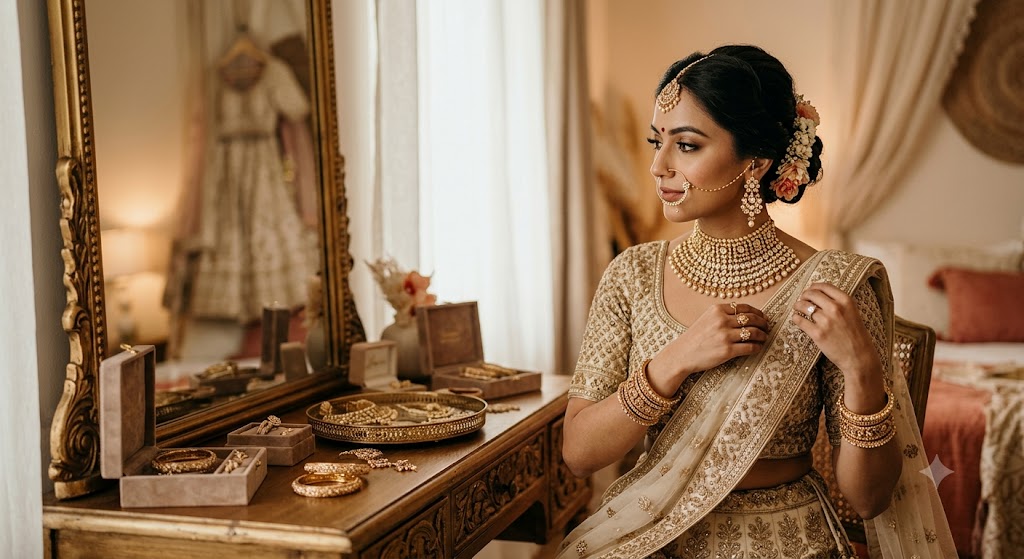
The traditional bridal pairing combines a choker at 14 to 16 inches with a rani haar at 36 to 48 inches. The two pieces occupy entirely different vertical zones — the choker frames the throat and face, while the rani haar fills the chest and waist — which is exactly why the combination works without the two pieces competing. This is the same zone-based logic we cover in more general terms in our guide on layering necklaces of different lengths, applied here to its most traditional and dramatic form.
Occasion Fit
- Rani haar: reserved for principal wedding ceremonies and major bridal occasions, where its scale and ceremonial association suit the significance of the event
- Standard long necklace: covers a much broader range — festive wear, wedding guest styling, and even simpler daily or office wear at the shorter end of its length range
If you're shopping for a wedding guest look rather than bridal wear specifically, a standard long necklace is generally the more versatile and appropriate choice; see our long necklaces collection for the fuller range. For bridal-specific pieces, our wedding jewellery collection covers occasion-scaled options, and our Mughal Kundan collection reflects the same craft tradition rani haar pieces are historically built from.
FAQs
What does "rani haar" mean?
It translates literally to "queen's necklace" — rani meaning queen and haar meaning necklace or garland in Hindi, reflecting its historical association with Rajput and Mughal royal jewellery.
Is a rani haar just a longer version of a long necklace?
Not exactly — while length is part of the distinction (36 to 48 inches versus 24 to 36 for a standard long necklace), a rani haar is also almost always multi-stranded and carries specific ceremonial and bridal significance that a general long necklace doesn't.
What are panchlada and satlada?
Traditional terms for rani haar strand count — panchlada refers to a five-strand piece, and satlada to a seven-strand piece, both typically graduated in length from top to bottom.
How should a rani haar fit with a lehenga?
It should sit above the waistband rather than disappearing beneath it. High-waisted lehengas generally suit a shorter rani haar (36–38 inches), while low-waisted styles allow for a longer piece (40–44 inches).
What's the classic way to layer a rani haar?
Paired with a choker at 14 to 16 inches — the choker frames the throat and face while the rani haar fills the chest and waist, occupying distinct vertical zones rather than competing.
Should I choose a long necklace or a rani haar for a wedding guest look?
A standard long necklace is generally the more versatile and appropriate choice for wedding guest styling, since rani haar is traditionally reserved for bridal wear and principal ceremonies.
Explore the full range in our long necklaces collection at Mine of Design.