Cart
0
Moti (Pearl) Necklaces: A Complete Style Guide
Moti is the Hindi and Urdu word for pearl, and in Indian jewelry it's used broadly — covering everything from genuine cultured pearls to glass, shell, or acrylic beads finished to look like pearls in affordable fashion jewelry. These are meaningfully different products, and knowing which one you're actually buying matters more than the shared name suggests, since real and imitation pearls behave very differently in price, durability, and care.
This guide covers what "moti" actually refers to, how genuine pearls and pearl-look beads differ, how to tell them apart, and how to style a moti necklace across occasions.
What "Moti" Actually Covers

Because moti is a broad, traditional term rather than a strict material category, it's applied to a wide range of actual products in the market:
- Genuine cultured pearls — real pearls formed inside a mollusk, cultivated with human intervention (nucleation) rather than found naturally, which is how the vast majority of pearls sold today are produced
- Natural pearls — formed without human intervention, considerably rarer and more expensive than cultured pearls, and uncommon in everyday fashion jewelry
- Imitation or faux pearls — beads made from glass, shell, or acrylic, coated with a pearl-essence finish to mimic the look of a real pearl, common in affordable fashion jewelry where the aesthetic matters more than material authenticity
None of these categories is inherently "better" for every use case — a faux pearl piece can be a perfectly reasonable fashion choice at its price point, provided it's sold and understood as what it actually is.
Real Pearl Types, Briefly

If you are specifically shopping for genuine pearls, a few terms are worth knowing:
- Freshwater pearls — cultivated in lakes and rivers, generally more affordable, with a wide range of natural shapes and colours
- Saltwater pearls — including Akoya, South Sea, and Tahitian varieties, generally higher in luster and roundness, and priced higher than freshwater pearls
- Round vs. baroque — round pearls are the classic, symmetrical shape; baroque pearls are irregular and organic in form, and tend to read as more casual and contemporary than a uniform round strand
How to Tell Real Pearls from Imitation Ones
A few checks help distinguish genuine pearls from faux beads, whether you're evaluating your own jewellery or shopping for new pieces:
- Surface texture: genuine pearls have subtle, natural irregularities; a perfectly smooth, glassy surface generally indicates an imitation
- Drill holes: genuine pearls show clean, layered edges at the drill hole; imitation beads often show chipping or a visibly painted coating around the hole
- Weight and temperature: genuine pearls feel cool to the touch initially and warm gradually; many imitations feel lighter and adjust to body temperature almost immediately
- The gentle tooth test: genuine pearls feel slightly gritty when lightly rubbed against a tooth, due to natural nacre layers; imitation pearls feel smooth or slick
None of these tests are definitive on their own, but together they give a reasonable sense of what you're working with.
The Cultural Significance of Moti
Pearls hold a distinct place in Indian tradition beyond their appearance. In Vedic astrology, moti is traditionally associated with the moon and is believed by many to represent purity, emotional balance, and calm. This traditional association is part of why pearl jewellery carries particular significance in Indian bridal and festive contexts specifically, beyond simply being a popular aesthetic choice.
Styling Moti Necklaces
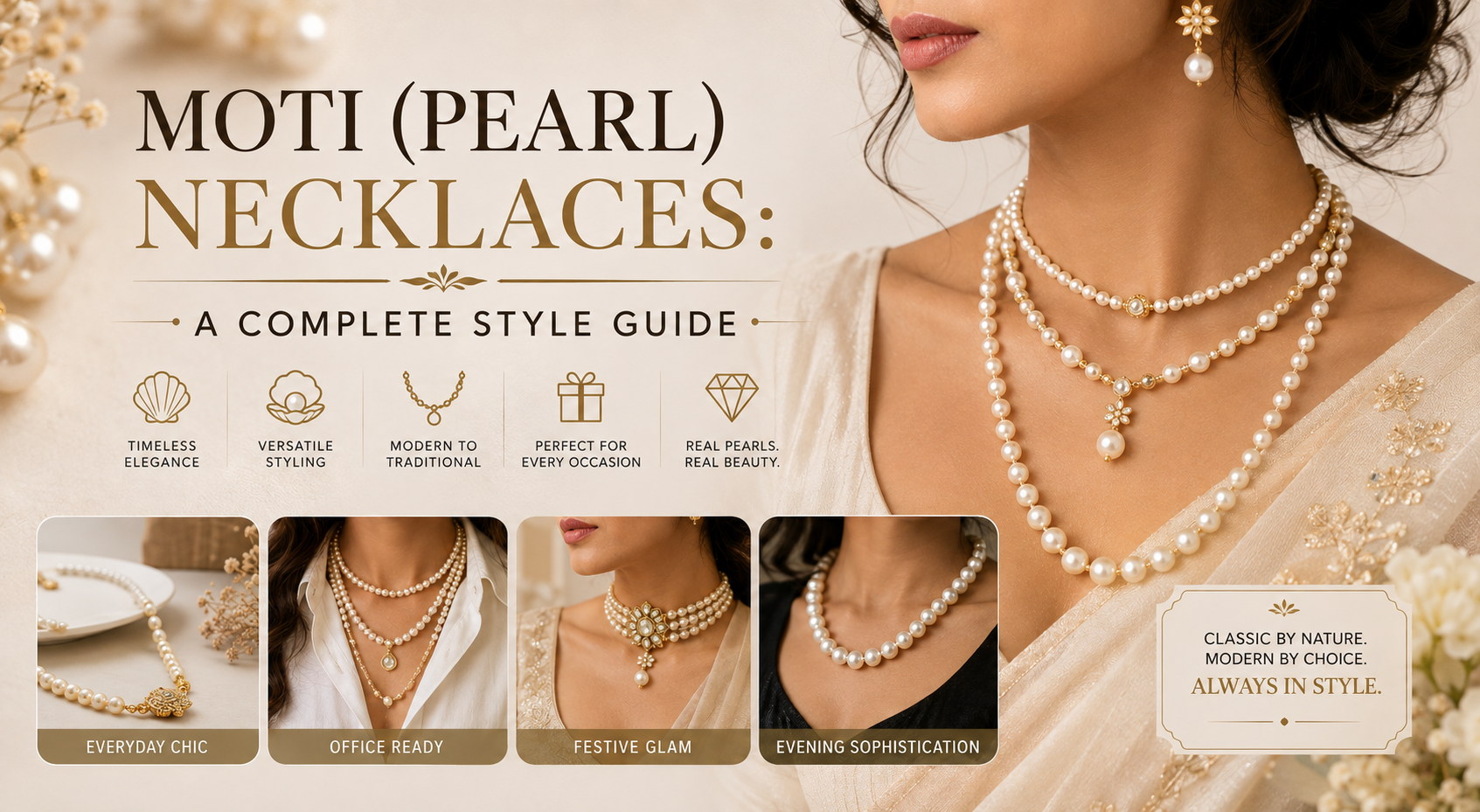
- Necklace length and neckline: a moti strand around 16 to 17 inches typically sits at the collarbone, working well with crew and V-neck styles; longer strands read more classic and traditional
- Layering with a thin chain: pairing a pearl strand or pendant with a simple metal chain gives a more contemporary look than a pearl piece worn entirely on its own — our layered necklaces collection covers this combination in more depth
- Mixing metals freely: pearls generally pair well with both gold and silver tones, so metal-matching rules apply less strictly here than with some other necklace materials
- Colour and skin tone: warmer skin tones tend to suit ivory, cream, and warmer-toned pearls; cooler skin tones tend to suit white, grey, or cooler-toned pearls, though this is a styling preference rather than a fixed rule
- Occasion range: baroque and mixed-material moti pieces tend to read as more casual and everyday-appropriate, while classic round strands in a choker or collarbone length lean more formal and festive
Choosing a Moti Piece by Occasion
- Everyday wear: a simple, shorter moti strand or a pearl pendant layered with a thin chain
- Festive and ethnic occasions: a fuller moti choker or layered piece pairs naturally with traditional outfits — see our choker necklaces and moti collections
- Weddings: multi-strand or layered moti pieces are a traditional choice for bridal and wedding-adjacent styling
Caring for Moti Necklaces
Pearls, real or imitation, need slightly different care than plain metal pieces:
- Apply perfume, hairspray, and skincare before putting a moti piece on, since pearls are more porous than metal and absorb residue more readily
- Avoid submerging pearls in water, even briefly
- Wipe gently with a soft, dry cloth after wear, rather than using any chemical cleaner
- Store separately from metal pieces to avoid scratching the pearl surface
For general jewellery care and cleaning frequency, see our guide on how often to clean everyday jewellery.
FAQs
What does "moti" mean?
Moti is the Hindi and Urdu word for pearl, used broadly to describe both genuine pearls and pearl-look beads in fashion jewellery.
How can I tell if a moti necklace has real or imitation pearls?
Check the surface for natural irregularities, examine the drill holes for clean layered edges versus chipping or paint, and note whether the beads feel cool and slightly gritty (real) or smooth and quick to warm (imitation).
Are freshwater pearls real pearls?
Yes — freshwater pearls are genuine cultured pearls, formed in mussels in lakes and rivers, generally more affordable than saltwater varieties like Akoya or South Sea pearls.
What's the difference between round and baroque pearls?
Round pearls are symmetrical and classic in shape; baroque pearls are irregular and organic, and tend to read as more casual and contemporary.
How should I care for pearl or moti jewellery?
Apply perfume and skincare before putting pearls on, avoid submerging them in water, wipe gently with a soft cloth after wear, and store them separately from metal pieces.
Are moti necklaces suitable for everyday wear?
Yes — shorter strands, baroque styles, or a pearl pendant layered with a thin chain all work well for daily wear, while fuller or multi-strand pieces suit festive and bridal occasions better.
Explore our moti pieces in the moti and moti necklaces collections at Mine of Design.