Cart
0
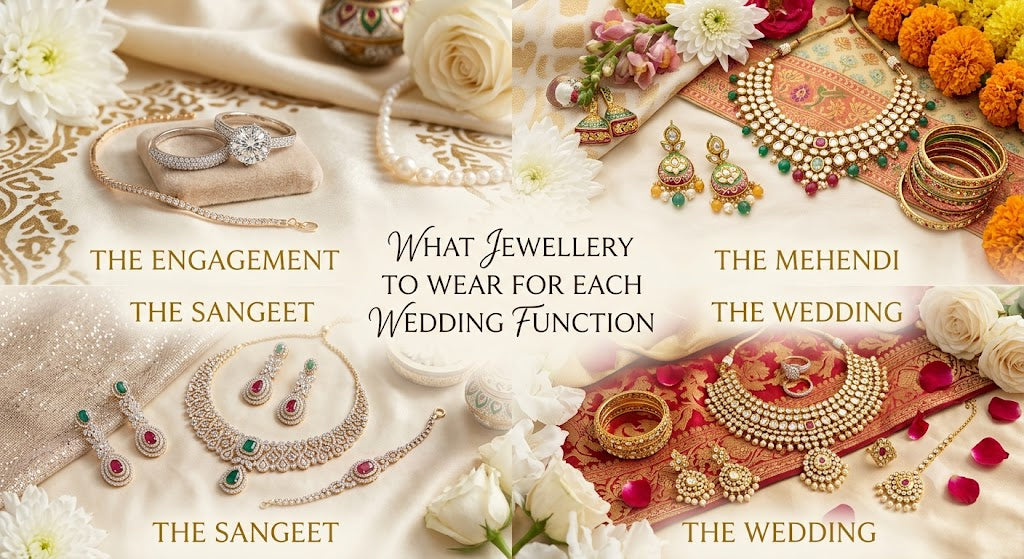

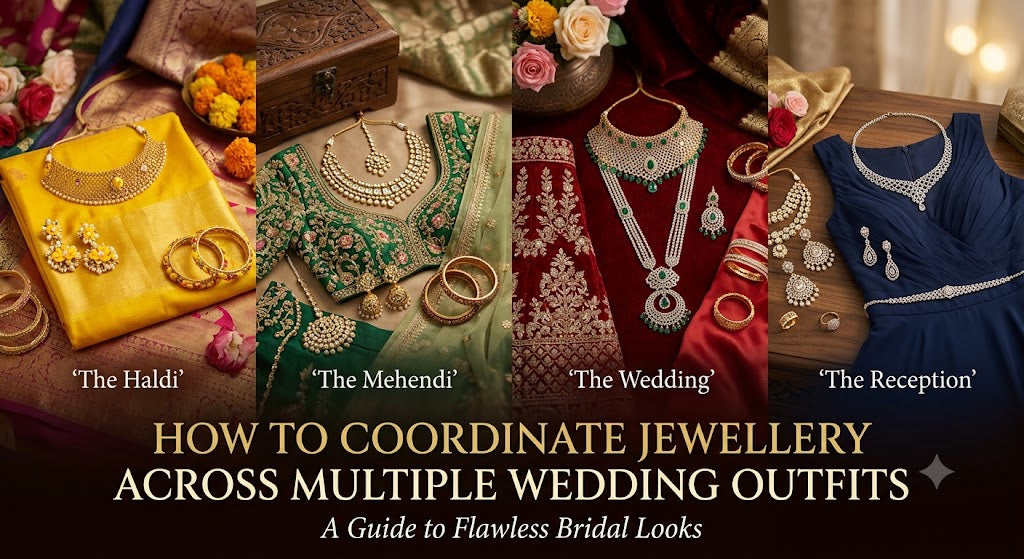
Wedding jewellery builds from light to rich across the functions. Haldi and mehendi call for minimal, floral or lightweight pieces. The sangeet suits bold, dance-friendly jewellery. The wedding ceremony is the most formal look and takes the richest set. The reception is the most flexible, with room for a modern or lighter look. Each function has its own outfit, setting and level of movement, and the jewellery should follow all three.
This guide goes through each function, says what to wear and what to avoid, and covers how to manage jewellery across several days. Customs differ by community and region, so use it as a general guide and follow family tradition where it applies.
Wedding Functions and Jewellery at a Glance
|
Function |
Setting |
Jewellery to wear |
What to avoid |
|
Haldi |
Daytime, informal, turmeric and flowers |
Minimal pieces, floral jewellery, simple earrings |
Precious or delicate pieces |
|
Mehendi |
Long hours seated, henna on hands |
Statement or floral earrings, hair flowers |
Bangles, rings and bracelets while the henna dries |
|
Sangeet |
Evening, dancing, stage lighting |
Bold earrings, a choker or statement necklace |
Heavy pieces that make dancing hard |
|
Wedding ceremony |
Most formal, long rituals |
The full bridal or formal set |
Pieces that clash with the outfit's detail |
|
Reception |
Evening, relaxed formal |
Modern or lighter pieces, or a contrasting look |
Repeating the wedding look |
How Wedding Jewellery Builds Across the Functions
Wedding jewellery follows the energy of the event. The early functions are playful and informal, so the jewellery is light. The sangeet is the high-energy night, so it is bold but built for movement. The wedding ceremony is the centre of the celebration, so it takes the richest look. The reception comes after the ceremony, so it can change direction.
Three questions help at every function:
-
How formal is it? The more formal the event, the richer the jewellery.
-
How much will you move? Dancing and sitting on the floor both limit what is practical.
-
What is the outfit doing? A heavily embroidered outfit needs quieter jewellery.
Haldi Jewellery

The haldi is a daytime function where turmeric paste is applied, often with flowers and plenty of mess. Outfits are usually yellow, orange or other bright colours in light fabrics.
-
Earrings: small jhumkas, simple gold-toned earrings or floral earrings.
-
Floral jewellery: flower garlands, floral maang tikka and floral bracelets suit the setting and match the colours.
-
Necklace: a light necklace or none.
-
Avoid: precious or delicate pieces, because turmeric can stain, and keep pieces you would hate to mark at home.
Choose pieces you can wipe clean afterwards, and do not wear anything that matters to you for the paste or the water.
Mehendi Jewellery
The mehendi is a long, relaxed function where much of the time is spent seated while henna is applied. Outfits are often green, with bright accents.
-
Earrings: jhumkas, chandelier earrings or floral earrings, because the earrings are the jewellery that is free to wear.
-
Hair: fresh flowers such as mogra, marigold or rose petals.
-
Hands and wrists: leave bangles, bracelets and rings off until the henna has dried, so they do not smudge the design.
-
Neck: a simple necklace, if the outfit calls for one.
Sangeet Jewellery

The sangeet is the evening of music and dancing, and the outfits are usually bold. Jewel tones and metallics are common, and lehengas, embellished anarkalis and indo-western gowns are popular.
-
Earrings: bold earrings or statement earrings, which stand out under stage lighting.
-
Necklace: a choker or statement necklace. Kundan jewellery and Mughal kundan pieces suit the occasion.
-
Hair: a sleek bun or a statement hairpin shows off the earrings.
-
Comfort: dance in the jewellery before the night if you can. If heavy earrings drag, see how to wear heavy earrings without pain.
Wedding Ceremony Jewellery

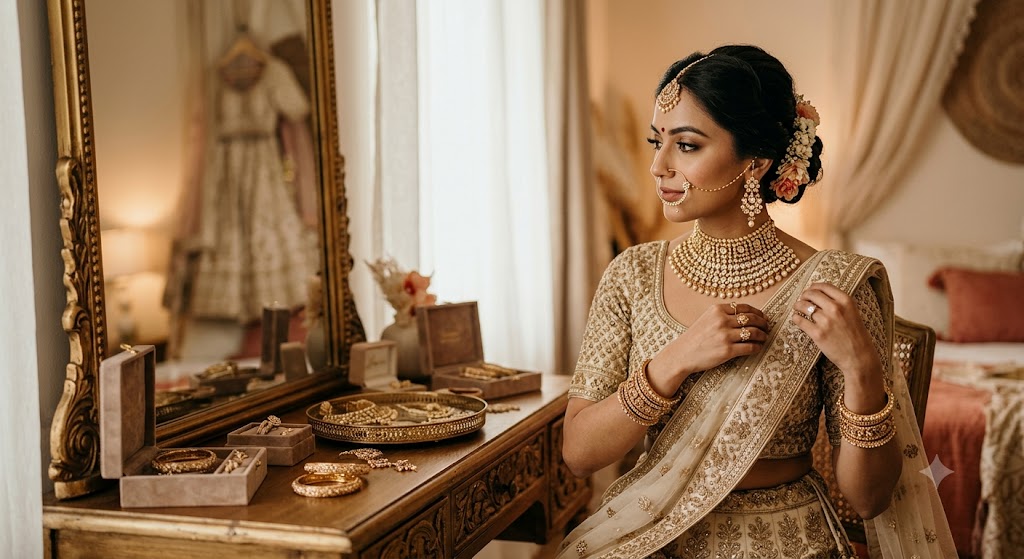
The wedding ceremony is the most formal function. The bride usually wears the full bridal look, and family and guests dress formally too. Red, maroon and pink are common for brides, and many communities have their own traditions for colour, fabric and ceremonial pieces.
-
For the bride: a coordinated set, usually including a necklace, earrings, head ornament and bangles, planned with the outfit. The guide to building a bridal jewellery set explains how the pieces fit together.
-
Necklace length: match it to the neckline, as explained in necklace length for your neckline.
-
For guests: festive jewellery with one focal piece, lighter than the bride's look.
-
Balance: the more detailed the outfit, the quieter the other pieces should be.
-
Comfort: the ceremony is long, so choose earrings you can wear for hours.
Reception Jewellery
The reception is the most flexible function. The bride often changes outfit, and the look is usually more modern, with indo-western styles, gowns, pre-draped sarees and lighter lehengas.
-
Earrings: studs, drops or statement earrings, depending on the outfit.
-
Necklace: a simpler necklace, or a choker with a lighter outfit.
-
Contrast: a lighter look can contrast with the wedding ceremony, so the two outfits do not repeat.
-
Guests: festive or cocktail-style jewellery, with one focal piece.
Choosing by Outfit Colour
|
Function |
Common outfit colours |
Jewellery tone |
|
Haldi |
Yellow, orange, marigold |
Gold-toned or floral, kept light |
|
Mehendi |
Green, with bright pinks and teals |
Gold-toned or oxidised, with floral accents |
|
Sangeet |
Jewel tones and metallics |
Gold-toned, with one bold focal piece |
|
Wedding ceremony |
Red, maroon, pink, and community-specific colours |
Rich gold-toned sets, matched to the outfit |
|
Reception |
Pastels, metallics, jewel tones |
Gold-toned or lighter modern pieces |
A gold-toned base works across most of these colours, which makes it easier to move jewellery between functions.
Managing Jewellery Across Several Days
Wedding functions run over several days, and the jewellery needs a plan:
-
Make a function list with the outfit and the jewellery for each, in order.
-
Reuse pieces across functions by changing the styling around them. The same jhumkas can work for the mehendi and, with a different outfit, for the reception.
-
Pack by function, with each outfit's jewellery in its own pouch.
-
Wipe each piece after wearing with a soft, dry cloth, and store it separately so pieces do not scratch each other.
The jewellery care page has a quick reference, and gold-plated earrings suit this kind of occasion wear, because the designs are detailed and the pieces are worn on a limited number of days.
Frequently Asked Questions
What jewellery should I wear to a haldi?
Wear minimal, floral or lightweight pieces, and avoid precious or delicate jewellery, because turmeric can stain.
Should I wear bangles to a mehendi?
It is better to leave bangles, bracelets and rings off until the henna has dried. Earrings and hair flowers are the jewellery to wear.
What jewellery suits a sangeet?
Bold earrings and a choker or statement necklace suit the evening and the dancing. Choose pieces you can move in comfortably.
What should a bride wear for the wedding ceremony?
A coordinated bridal set planned with the outfit. Many communities have their own customs, so follow family tradition.
Can I wear the same jewellery to more than one function?
Yes. Change the outfit and the styling around the piece, and it can work at a second function.
What jewellery should a guest wear to a wedding?
Festive jewellery with one focal piece, lighter than the bride's look.
How many jewellery sets do I need for a multi-day wedding?
Fewer than you might think. A gold-toned base with several pieces that work across functions covers most of the days.
Wedding jewellery builds from light to rich. Haldi and mehendi suit minimal and floral pieces, with bare hands at the mehendi. The sangeet suits bold, dance-friendly jewellery, the wedding ceremony takes the richest set, and the reception can go modern. Match each function's jewellery to its setting, movement and outfit, and plan the pieces across the days. Wedding jewellery in a gold-toned base is the easiest way to build that plan.