Cart
0

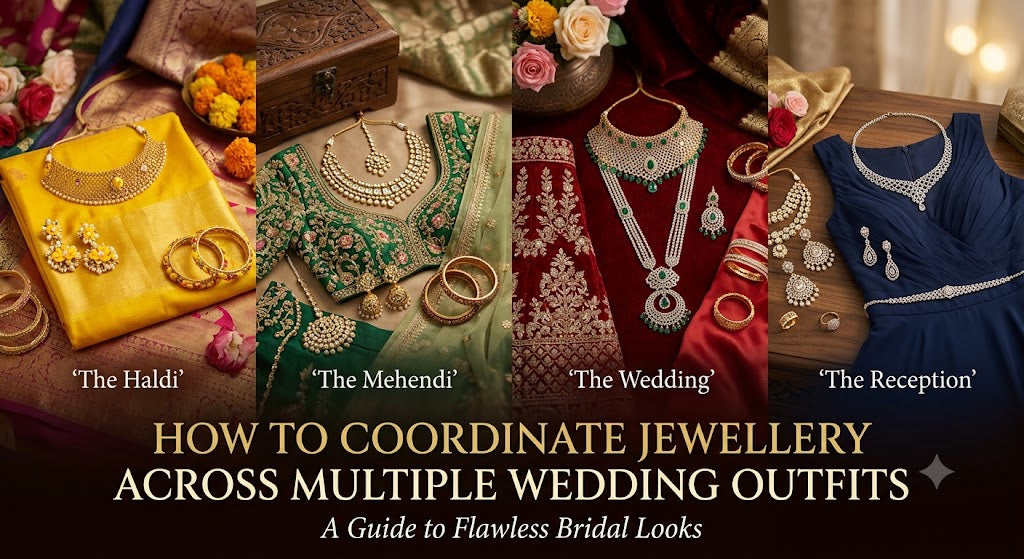
A wedding look has too much jewellery when the pieces compete with each other or with the outfit, or when you cannot move, eat or dance comfortably. The usual fix is one focal piece: let one item lead, keep the rest quiet, and adjust for the neckline and the embroidery. For many brides a full set is standard, so "too much" depends on the role, the outfit and your family's customs.
This guide gives a simple balance test, shows how the rule changes for the bride, bridesmaids and guests, and explains how to edit a look that has gone too far.
What "Too Much" Means in a Wedding Look
"Too much" is about balance, not a piece count. A look is overloaded in three situations:
|
Sign |
What it looks like |
|
Competing pieces |
Heavy necklace, oversized earrings, head ornament and wide bangles all fighting for attention |
|
Outfit clash |
Jewellery added on top of heavy embroidery, so neither stands out |
|
Discomfort |
You are weighed down, or the jewellery gets in the way of moving, eating or dancing |
The One-Focal-Piece Rule
Styling guides repeat one idea: let one piece be the star. The other pieces support it in the same metal tone and at a smaller scale.
|
If the focal piece is |
Keep these quieter |
|
A heavy necklace |
Small earrings such as studs or small drops |
|
Oversized earrings |
A thin chain, or no necklace |
|
A head ornament |
Moderate earrings |
|
A bold bangle stack |
Simple earrings and necklace |
For earrings, the guide to statement vs everyday earrings explains when a pair should lead and when it should recede, and minimal earrings are the quiet partner for a statement necklace.
How Much for the Bride, Bridesmaid and Guest

|
Role |
How far it can go |
|
Bride |
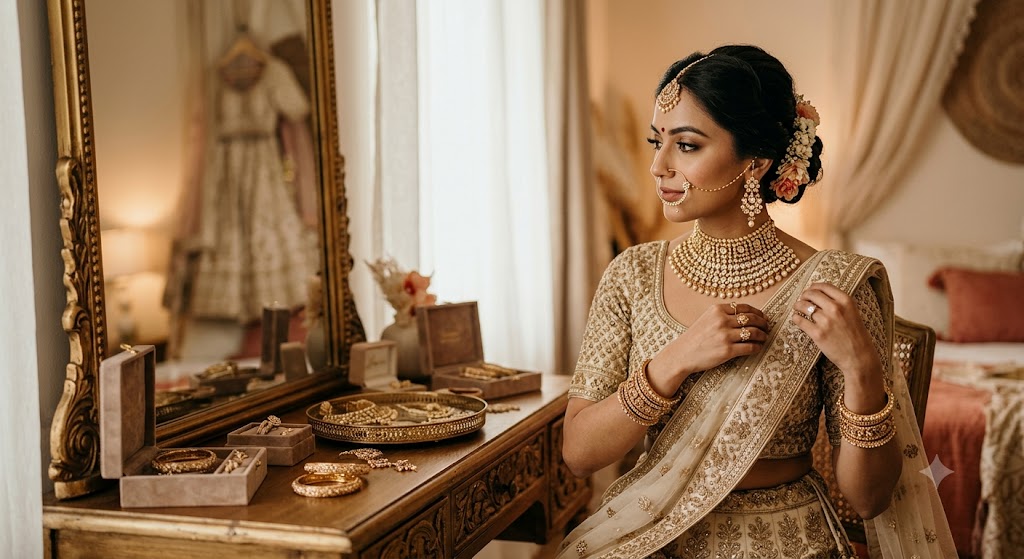
A full set is standard in many families, usually a necklace, earrings, head ornament and bangles, though one focal point still looks more polished |
|
Bridesmaid |
Lighter than the bride, with one focal piece |
|
Guest |
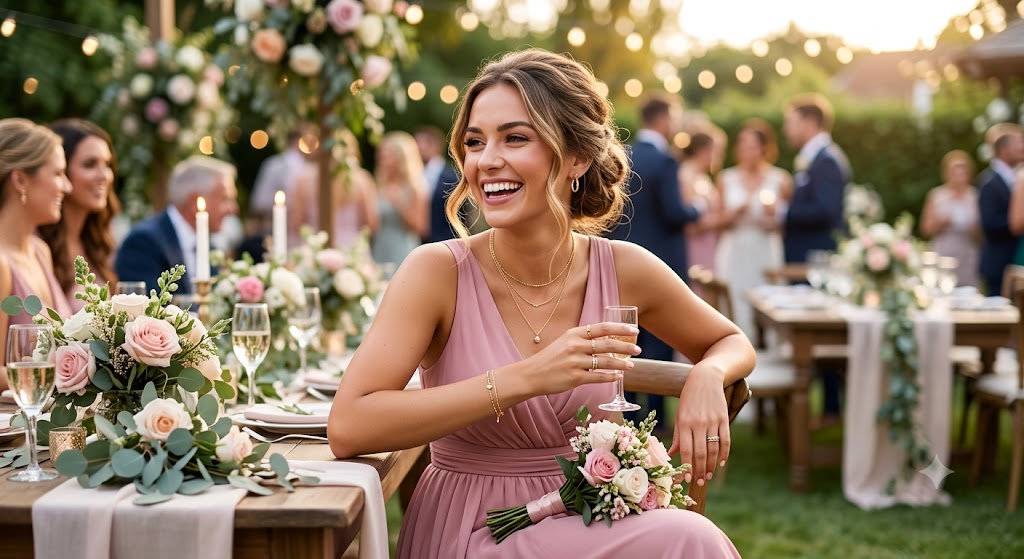
Lighter again, with one focal piece, and nothing that reads as a full bridal set |
The guide to building a bridal jewellery set explains how a bride's set is put together. Guests and bridesmaids should keep to "less is more" and ask the bride when unsure.
Balance Test: Four Quick Checks
-
Photo check. Put on the necklace, take a photo, then try the earrings alone. If you feel weighed down, remove something.
-
Eye check. Look at the mirror once. If your eye does not settle on one place, there are too many leads.
-
Movement check. Turn, sit, raise your arms and dance a few steps. Pieces should stay put.
-
Comfort check. Wear the full look for an hour. If anything pulls or pinches, change it.
Adjust for the Outfit
The outfit decides how much room there is.
|
Outfit |
What to do |
|
Heavy embroidery or embellishment |
Use lighter or open-design jewellery, so the outfit does not look cluttered |
|
Simple, plain or pastel outfit |
You can go bolder |
|
Heavy embroidery at the wrist |
Fewer bangles |
|
Busy-patterned or sequined outfit |
Keep the jewellery quiet |
Match the metal tone to the embroidery. Gold zari goes with gold-toned pieces, and mixing tones on a heavily embroidered outfit can look messy.
Adjust for the Neckline
|
Neckline |
What works |
|
Deep V or sweetheart |
A choker or V-shaped pendant |
|
High neck or boat neck |
Statement earrings, or a long necklace, and no short necklace |
|
Off-shoulder or strapless |
A choker, or bare neck with bold earrings |
The guide to necklace length for your neckline explains the match, and types of choker necklaces helps if a choker is your lead piece. For layers, see how many necklaces to layer.
When Heavy Pieces Are Part of the Plan

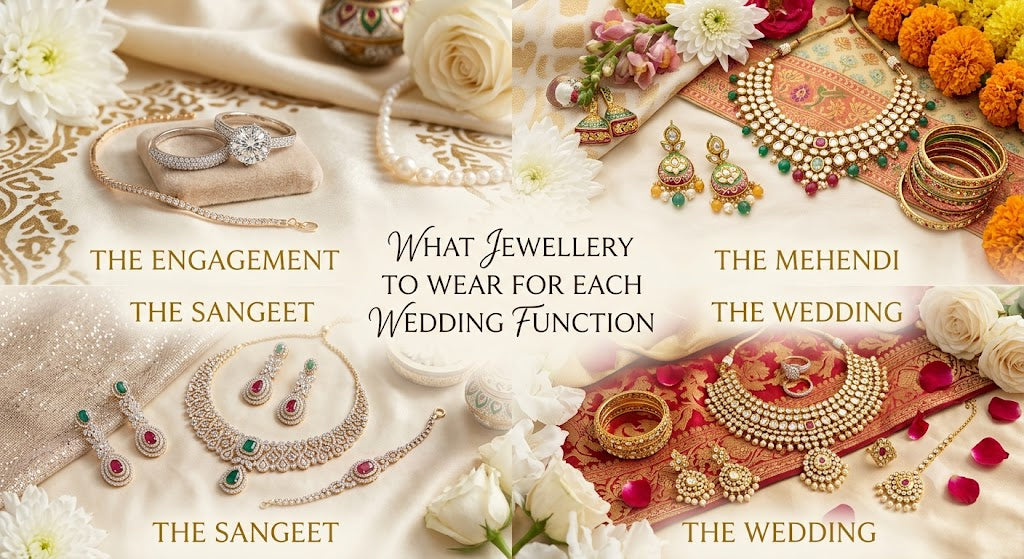
Some looks include heavy earrings or a full set on purpose. Then comfort becomes part of the balance. The guide to wearing heavy earrings without pain covers how to carry them through a long day, and earring backings for heavy earrings explains what keeps them in place. If you are planning pieces for several functions, how many earrings for daily rotation helps you decide how many pairs you need.
How to Edit a Look That Is Too Much
-
Choose the lead piece. Decide which single item is the star.
-
Remove or shrink one item at a time and check the mirror again.
-
Swap bold pieces for quieter versions in the same tone.
-
Skip the piece that duplicates another. If the necklace is rich, you may not need the head ornament too.
-
Check comfort last.
Common Mistakes
-
Wearing every piece you own rather than choosing one focal point.
-
Pairing a heavy necklace with oversized earrings.
-
Using a short necklace with a high neckline.
-
Mixing tones on a heavily embroidered outfit.
-
Skipping the comfort test until the day.
Frequently Asked Questions
How much jewellery should a bride wear?
Many brides wear a full set, but a single focal point usually looks more polished. Follow family tradition where it applies.
How many pieces is too many?
There is no fixed number. It is too many when pieces compete with each other or the outfit, or when you cannot move comfortably.
Can I wear a necklace and statement earrings together?
Only if one leads. Pair a bold necklace with small earrings, or bold earrings with a thin chain.
How much jewellery should a wedding guest wear?
Less than the bride, with one focal piece.
What if my outfit is heavily embroidered?
Choose lighter or open-design jewellery in the same metal tone as the embroidery.
How do I know if I am overdoing it?
Take a photo, move around and wear the look for an hour. If you feel weighed down, remove a piece.
Too much jewellery means pieces compete with each other or the outfit, or comfort suffers. Choose one focal piece, keep the others quieter in the same tone, adjust for the neckline and the embroidery, and test the full look before the day. Wedding jewellery works best when the pieces are chosen as one balanced set, not added one by one.