Cart
0
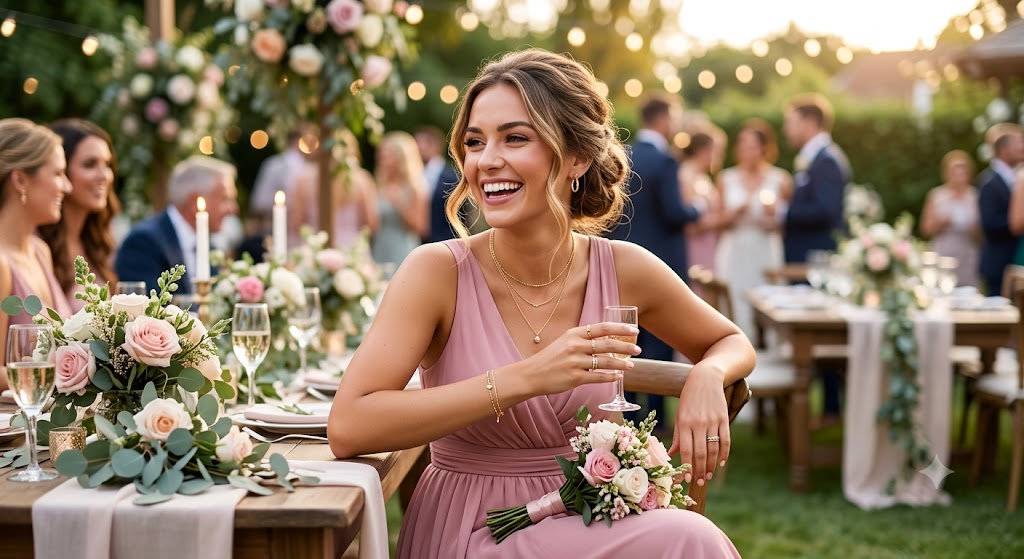

As a bridesmaid or wedding guest, wear jewellery that complements the bride, stays lighter than hers, suits the function and stays comfortable for hours. Choose one focal piece, keep the rest simple, and leave the most bridal pieces to the bride. A pair of statement earrings with a simple neckline, or a single traditional necklace with small earrings, is enough for most functions.
This guide covers the rules for guests and bridesmaids, what to wear to each function, how to match jewellery to an outfit, and how to coordinate with the rest of the bridal party.
Bridesmaid vs Guest: What Is the Difference?
The two roles share most of the rules, with one difference.
|
Role |
What it means for jewellery |
|
Guest |
You choose your own look, within the function's dress level, and stay lighter than the bride |
|
Bridesmaid |
You do the same, and also coordinate with the bride and the other bridesmaids, so the group looks planned |
A bridesmaid often agrees colours and outfits with the bride, so the jewellery follows those choices. A guest has more freedom, but the same limits on scale and formality apply.
Six Rules for Bridesmaid and Guest Jewellery
|
Rule |
What to do |
Why |
|
Do not outshine the bride |
Keep your look lighter than hers |
The bride is the focus of the wedding |
|
One focal piece |
Choose earrings or a necklace, not both bold |
Competing statements crowd the look |
|
Leave bridal pieces to the bride |
Avoid wearing a full bridal combination |
A full bridal look can read as competing |
|
Match the function |
Dress up or down for the event |
Each function has its own dress level |
|
Choose comfort |
Wear lightweight pieces |
Guests may wear jewellery for many hours |
|
Match the outfit |
Choose a metal tone that suits the zari, embroidery and colour |
A matched tone looks planned |
Pieces That Are Usually Left to the Bride

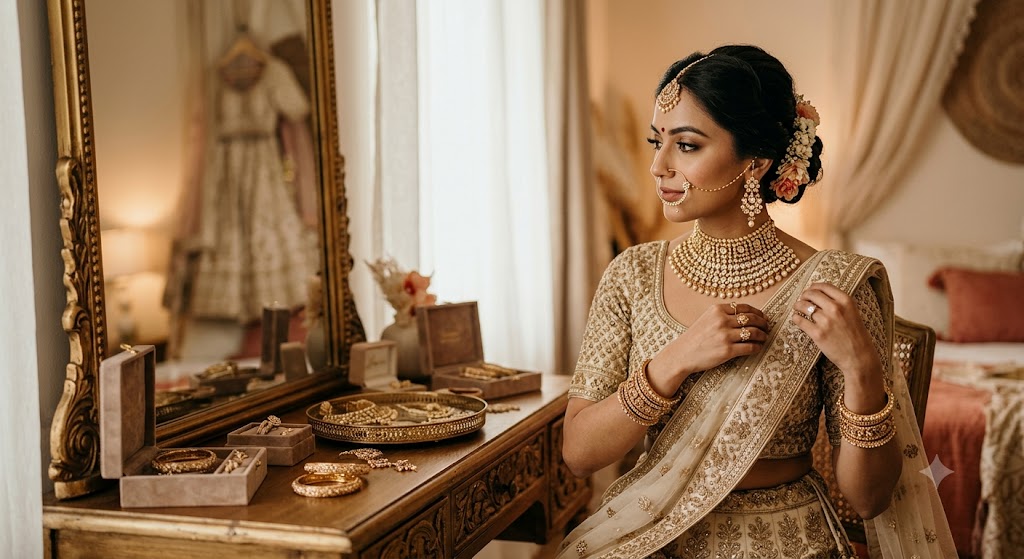
In many families and communities, some pieces are traditionally associated with the bride, such as a nath and a maatha patti. A full bridal combination, such as a head ornament, a nose ring, a full choker and a long haar all together, can also read as a competing bridal look. A simple guideline is to choose no more than two heavy pieces from the necklace, earrings and head ornament. Customs differ, so check with the bride or family if you are unsure.
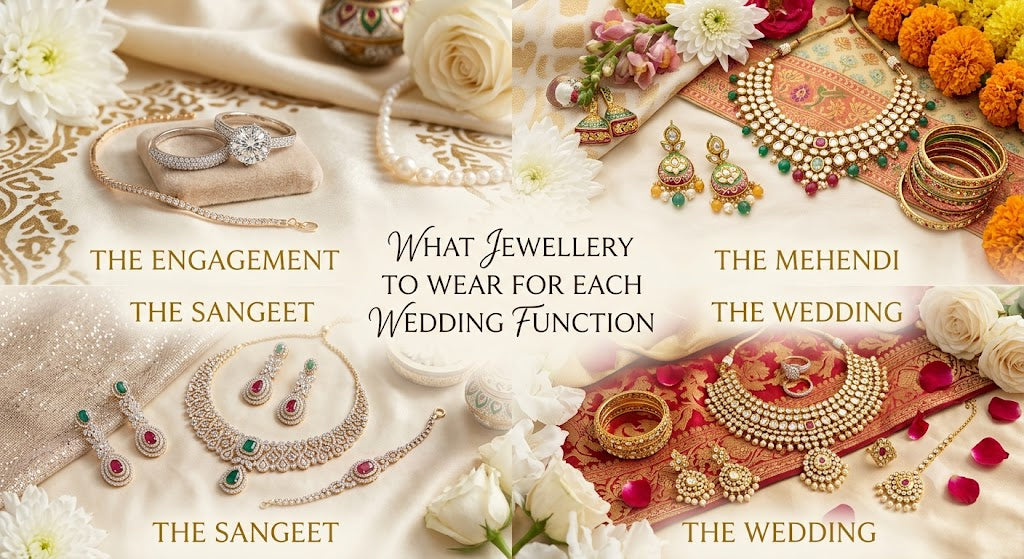
What to Wear to Each Wedding Function
|
Function |
What suits a guest or bridesmaid |
|
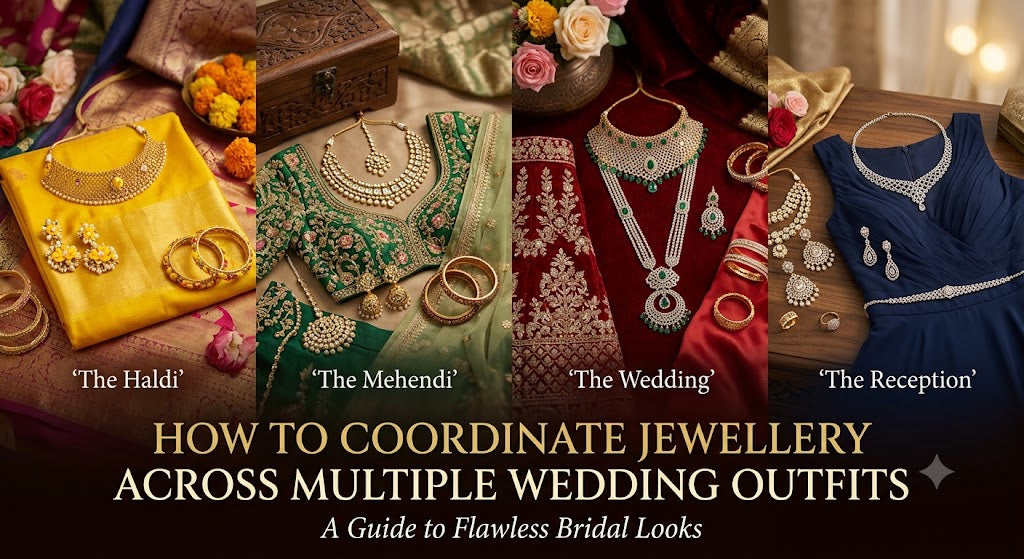
Haldi |
Light, simple or floral jewellery, and nothing precious |
|
Mehendi |
Earrings and hair flowers, with bare hands and wrists until the henna dries |
|
Sangeet |
Secure, comfortable earrings that stay in place for dancing, and a choker or statement piece |
|
Wedding ceremony |
Traditional pieces such as kundan, with one focal piece and a quieter overall look than the bride |
|
Reception |
Modern, sleek or fusion jewellery, in a cocktail-style look |
The guide to what to wear for each wedding function covers these in more detail.
Matching Jewellery to Your Outfit
The neckline and the fabric decide what suits the outfit.
|
Outfit |
Jewellery that suits it |
|
Lehenga with a deep neckline |
A choker or short necklace, with simple earrings |
|
Lehenga with an off-shoulder or high neck |
Bold earrings, and no necklace |
|
Saree |
Jhumkas, with a long necklace or none |
|
Anarkali |
Long jhumkas to balance the fuller silhouette |
|
Salwar kameez or kurta set |
Studs, small drops or a layered necklace |
|
Indo-western |
Statement earrings or a simple chain |
The guide to necklace length for your neckline explains how to match the necklace to the neckline.
Choosing the Metal Tone
Match the metal tone to the outfit. Gold-toned jewellery suits warm colours, rich silk and gold zari, and is the usual choice for the main ceremony. Silver-toned jewellery suits cooler colours and lighter daytime looks. Choose the tone that matches the zari or embroidery on the outfit, and keep it consistent across the look. If the outfit is heavily detailed, choose simple jewellery in the same tone.
Jewellery Ideas for Each Look
-
Traditional look: jhumkas or kundan-style earrings with a simple necklace. The guide to kundan jewellery explains the style, and the Mughal kundan collection is where it sits.
-
Modern look: statement earrings, or ear cuffs with a clean neckline.
-
Light look: minimal earrings with a fine chain.
Coordinating With the Bridal Party

Bridesmaids can coordinate jewellery without matching exactly.
-
Ask the bride first. She may have views on colour, formality and metal tone.
-
Agree a palette. Bridesmaids often wear the same colour or a complementary family of shades, and avoid the bride's own colour.
-
Choose a shared metal tone, so the group looks planned.
-
Vary the pieces. Each bridesmaid can wear a different focal piece in the same tone.
-
Keep the scale below the bride's.
Comfort and Practical Tips
Weddings are long, so comfort matters as much as appearance.
-
Test your jewellery before the day, especially earrings you will dance in. If heavy earrings drag, see how to wear heavy earrings without pain.
-
Choose lightweight pieces for long events.
-
Make sure you can move, eat and dance in what you wear. If the jewellery gets in the way, it is too much.
-
Pack by outfit, with each look's jewellery in its own pouch.
-
Wipe each piece with a soft, dry cloth after wearing and store each piece separately. The jewellery care page has a quick reference.
A Small Capsule for a Multi-Day Wedding
A guest attending several functions does not need many pieces. A small set covers most looks:
-
A pair of jhumkas for traditional outfits.
-
A pair of studs or minimal earrings for daytime.
-
One statement piece for the sangeet or reception.
-
A simple gold-toned or silver-toned chain.
The guide to a capsule earring wardrobe shows how to choose earrings that work across outfits. Gold-plated earrings suit this kind of plan, because plating offers detailed designs at an accessible price, and each piece is worn on a limited number of occasions.
Common Mistakes
-
Wearing a full bridal combination. It competes with the bride.
-
Wearing all-white jewellery or an all-white outfit to a ceremony, since white is associated with mourning in some communities.
-
Stacking several statement pieces. Choose one focal piece.
-
Ignoring comfort. Jewellery that drags or pinches is hard to enjoy for hours.
-
Skipping the check with the bride, if you are a bridesmaid.
Frequently Asked Questions
What jewellery should a bridesmaid wear?
One focal piece in a metal tone that matches the group and the outfit, kept lighter than the bride's look.
Can a wedding guest wear gold jewellery?
Yes. Gold-toned jewellery suits warm colours and the main ceremony. Keep it lighter than the bride's.
Can I wear a maang tikka as a guest?
A small one can work if the rest of the look is simple. Some families see head ornaments such as the maatha patti as bridal, so check if unsure.
Should bridesmaids wear matching jewellery?
They can coordinate on metal tone and style without matching exactly. Asking the bride first is the safest approach.
What jewellery is best for dancing at a sangeet?
Lightweight earrings that stay secure, and a choker or statement piece that does not move around.
What should I avoid wearing to a wedding as a guest?
A full bridal combination, several statement pieces at once, and all-white jewellery.
As a bridesmaid or guest, complement the bride and stay lighter than her. Choose one focal piece, match the metal tone to the outfit, suit each function and prioritise comfort. Leave the most bridal pieces to the bride, and ask her first if you are a bridesmaid. Wedding jewellery in a gold-toned base makes a small, versatile set easy to build, and the guide to building a bridal jewellery set shows what the bride's own look involves.