Cart
0


Heavy earrings and ear pain aren't inevitable — they're usually the result of a few fixable factors: an unsupported backing, a design heavier than the occasion calls for, or simply not knowing the handful of techniques that make a real difference. None of these require giving up on bold earrings. They just require a bit of technique.
This guide covers why heavy earrings actually cause discomfort, the backing types and accessories that genuinely help, styling adjustments that reduce strain, and how to time your wear so a statement pair doesn't turn a full day into an endurance test.
Why Heavy Earrings Actually Hurt

The discomfort isn't really about total weight in isolation — it's about weight combined with leverage. A heavier earring pulls down on a single, small point of the earlobe, and the further that weight sits from the piercing (a long drop or wide chandelier design, for instance), the more leverage it exerts, and the more the piercing feels it. Two earrings of identical weight can feel completely different depending on how that weight is distributed and how far it sits from the ear.
This is why backing type, construction, and design shape matter as much as the actual gram weight of a piece — and why the solutions below target those specific factors rather than just "wear lighter earrings," which defeats the purpose if you actually want the statement look.
Backing Types That Actually Help
-
Lever backs and screw backs distribute weight and hold a heavier piece securely in place far better than a basic butterfly back, which is designed for lighter everyday studs rather than scaled-up designs
-
Dual or hybrid backs, which combine a standard post with an additional clip-style support, spread the load across more of the earlobe rather than concentrating it entirely on the piercing point
-
If you're unsure what backing a specific pair uses, it's worth asking directly before buying — backing type affects comfort more than almost any other single factor for a heavier design
Ear Lifters and Support Accessories

A few genuinely effective, low-cost tools exist specifically for this problem:
-
Earring lifters or support patches — small silicone or metal discs that sit behind the earlobe and take on some of the earring's weight, preventing the lobe from drooping under a heavier piece
-
Surgical tape — a small strip placed behind the earlobe before putting the earring on provides a similar lifting effect, distributing weight across a slightly wider area of skin rather than the piercing alone
-
Both options are designed to be invisible once the earring is on, and neither requires any change to the earring itself
These are worth having on hand specifically for the pieces you know you'll want to wear for a full event — weddings, long celebrations, evenings that run late — rather than for daily wear, where a genuinely lightweight design is the more practical long-term solution.
Construction: Why Hollow Isn't a Downgrade
A well-made heavier-looking earring can still be built to minimise unnecessary weight. Hollow or semi-hollow construction achieves the same visual scale as a solid piece at a meaningfully lower weight, which is part of why gold-plated construction suits bold, larger designs particularly well — the base metal underneath the plating is lighter than an equivalent solid-gold piece of the same size. For more on how this construction works, see our guide on what gold plating is.
When shopping for a statement piece, a hollow or semi-hollow design isn't a lesser version of a solid one — it's frequently the more comfortable, better-engineered choice at the same visual scale.
Styling Adjustments That Reduce Perceived Strain

-
Skip the necklace, or keep it minimal, when wearing a larger earring. This isn't purely aesthetic — it also means there's nothing else competing for attention or adding visual (and sometimes literal) weight to the overall look
-
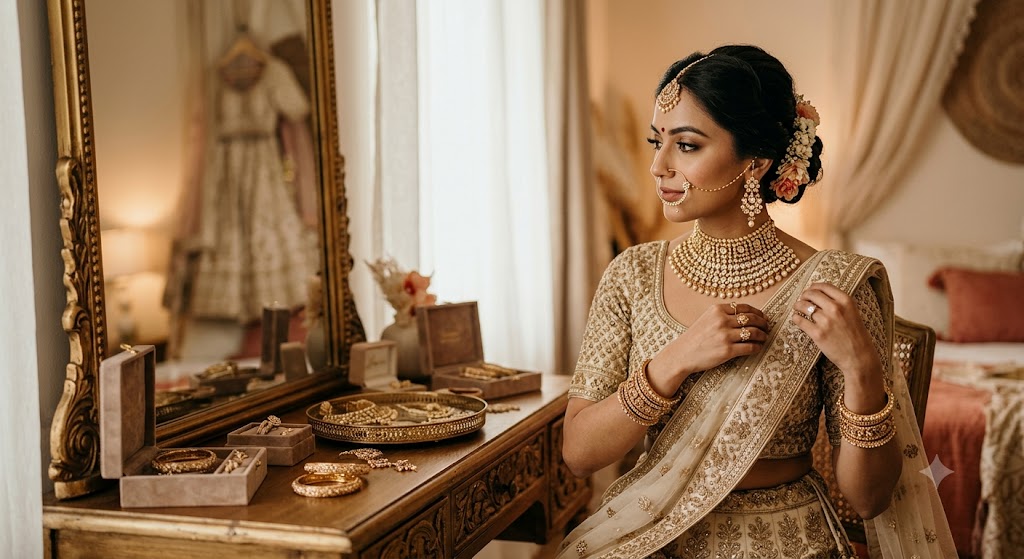
Choose a sleek, pulled-back hairstyle — a bun, ponytail, or braid — which frames the earring rather than letting hair catch on it, and also helps keep the earring from shifting or tangling through a long event
-
Avoid layering multiple statement pieces in the same look; one bold earring plus a busy neckline or a second heavy accessory tends to compete rather than complement, and adds unnecessary cumulative weight to the overall styling
Timing Strategies for Long Events

-
Give your ears periodic breaks — stepping away for a few minutes during a long wedding or celebration to remove earrings briefly makes a real difference over an eight-hour day
-
Match earring weight to the actual event, not just the dress code — a smaller, lighter statement piece is often the better choice for a daytime function, saving the heaviest design for the portion of the event where you'll be seated or less active
-
Put your heaviest pair on last, closer to when you'll actually be photographed or seen, rather than wearing it through the full getting-ready process beforehand
Know Your Own Limit
Not every ear tolerates the same weight equally, and that's fine — it's a piercing strength and personal comfort question, not a style failure. If a pair causes noticeable discomfort before you've even left the house, that's a reliable signal to size down rather than push through, regardless of how the piece looks in the mirror. Our hoop earrings and lightweight earrings collections both offer bolder-looking options built with comfort as a starting priority, if that's the better fit for your ears specifically.
Storing Heavy Earrings to Maintain Their Shape

-
Lay statement pieces flat in a padded compartment rather than hanging them, particularly for designs with delicate detailing or drop elements, which can distort out of shape if hung repeatedly
-
Store separately from other jewellery to avoid tangling or scratching, especially for pieces with textured or layered surfaces
-
Full general care guidance is available on our jewellery care page
FAQs
How do I know if my earrings are too heavy for my ears?
If they cause noticeable discomfort, visible sagging, or strain within minutes of putting them on, they're likely too heavy for extended wear — consider a lighter design or a supportive backing accessory.
Can I wear heavy earrings for a full day or event?
Yes, with the right support — a proper backing type, an ear lifter or tape if needed, and periodic breaks during the event.
What backing is best for heavy or statement earrings?
Lever backs and screw backs generally offer more support than a standard butterfly back, and dual or hybrid backs offer additional support for particularly heavy designs.
Do ear lifters actually work?
Yes — they redistribute some of the earring's weight across a wider area of the earlobe rather than concentrating it entirely on the piercing, which meaningfully reduces strain for many wearers.
What hairstyle works best with heavy earrings?
A sleek, pulled-back style — a bun, ponytail, or braid — frames the earring clearly and reduces the chance of hair catching on it or adding to the strain.
Should I skip my necklace when wearing statement earrings?
Generally yes, or keep it minimal — this balances the overall look and avoids competing visual weight, particularly when the earring is already the focal point.
How should I store heavy or statement earrings?
Lay them flat in a padded compartment rather than hanging them, especially for designs with delicate drop or layered elements that can lose their shape if hung repeatedly.
Explore bold, comfort-conscious designs in our statement earrings collection at Mine of Design.