Cart
0
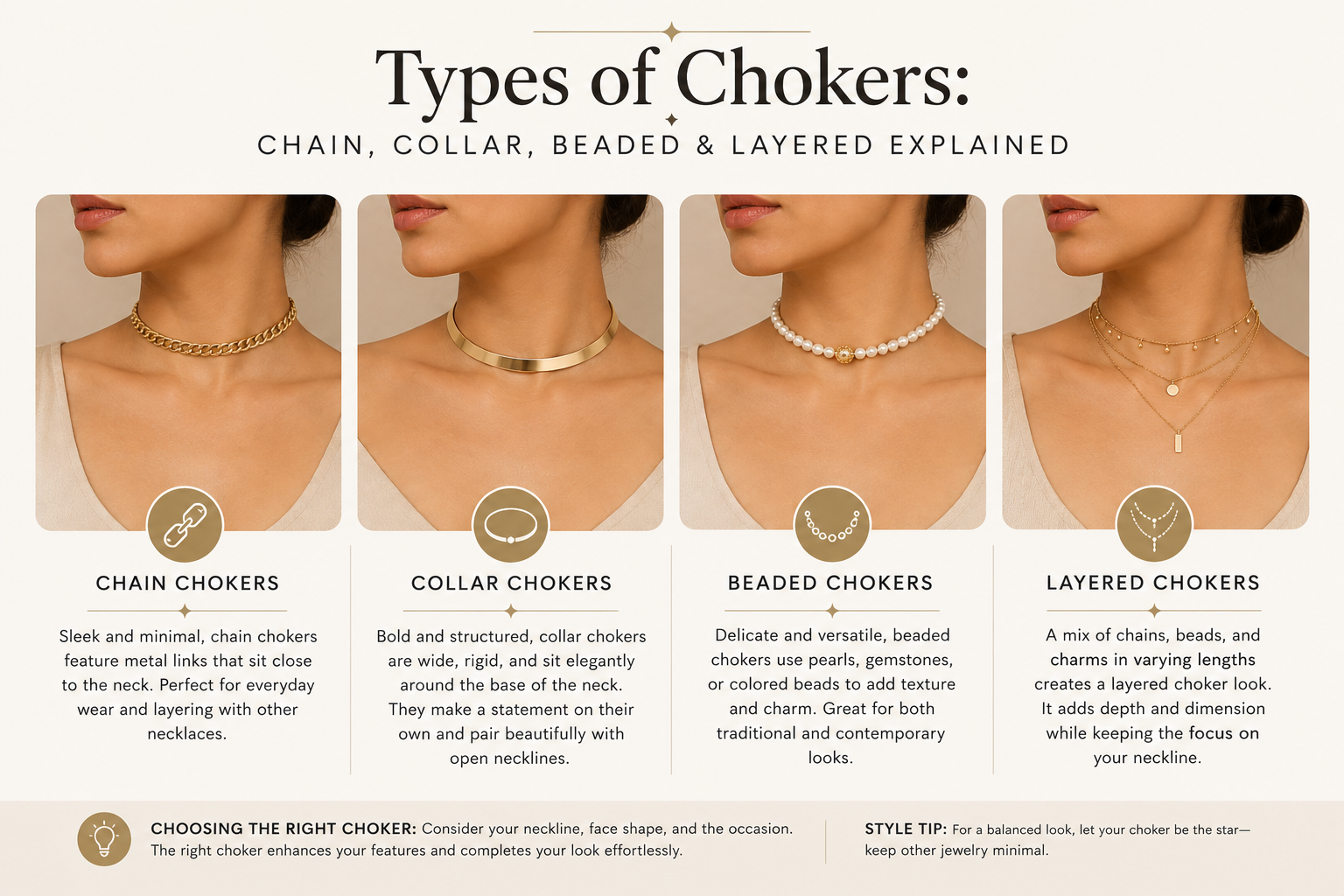
Four construction types cover most of what falls under "choker": chain, collar, beaded, and layered. Each is defined by how it's actually built, not by a specific aesthetic — a chain choker can look minimalist or ornate, a collar can look modern or vintage. Construction determines fit, comfort, and clasp type more than style does, which is why understanding the difference matters beyond just picking a look you like.
Chain Chokers
A chain choker is a flexible metal chain, usually worn at 14 to 16 inches, sitting close to the neck without the rigidity of a solid band. This is the most versatile and most common choker construction, and it breaks down further by link style:
- Cable chain — classic round, uniform links; the most traditional chain style
- Box chain — square-cut links, giving a slightly heavier, more structured look than cable
- Snake chain — tightly connected, smooth-surfaced links that give a fluid, almost seamless appearance
- Rope chain — twisted strand construction, adding visible texture compared to a flat link style
Chain chokers typically use a lobster clasp with an extender chain, which allows for a small range of adjustment rather than one fixed size — this is part of why chain is generally the easiest construction to size correctly on the first try.
Collar Chokers

A collar choker uses a rigid or semi-rigid band rather than a flexible chain, holding its shape around the neck instead of draping. This construction gives a more structured, architectural look, and behaves differently in terms of fit than any of the other three types — a collar generally needs little to no extra length beyond your actual neck measurement, since it doesn't require the slack a flexible chain needs to drape naturally. We cover this fit difference in more detail in our guide on how to measure your neck for a choker.
Collar chokers commonly use hook-and-eye or toggle closures rather than a simple lobster clasp, since the rigid structure needs a more deliberate closure to open and close around the neck.
Beaded Chokers

A beaded choker is built from a continuous strand of beads — pearls, glass, acrylic, or small gemstone-style beads — rather than a chain or solid band. Construction varies between a strung strand (beads threaded on cord or wire) and a wired design (beads set along a more rigid internal structure). Beaded chokers generally use a hook-and-eye or toggle clasp, since the closure needs to sit flush with the strand rather than interrupt it visually.
This construction type leans toward festive and ethnic styling more than the other three, particularly in pearl or moti-strand form, since the visual texture of a beaded strand reads differently than a smooth chain or rigid band.
Layered or Multi-Strand Chokers

A layered choker combines two or more strands — chain, beaded, or a mix — set at slightly different lengths within a single piece, creating a stacked look without needing to wear separate necklaces. These are typically sold pre-set, with the strand lengths and spacing already calculated, and secured with a single clasp rather than multiple separate closures. This is what separates a true layered choker from simply wearing several chokers at once: one piece, one clasp, spacing already resolved.
If you're interested in layering beyond the choker length specifically — combining a choker with longer pieces — our layered necklaces collection covers that broader approach.
Other Choker Types You May Encounter
Beyond the four core constructions, a few specific styles come up often enough to be worth knowing:
- Bar chokers — a thin horizontal bar or plate centered on a delicate chain, often used for a minimalist or personalised (initial, engraved) look
- Pendant or Y-chokers — a chain at choker length with a single drop element at the front, adding a small vertical detail without moving into full statement territory
- Lariat-style chokers — a chain with no fixed clasp, wrapped or looped into place instead, offering a more adjustable, less structured fit than a standard closure
These aren't separate categories so much as variations layered on top of chain or beaded construction — a bar choker, for instance, is still fundamentally a chain choker with one added element.
Choosing a Construction Type by Occasion
- Chain chokers: the most versatile — office, casual, and evening wear all suit a simple chain construction
- Collar chokers: lean more structured and statement-forward, suited to evenings and events where the architectural shape can stand out
- Beaded chokers: particularly well suited to festive and ethnic occasions, especially in pearl or moti-strand form
- Layered chokers: work well as a single statement piece for events, offering a fuller look without needing to coordinate multiple separate necklaces
How Construction Affects Fit
This is worth repeating because it's the detail most choker guides skip entirely: the "add extra length to your neck measurement" rule doesn't apply the same way across all four constructions. A flexible chain needs the standard addition to drape properly; a rigid collar needs little to none; a beaded strand generally follows the chain logic; a layered piece needs each individual strand considered on its own, since the shortest strand behaves like a standard choker while the others extend past it. Getting this wrong is one of the most common reasons a choker that seemed correctly sized doesn't actually sit right once worn.
FAQs
What are the main types of choker necklaces?
Chain, collar, beaded, and layered are the four core construction types, each defined by how the piece is built rather than by a specific aesthetic.
What's the difference between a chain choker and a collar choker?
A chain choker uses a flexible metal chain that drapes slightly; a collar choker uses a rigid or semi-rigid band that holds its shape without draping, and generally needs less added length to fit correctly.
What chain link styles are used in chain chokers?
Cable (classic round links), box (square, slightly heavier), snake (smooth and fluid), and rope (twisted, textured) are the most common link styles.
Are beaded chokers good for festive occasions?
Yes — beaded and pearl-strand chokers tend to suit festive and ethnic styling particularly well, more so than a plain chain or rigid collar.
How is a layered choker different from wearing several chokers together?
A layered choker is a single piece with strand lengths and spacing pre-set and secured with one clasp, rather than multiple separate necklaces each needing their own closure and alignment.
What clasp type should I expect on a collar choker?
Hook-and-eye or toggle closures are most common on collar chokers, since the rigid structure needs a more deliberate closure than a simple lobster clasp.
Does construction type affect how I should measure for sizing?
Yes significantly — rigid collars need little to no extra length beyond your neck measurement, while flexible chain and beaded strands need the standard addition to drape naturally.
Explore all four construction types in our choker necklaces collection at Mine of Design.