Cart
0
How Many Necklaces Should You Layer Together?

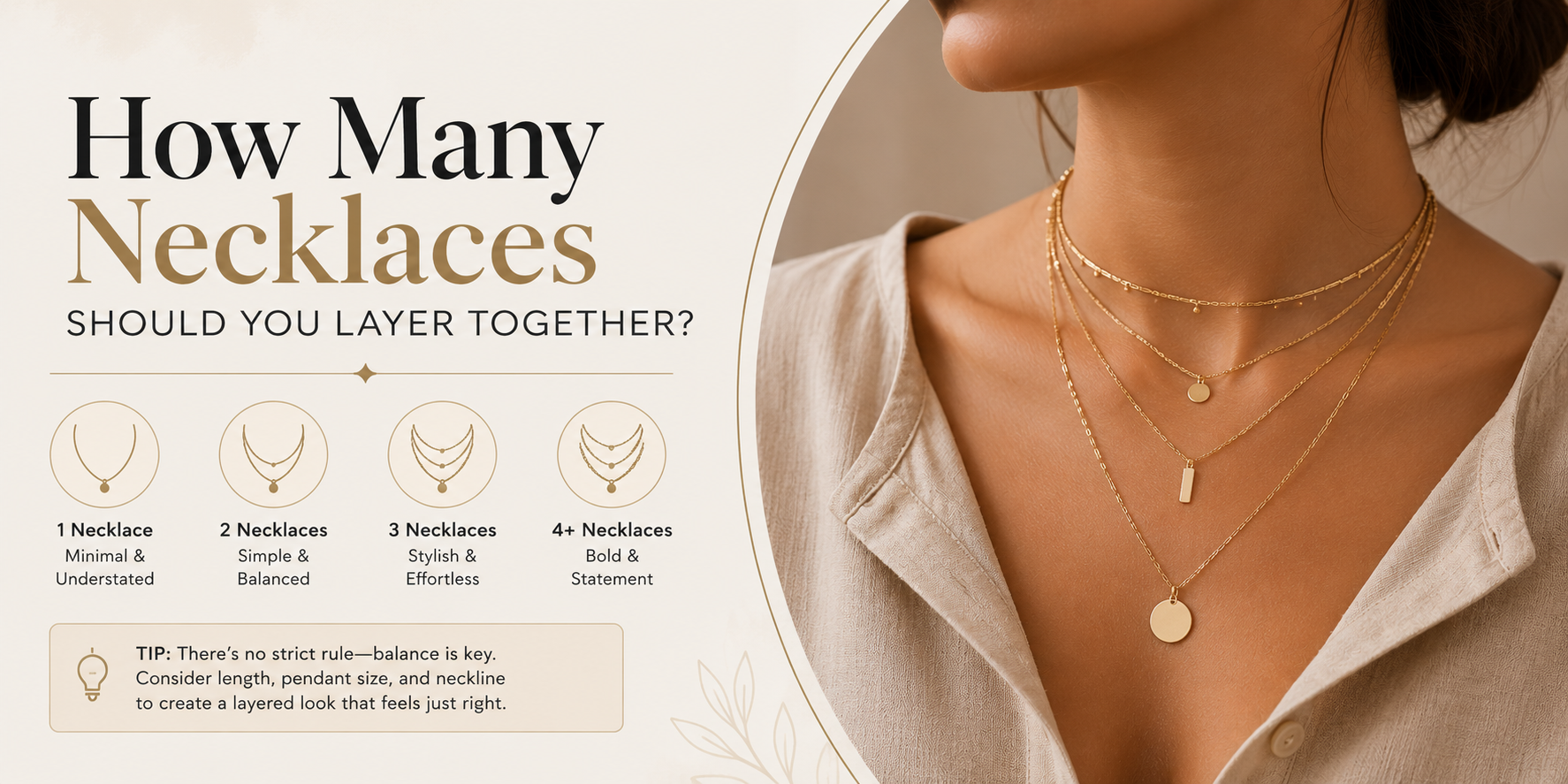
Two to three strands is the practical range that works for most necklines, most outfits, and most people building a layered look for the first time. Beyond three, spacing becomes harder to control and the look shifts from "considered" to "busy" for most everyday settings — though there are specific, more maximalist occasions where going further makes sense deliberately, rather than by accident.
This guide covers why two to three is the reliable starting range, what actually determines whether a given number of strands works, and how to build toward the right number for your own neckline and occasion rather than guessing.
Why Two to Three Strands Is the Practical Range

A layered look reads as intentional when each strand is visually distinct — different length, different weight, or different position on the chest. Every additional strand beyond the third makes that distinction harder to maintain, since there's only so much vertical space between the base of the neck and the chest to work with before strands start to overlap or blend into each other rather than reading as separate, deliberate layers.
This is the same underlying logic that applies to building a capsule earring wardrobe or deciding how many earrings you actually need in daily rotation: more isn't automatically better. A well-chosen set of two or three pieces that each do something distinct beats a larger collection where nothing stands out individually.
As a quick reference:
- Two strands — the cleanest, most minimal option, well suited to office and understated everyday looks
- Three strands — the balanced default for most everyday and semi-dressy occasions, and the number most stylists converge on when asked for one figure
- Four strands — a fuller, more deliberate look, best reserved for occasions or outfits with enough open neckline to support it
The Standard Three-Layer Structure

When people picture "a layered necklace look," they're usually picturing this specific structure, whether or not they'd describe it that way:
- A choker or short piece near the neck — roughly 12 to 14 inches, sitting close against the base of the neck; see our choker necklaces collection for pieces built specifically for this position
- A mid-length piece — generally 16 to 18 inches, sitting at or just below the collarbone, bridging the gap between the shortest and longest strands
- A longer piece — 24 inches and beyond, providing the visible drop that anchors the whole look; our long necklaces collection covers this length in depth
This three-tier spacing is what most fixed layered necklace sets are built around, since it reliably produces visible separation between strands regardless of body type or neckline.
When Two Strands Works Better Than Three

A two-strand combination — typically a short piece and a longer one, skipping the middle length — reads as simpler and more office-appropriate than a full three-layer look. This is often the better choice for:
- Daily and office wear, where a fuller layered look can read as more occasion-specific than the setting calls for
- Necklines with less open space, where three strands genuinely don't have enough room to stay visually distinct
- A first attempt at layering, since two strands are considerably easier to get right than three on the first try
When to Go Beyond Three

Four or more strands is a deliberate maximalist choice rather than a default, and it works best under specific conditions:
- Very open necklines — off-shoulder, deep V, strapless — that provide enough vertical space for additional strands to stay distinct rather than overlapping
- Festive or boho-leaning occasions, where a fuller, more layered look is the intended effect rather than an accident
- Mixed textures and materials, such as combining beaded, moti, or handmade pieces with plain chain — variation in material helps additional strands read as distinct even when spacing gets tighter
Going beyond three without one of these conditions in place is the most common way a layered look tips from intentional into cluttered.
Matching Strand Shape to Your Neckline

This is a detail most layering guides mention in passing without explaining, and it follows the same echo-versus-contrast logic we use elsewhere for choker and neckline pairing: a V-neck creates a sharp downward point, and a pendant hanging to a similar point echoes that line cleanly, while a rounded or U-shaped strand sitting across a V-neck can visually clash with the neckline's own angle rather than complement it. A crew or round neckline is the safest default for layering generally, since it doesn't impose a strong shape of its own for your strands to clash with.
Keeping Layers from Tangling
- A necklace spacer — a small clip-style connector worn at the back of the neck — holds multiple chains at fixed spacing throughout the day, which is a more reliable fix than adjusting strands by hand each time they shift
- Anchor the stack with a slightly heavier piece, typically in the lowest position, which helps keep lighter strands above it from sliding around as much
- If you own two necklaces of the same length, connecting them end to end and draping the joined piece over both shoulders is a workaround that turns identical lengths into a usable layered effect, rather than needing to buy a new length specifically
Because layered strands rub against each other throughout the day, they also collect more residue than a single necklace worn alone — worth factoring into how often you wipe them down; see our guide on cleaning gold-plated jewellery for the general cadence.
Fixed Sets vs. Building Your Own
A pre-built layered necklace removes most of the guesswork, since the strand count, lengths, and spacing are already resolved by design. Building your own from separate pieces — combining a choker, a short necklace, and a long necklace you already own — offers more flexibility, but requires more attention to the spacing principles above. Either approach can land on the same two-to-three range; the difference is simply how much of the calculation is done for you versus left to your own judgement.
Common Mistakes
- Choosing strands too close in length, which causes overlap rather than distinct layers — this is the single most common reason a layered look fails
- Ignoring the neckline's own shape, layering a rounded strand across a sharply angled neckline or vice versa, rather than working with it
- Stacking multiple bold or heavy pieces together, which competes for attention rather than creating a cohesive stack — generally one anchor piece is enough
- Mixing too many metal tones without any consistency, which can read as unplanned rather than deliberately eclectic
FAQs
What's the ideal number of necklaces to layer?
Two to three strands works reliably for most necklines and occasions. Beyond three requires more deliberate spacing and generally suits fuller, more festive looks rather than daily wear.
Is two necklaces enough for a layered look?
Yes — a short piece paired with a longer one is a simple, effective two-strand combination, particularly well suited to office and daily wear.
When should I layer more than three necklaces?
Mainly with very open necklines, festive or boho-leaning occasions, or when mixing distinct textures and materials that help additional strands stay visually separate.
Do all layered necklaces need to be the same metal tone?
No, but matching metal tone generally reads as more coordinated. Mixing tones deliberately can also work, particularly in a more maximalist, festive-leaning look.
Should I buy a pre-built layered set or combine pieces myself?
A pre-built set is the simpler option, with spacing and lengths already resolved. Building your own offers more flexibility if you already own pieces at complementary lengths.
What's the most common mistake when layering necklaces?
Choosing strands that sit too close in length, which causes them to overlap rather than read as distinct layers — spacing matters more than the specific lengths chosen.
Explore ready-to-wear combinations in our layered necklaces collection at Mine of Design.