Cart
0
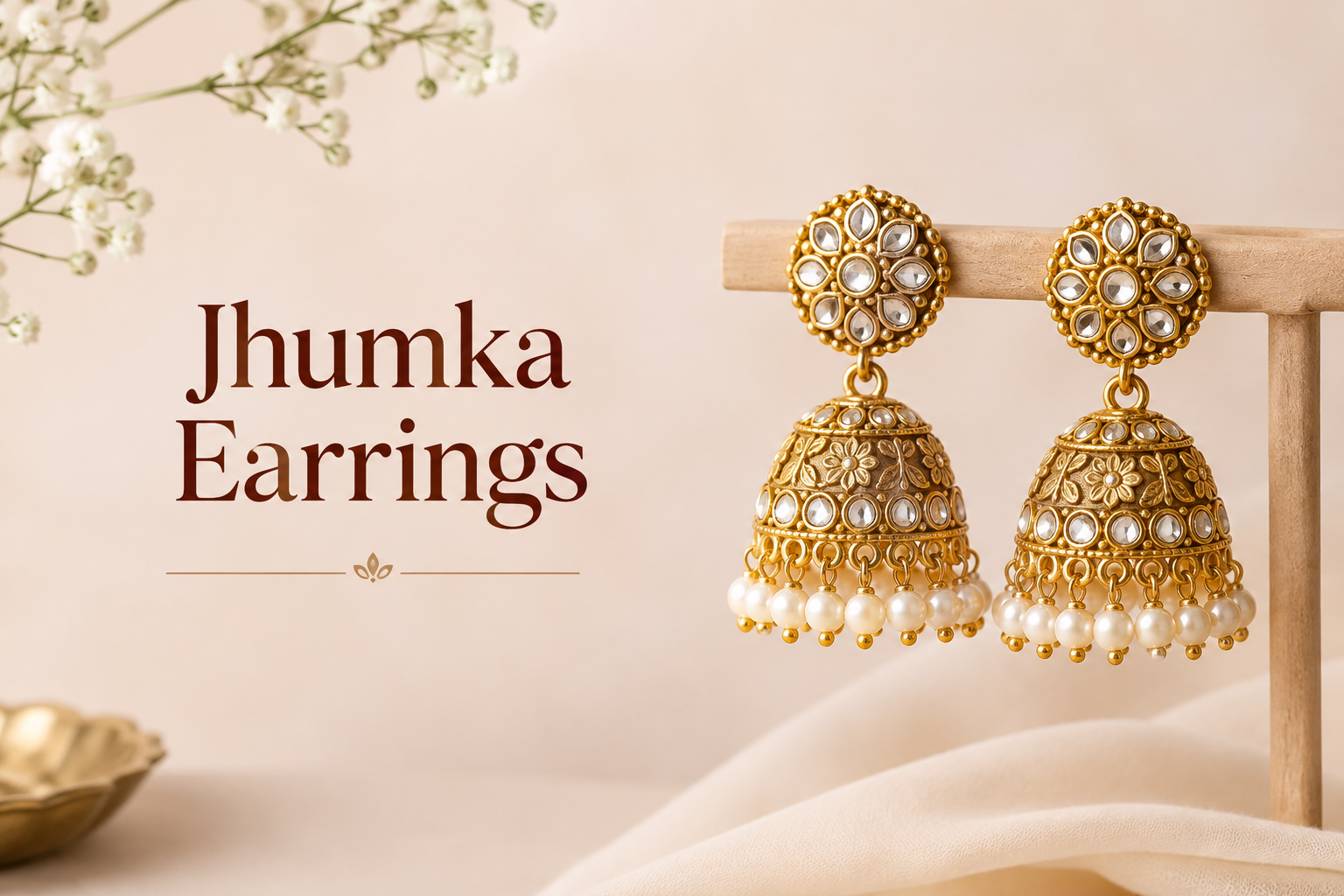

Jhumka earrings are traditional Indian bell-shaped drop earrings, built around a domed or bowl-shaped top and a flared, dangling lower half that swings and catches light with movement. The name comes from jhumki, a Hindi word for "little bell," and the shape is a direct reference to that sound and silhouette. Jhumkas are one of the oldest and most recognisable forms of Indian jewellery, and they remain a staple in festive, bridal, and everyday wardrobes across every region of India.
This guide breaks down what makes an earring a jhumka, where the style comes from, what it symbolises, and the main regional and material types you'll come across when shopping for one.
What Makes an Earring a "Jhumka"
Three structural features define a jhumka, regardless of size or material:
-
A domed or hemispherical top — this is the part that sits closest to the earlobe and gives the earring its "inverted bowl" profile.
-
A flared or frilled lower section — often layered, beaded, or fringed, this is the part that creates the signature bell shape and the movement the earring is known for.
-
A drop or dangle structure — jhumkas are almost never studs; the bell hangs below the ear and swings with motion.
Anything that combines these three elements is a jhumka, whether it's a 2-inch gold-toned everyday pair or an oversized bridal piece with layered fringe. This is also what separates jhumkas from a chandbali (a crescent or fan-shaped earring) or a plain hoop — related Indian earring families that are often confused with jhumkas but follow a different silhouette entirely.
The History of Jhumka Earrings

Jhumkas have one of the longest documented histories of any Indian jewellery form. Their design traces back to temple sculpture from the Chola and Pallava dynasties of South India, where bell-shaped earrings appear carved onto depictions of deities and temple dancers. Because jhumkas were originally crafted as adornment for temple idols, the style is closely tied to temple jewellery — a broader category of ornamentation rooted in South Indian religious tradition.
From temple sculpture, the jhumka moved into performance: bell-shaped earrings became standard in classical dance forms like Bharatanatyam and Kuchipudi, partly because the drop and movement of the earring complemented the rhythm of the dance — the same logic behind ghungroo, the ankle bells worn by classical dancers.
The Mughal era added a second layer of craftsmanship to the jhumka. Mughal artisans introduced techniques like kundan (gold foil-set stonework) and meenakari (enamel work) to the jhumka form, which is why so many "traditional" jhumka designs today still carry kundan or meenakari detailing. By the time jhumkas spread across North and West India, each region had developed its own take on the silhouette — which is where the modern types of jhumka earrings come from.
What Jhumka Earrings Symbolize
Beyond their design, jhumkas carry cultural meaning that has stayed remarkably consistent over centuries:
-
Grace and femininity — the swinging motion of a jhumka has long been associated with graceful movement, which is part of why the style became linked to dance.
-
Tradition and heritage — because jhumkas are tied to temple jewellery and classical dance, wearing them is often read as a nod to cultural heritage, especially during festivals and weddings.
-
Auspiciousness — the bell shape, linked to ghungroo and temple bells more broadly, is associated with positive or auspicious sound in Indian tradition.
-
Milestone and heirloom value — jhumkas are frequently gifted at weddings or passed down as heirlooms, reinforcing their role as more than a fashion accessory. If you're building out a set for a milestone occasion, this pairs naturally with our guide to building a bridal jewellery set and our jewellery gifting guide.
Types of Jhumka Earrings
Jhumkas are typically classified two ways: by regional design tradition and by finish or material. Most jhumkas you'll see today fall into one or more of these categories.
By Regional Design
-
South Indian temple jhumka — the most traditional form, closest to the original temple sculpture designs; typically gold-toned with a smooth or filigreed dome.
-
Rajasthani mirror-work jhumka — incorporates small mirrors and vibrant colour, reflecting Rajasthan's broader tribal and folk jewellery tradition.
-
Kashmiri jhumka — recognisable for intricate metalwork and often paired with hanging chains or jhumar-style embellishment.
-
Odisha filigree jhumka — built using fine silver or gold wirework (filigree), giving the earring a lace-like, delicate top structure.
By Finish or Technique
-
Kundan jhumka — set with gold-foil-backed stones, a Mughal-era technique; common in bridal and festive pieces.
-
Meenakari jhumka — enamelled in colour, often paired with kundan work for a layered, festive look.
-
Oxidised jhumka — finished in darkened silver-tone metal; popular for a more everyday, folk-inspired look rather than a formal one.
-
Gold-plated and gold vermeil jhumka — a modern, lighter-weight alternative to solid gold pieces, built for daily or semi-formal wear. If you're comparing finishes, our guide on what gold vermeil is breaks down how it differs from standard gold plating.
By Size and Occasion
-
Lightweight jhumka — smaller, closer-to-the-ear designs built for daily wear without ear strain; see our breakdown of lightweight earring styles for how jhumkas fit into that category.
-
Statement jhumka — larger, layered designs with more fringe or embellishment, built for weddings and festive events; our guide to styling statement earrings applies directly to bridal-weight jhumkas.
Jhumka vs. Other Indian Earring Styles

Jhumkas are frequently grouped with — and confused for — a few adjacent earring styles. The distinction comes down to shape:
-
Jhumka vs. chandbali: a chandbali is crescent or fan-shaped and opens outward, while a jhumka is domed and closes into a bell. Many modern "chandbali jhumka" hybrids exist, but structurally they're different families.
-
Jhumka vs. hoop: hoops are a continuous circular or oval band; jhumkas are a drop earring with a distinct top-and-bottom structure. Compare against our hoop earring guide if you're deciding between the two.
-
Jhumka vs. everyday drop earrings: everyday earrings prioritise minimal weight and simple silhouettes; jhumkas can be adapted for daily wear, but their defining bell structure is inherently more ornamental. See our comparison of statement vs. everyday earrings for how weight and formality trade off.
How to Wear Jhumka Earrings Today
Jhumkas are no longer limited to weddings and festivals — the range of weights and finishes now available means there's a jhumka style for almost any occasion:
-
With sarees and lehengas — traditionally the most common pairing, especially for kundan or meenakari jhumkas at weddings and festive events.
-
With kurtas and Indo-western outfits — smaller gold-plated or oxidised jhumkas work well for everyday or semi-formal dressing.
-
With Western outfits — minimal, lightweight jhumkas are increasingly worn as a statement piece against plain necklines, without the rest of the look needing to be traditional.
If daily comfort is a priority, it's worth checking earring weight and backing type before buying — our guide on wearing heavy earrings without pain and our note on choosing earrings for sensitive ears both apply directly to jhumka shopping, since bridal-weight designs can be significantly heavier than everyday styles.
Caring for Jhumka Earrings

Because jhumkas often combine multiple textures — metalwork, enamel, stones, or mirrors — in one piece, they need slightly more attention than a simple stud or hoop. Keep them away from moisture and perfume, store them separately so the fringe or dangling elements don't tangle or scratch, and wipe them down with a soft cloth after wear. For gold-plated jhumkas specifically, our gold-plated earring care guide covers how to keep the finish looking new for longer.
Frequently Asked Questions
What does "jhumka" mean?
Jhumka comes from jhumki, a Hindi word meaning "little bell," referring to the earring's bell-shaped silhouette and the sound it makes.
Are jhumkas only worn at weddings?
No. While statement and kundan jhumkas are common bridal and festive choices, lightweight and gold-plated jhumkas are widely worn for daily and semi-formal wear.
What's the difference between a jhumka and a jhumki?
The terms are largely used interchangeably; "jhumki" is sometimes used for smaller, daintier versions of the same bell-shaped design.
Which jhumka style is best for everyday wear?
Lightweight, gold-plated jhumkas with a smaller dome and minimal fringe are generally the most comfortable for daily wear. See our lightweight earrings guide for specific styles.
Explore our full jhumka earrings collection to find a style suited to your occasion, from everyday gold-plated pairs to statement bridal designs.