Cart
0
What Is Gold Plating?
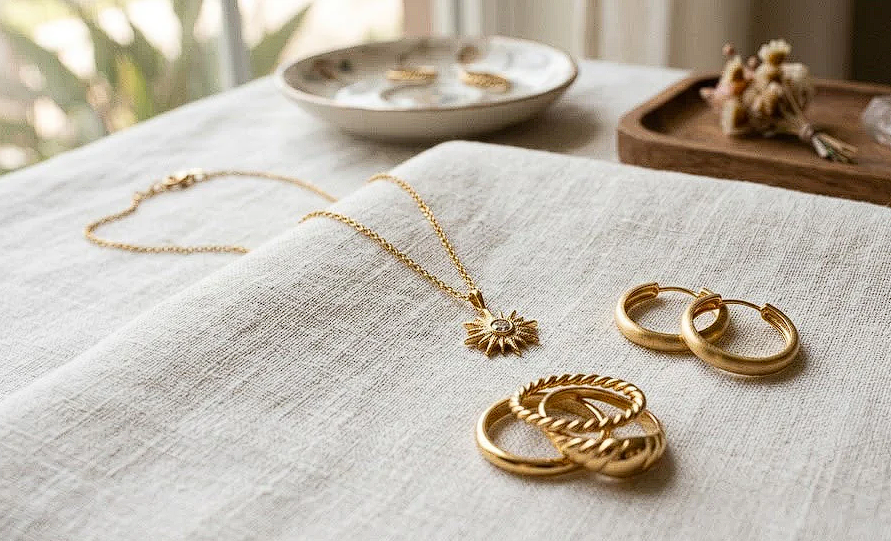
Gold plating is a manufacturing process that bonds a layer of gold onto a base metal — typically brass, an alloy, or sometimes silver — using an electric current in a process called electroplating. The result is jewellery that carries the look, colour, and shine of gold, at a fraction of the weight and cost of a piece made entirely from a gold alloy.
This single term, though, covers a wide range of actual quality outcomes. Not all "gold-plated" jewellery is built the same way, and understanding what actually separates a well-made piece from a poorly made one comes down to a few specific factors: plating method, gold layer thickness, and the karat of the gold used in the plating itself.
How Gold-Plated Jewellery Is Actually Made
The process, in simplified terms, involves a few consistent steps regardless of the piece being made:
-
Base metal preparation — the base metal component (a ring, a chain, an earring) is cleaned and polished so the plating bonds evenly, without trapped dirt or oxidation underneath
-
Electroplating — the piece is submerged in a solution containing dissolved gold, and an electric current causes gold ions to bond to the surface of the base metal
-
Layer buildup — the piece stays in the plating bath long enough to build up a gold layer of a given thickness; this is the step that most affects how long the finish will last
-
Finishing — the plated piece is polished, and in some cases coated with a protective top layer to slow tarnishing and oxidation
The core process is the same across most gold-plated jewellery. What varies enormously between brands and price points is how long each piece spends in the plating bath, which determines the thickness of the gold layer — and thickness is the single biggest factor in how the piece performs over time.
Gold Plating vs. Gold Flash vs. Gold-Tone: Getting the Terms Right
 This is where a lot of confusion happens, since these three terms get used loosely and sometimes interchangeably, even though they describe meaningfully different products:
-
Gold plating — a proper electroplated gold layer of meaningful thickness over a base metal. This is the most durable of the three, holding its colour and finish through regular wear when cared for reasonably.
-
Gold flash or "fine gold finish" — a very thin electroplated gold layer, sometimes measured in fractions of a micron. It can look just as bright and gold-toned as thicker plating when new, but it wears down considerably faster, since there's simply less gold there to begin with.
-
Gold-tone or "gold-coloured" — no actual gold layer at all. This describes jewellery finished with a gold-coloured alloy or a coating designed to mimic gold's colour without using real gold. These pieces are the least durable of the three and typically fade or discolour fastest, since there's no gold present to wear through in the first place.
None of this is about brand quality in the abstract — it's about being able to tell, from a product listing or description, what you're actually buying. A piece can be perfectly nice and still fall into any of these three categories, but knowing which one you're looking at sets the right expectations for how it will hold up.
What Actually Determines How Long Gold Plating Lasts
 A few factors, in combination, determine how a plated piece performs over months and years of wear:
-
Gold layer thickness — a thicker plated layer takes longer to wear through than a thin one, all else being equal
-
The karat of the gold used in plating — different karats have different hardness and colour properties, which affects both appearance and how the plating wears
-
The base metal underneath — some base metals bond more evenly with a gold layer than others, affecting how consistently the plating holds up across a piece
-
How the piece is worn and cared for — sweat, moisture, and repeated friction all accelerate plating wear regardless of how the piece was made, which is why care habits matter as much as the manufacturing spec itself
No single one of these factors tells the whole story on its own — a thick gold layer on a poorly bonded base metal can still perform inconsistently, and a well-made piece with reasonable care can outlast a "higher spec" piece that's handled carelessly.
What to Check Before Buying Gold-Plated Jewellery
-
Ask what the base metal is — if a listing doesn't say, that's worth asking about directly rather than assuming
-
Check whether "gold-plated" is stated explicitly, as opposed to vaguer language like "gold-tone" or "gold-coloured," which usually signals no actual gold layer
-
Don't assume price alone tells you the plating quality — thickness and process matter more than a price point in isolation
-
Look for care guidance from the seller — a brand that provides clear care instructions for its plated pieces is generally being upfront about the fact that plating is a finish, not a permanent, maintenance-free layer
Why This Matters for Lightweight Earrings Specifically
Gold-plated construction is particularly well suited to lightweight jewellery, since the base metal underneath the plating is generally lighter than an equivalent solid-gold alloy of the same size. This is part of why a gold-plated design can achieve a bold, substantial look at a fraction of the weight of a comparable solid-gold piece — the plating delivers the colour and shine, while the lighter base metal keeps the piece comfortable for extended wear. Our lightweight earrings collection is built entirely around this principle.
Caring for Gold-Plated Jewellery
Because the gold layer is a surface finish rather than the metal all the way through, a few consistent habits meaningfully extend how long it holds its colour:
-
Apply perfume, skincare, and hairspray before putting jewellery on, not after
-
Wipe pieces down after each wear to remove sweat and product residue
-
Store pieces in a dry pouch or lined compartment, away from humidity where possible
-
Avoid prolonged water exposure — showering, swimming, and heavy sweating are among the main causes of plating wear over time
-
Clean gently with a soft cloth rather than abrasive materials, which can accelerate wear on the plated surface
Full care guidance is available on our jewellery care page.
FAQs
What is gold plating made of?
A base metal — commonly brass or an alloy — coated with a layer of gold through an electroplating process, where an electric current bonds gold onto the metal's surface.
What's the difference between gold plating and gold flash?
Gold flash (sometimes called a "fine gold finish") uses a much thinner gold layer than standard gold plating. Both use real gold, but gold flash wears down noticeably faster due to the reduced thickness.
What does "gold-tone" mean, and is it the same as gold-plated?
No — gold-tone generally means a gold-coloured alloy or coating with no actual gold layer at all, which is why gold-tone pieces tend to fade or discolour fastest of the three.
How can I tell if jewellery is properly gold-plated?
Check whether the listing explicitly states "gold-plated" rather than vaguer terms like "gold-tone," and ask about the base metal if it isn't specified.
Does gold-plated jewellery tarnish?
Over time and with exposure to moisture, sweat, and chemicals, plating can wear down and the base metal beneath may become visible. Proper care significantly slows this process.
Is gold-plated jewellery good for daily wear?
Yes, particularly for lightweight designs, since the lighter base metal underneath the plating makes daily wear more comfortable than an equivalent piece in solid gold — provided basic care steps are followed.
Can gold plating be reapplied once it wears down?
In principle, re-plating is possible, though availability depends on the specific jeweller or service. It's worth asking your jeweller directly whether this is something they offer.
Explore how this construction comes to life in our lightweight earrings collection at Mine of Design.