Cart
0
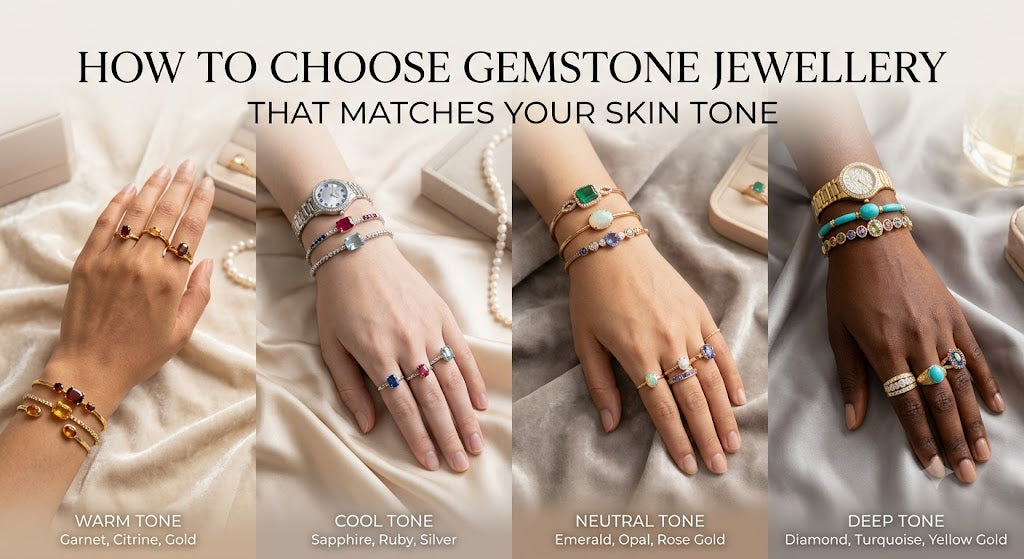

The gemstone colours that flatter you most depend on your skin's undertone — the underlying warm, cool, or neutral cast beneath your surface skin colour — not on how light or dark your skin is. Two people with very different surface skin tones can share the same undertone and be flattered by the same gemstone palette, while two people with similar surface tones but opposite undertones will look best in noticeably different colours.
Determining Your Undertone
A few quick checks, ideally done in natural daylight rather than indoor lighting, are usually enough to identify your undertone:
-
The vein test. Look at the veins on the inside of your wrist. Blue or purple veins generally indicate a cool undertone; green veins generally indicate warm; a mix of both, or difficulty telling, points to neutral.
-
The white paper test. Hold a plain white sheet of paper next to your bare face. If your skin looks more golden or yellow by comparison, that supports a warm undertone; if it looks more pink or rosy, that supports cool.
-
The sun reaction test. Skin that burns easily in the sun tends to lean cool; skin that tans more readily tends to lean warm.
-
The jewellery test. Try on both silver and gold jewellery against bare skin. If gold makes your complexion look brighter and healthier, you likely lean warm; if silver does the same, you likely lean cool. If both look equally good, you're probably neutral.
Warm Undertones: Gemstone Colours That Work
Warm undertones — a golden, peachy, or olive cast to the skin — are generally flattered by gemstones in warm colour families: citrine's golden yellow, peridot's lime green, amber's honeyed brown-orange, and warm-toned garnet or topaz. Even within a colour typically thought of as "cool," like red, a warm undertone is usually better suited to a brick-red or orange-leaning red stone than a cooler, blue-based red.
Cool Undertones: Gemstone Colours That Work

Cool undertones — a pink, red, or bluish cast — are generally flattered by gemstones in cool colour families: amethyst's purple, aquamarine's blue-green, sapphire's blue, and tanzanite's violet-blue. Pink stones work well here too, but specifically ones with a blue or purple undertone to the pink, rather than a warmer, more orange-leaning pink.
Neutral Undertones: More Flexibility
A neutral undertone — a genuine mix of warm and cool cues, often making the vein and paper tests harder to read decisively — has the most flexibility of the three, generally able to wear gemstones from either the warm or cool palette without either looking out of place. Opal is worth calling out specifically here: because a single opal can display multiple colours across its surface, it tends to work well across all three undertone categories rather than being tied to one.
Metal Tone Still Matters Alongside Stone Colour
Gemstone colour doesn't work in isolation — the metal it's set in interacts with your undertone too. Gold, rose gold, brass, and copper generally suit warm undertones; silver, white gold, and platinum generally suit cool undertones. Rose gold sits in a useful middle ground, often working reasonably well across both warm and cool undertones, which makes it a common choice for neutral undertones specifically, or as a bridge piece for anyone unsure which category they fall into.
Why This Matters Most for Earrings and Necklaces

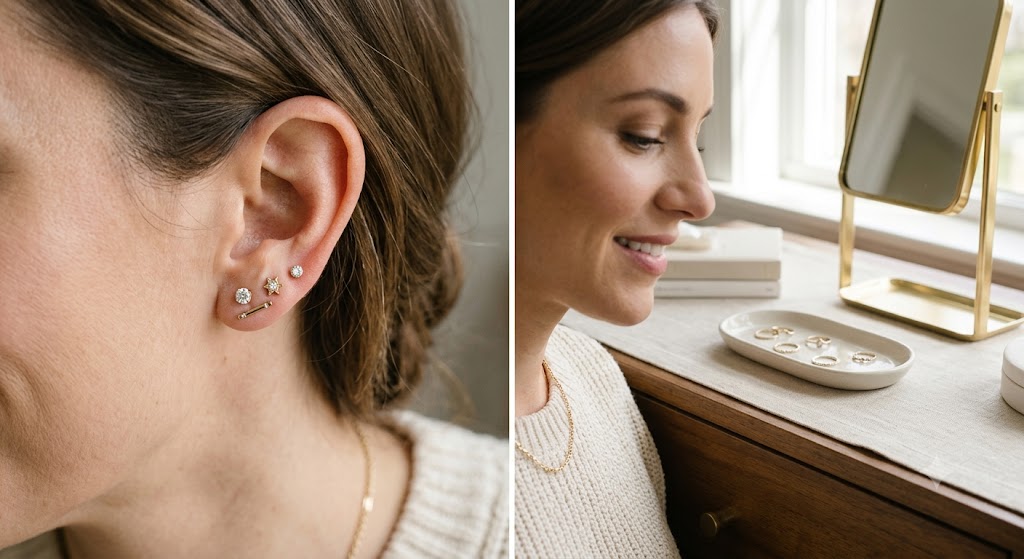
The closer a piece of jewellery sits to your face, the more visible its effect on your complexion. Earrings and necklaces, sitting directly at the face and neckline, show the impact of gemstone and metal colour far more noticeably than a ring or bracelet worn further from the face. If you're only going to apply undertone matching selectively rather than across every piece you own, earrings and necklaces are where it makes the most visible difference — worth keeping in mind when choosing between, say, a birthstone-inspired piece in a colour that doesn't quite suit your undertone and a different stone in a more flattering shade.
When Personal Preference Should Win Anyway
Undertone matching is a useful guideline, not a rule that overrides everything else. A stone you're genuinely drawn to — for its colour, its meaning, or simply because you love it — is often worth wearing regardless of whether it's the theoretically "correct" match for your undertone, particularly for occasional or statement pieces rather than jewellery worn daily. Undertone matching is most useful as a tie-breaker between options you already like equally, not as a filter that rules out everything else.
Frequently Asked Questions
Does skin tone or undertone matter more for choosing gemstones?
Undertone matters more. Surface skin tone (how light or dark your skin is) doesn't determine which colours flatter you the way undertone (the warm, cool, or neutral cast beneath the surface) does.
Can I wear cool-toned gemstones if I have a warm undertone?
Yes — undertone matching is a flattering guideline, not a restriction. Many people mix palettes freely, especially for statement or occasional pieces rather than everyday jewellery.
What's the best gemstone for a neutral undertone?
Neutral undertones generally suit the widest range of gemstone colours, with opal standing out specifically for its ability to display multiple colours within one stone.
Does gemstone colour matter more for earrings than for rings?
In terms of visible impact on your complexion, yes — earrings and necklaces sit closest to the face, so their colour has a stronger effect on how your skin tone reads than a ring or bracelet worn further away.
Gemstone-set pieces across warm, cool, and neutral colour palettes are available within the Stone Age collection.