Cart
0
Gold plating doesn't fade randomly — it wears down through specific, identifiable causes: friction, moisture, and repeated chemical contact.
Understanding what actually causes plating to wear is the difference between a pair that looks new after a year of regular wear and one that looks tired after a few months. None of the habits that make the difference are complicated; they just need to be consistent.
This guide covers exactly what causes gold plating to fade, the daily habits that meaningfully slow it down, the cleaning methods to use — and the ones to avoid — and how to store earrings so they hold their finish for as long as possible.
What Actually Causes Gold Plating to Fade
Plating is a thin surface layer, and a few specific things wear through it faster than normal handling alone:

-
Moisture — showering, swimming, and heavy sweating all accelerate plating wear, since prolonged water contact gradually breaks down the bond between the gold layer and the base metal underneath
-
Direct chemical contact — perfume, hairspray, and some skincare products contain ingredients that react with the plated surface over repeated exposure
-
Friction — earrings that rub against hair, clothing, or other jewellery in storage wear down faster than pieces handled and stored carefully
-
Abrasive cleaning — scrubbing with anything rough, including some jewellery cleaning cloths not designed for plated pieces, can strip the surface layer directly
None of these causes wear a piece down in a single exposure — it's the cumulative effect over weeks and months that determines how long the finish holds up, which is exactly why small daily habits matter more than occasional deep care.
The One Habit That Matters Most: Order of Application
This is the single most effective thing you can do, and it costs nothing: put earrings on last, and take them off first.
Perfume, hairspray, body lotion, and most skincare products are applied in liquid or aerosol form, and if earrings are already on when you apply them, the plated surface gets direct, repeated chemical contact every single day. Reversing the order — finishing your full routine first, then putting earrings on as the last step — removes most of that exposure without changing anything else about your routine.
The same logic applies in reverse at the end of the day: earrings off before skincare, cleansers, or makeup remover, rather than after.
Daily and Weekly Habits
-
Wipe earrings down after each wear with a soft, dry cloth to remove sweat, oils, and any residue before storing them
-
Avoid wearing earrings while sleeping, since pillow friction over a full night adds up over time and increases the chance of a piece catching or bending
-
Remove earrings before workouts, since sweat is one of the more concentrated forms of moisture exposure a piece will encounter
-
Take earrings off before showering or swimming, rather than assuming a quick exposure won't matter — it's the cumulative pattern that causes wear, and every exposure adds to it
How to Clean Gold-Plated Earrings

-
Use a soft, dry or barely damp cloth to wipe the surface gently — this is sufficient for most regular maintenance
-
Avoid ultrasonic cleaners, which are commonly recommended for solid gold and diamond jewellery but are generally not suitable for plated pieces, since the vibration and cleaning solution can accelerate plating wear rather than simply cleaning the surface
-
Avoid abrasive polishing cloths designed for solid gold or silver, since these are often too rough for a thin plated layer and can strip it directly
-
Skip harsh soaps or chemical jewellery cleaners — if a deeper clean feels necessary, a soft cloth and lukewarm water, followed by immediate thorough drying, is the safer approach for plated pieces specifically
-
Dry thoroughly before storing — putting a damp piece straight into a pouch or box traps moisture against the surface
How to Store Gold-Plated Earrings
-
Store each pair separately, ideally in a lined compartment or individual pouch, to prevent pieces from scratching each other
-
Keep pieces away from humidity, since consistent moisture exposure in storage has the same effect over time as moisture exposure while wearing
-
Avoid tossing earrings loose into a single drawer or bag, where friction against other jewellery, keys, or coins accelerates surface wear
-
Keep pairs together and organised, both to reduce handling time (less time being moved around means less friction) and to avoid losing a piece from a matched set
Building a Rotation to Extend Lifespan
One of the most effective things you can do isn't a cleaning technique at all — it's simply not wearing the same pair every single day. Rotating between two or three pairs spreads cumulative wear across multiple pieces instead of concentrating it on one, which means each individual pair lasts noticeably longer in good condition. Our everyday earrings collection covers this rotation approach in more depth.
Travel and Seasonal Care
Plating wears faster under specific conditions that come up more during travel and certain seasons than in a typical week at home:
-
Humid climates and monsoon season increase ambient moisture exposure even without direct water contact
-
Beach and pool trips combine water, sun, sweat, and often sunscreen or tanning oil residue — all at once
-
Sweat-heavy activities — sports, dancing, or simply hot weather — call for the same removal habit as a planned swim
Our vacation earrings guide covers this in more detail, including how to pack and store pieces on the move.
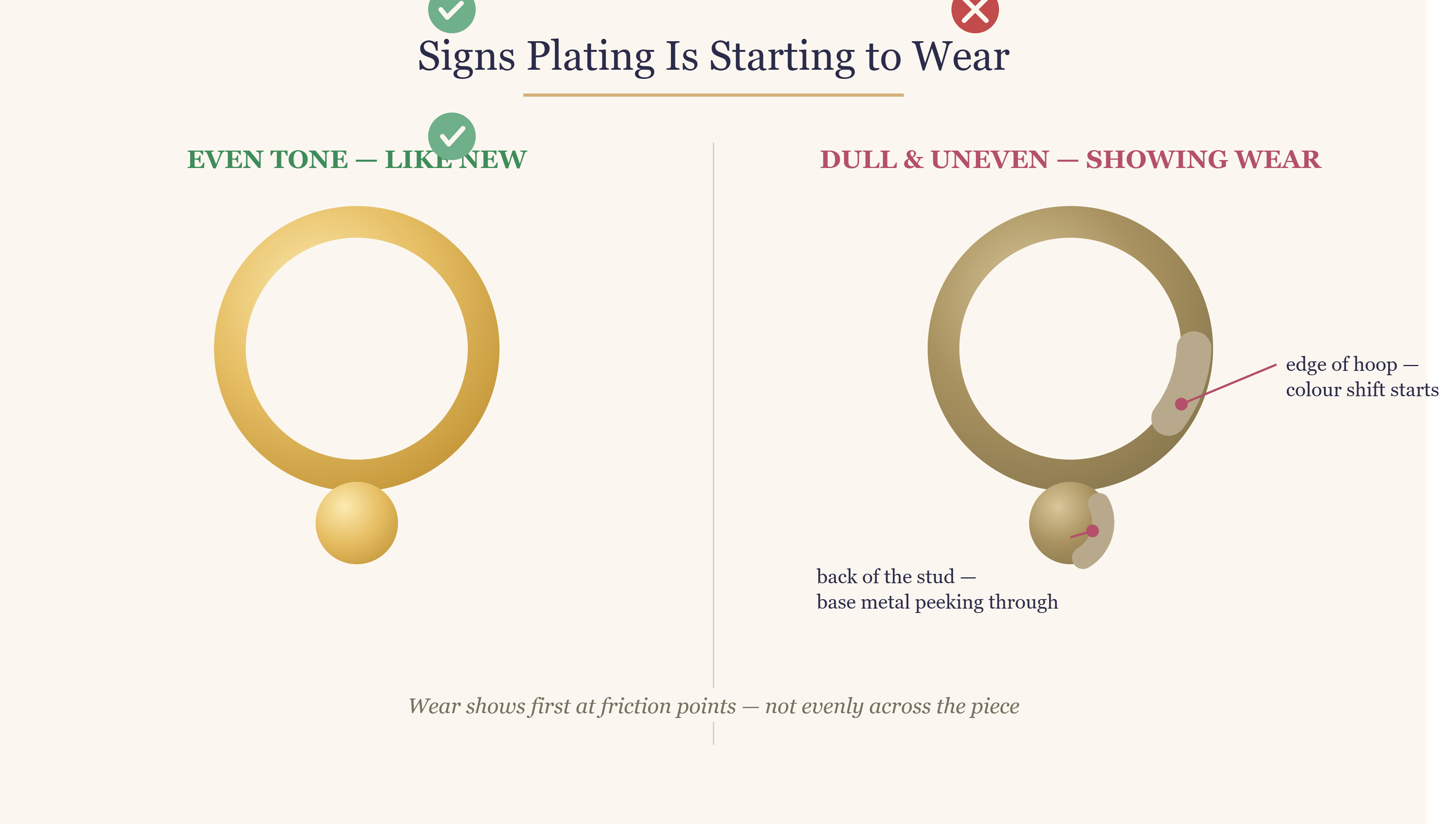
Signs Plating Is Starting to Wear

-
A slightly duller or less even tone compared to when the piece was new, particularly in areas that see the most friction
-
A faint colour shift at high-contact points — the edges of a hoop, the back of a stud — before it's visible across the whole piece
-
Small areas where the base metal tone shows through, usually starting at points of repeated contact rather than evenly across the surface
Catching this early and adjusting care habits — more consistent drying, less frequent wear of that specific piece — can slow further wear, though a plated layer that has already worn through in a visible spot won't restore itself with care alone.
FAQs
How long does gold plating typically last with good care?
This varies significantly based on plating thickness, base metal, and how consistently care habits are followed — there's no single fixed timeline, but consistent care meaningfully extends how long a piece looks new.
Can I wear gold-plated earrings every day?
Yes, though rotating between two or three pairs rather than wearing one pair daily reduces cumulative wear and generally extends how long each pair holds its finish.
Is it safe to clean gold-plated earrings with an ultrasonic cleaner?
Generally no — ultrasonic cleaners are better suited to solid gold and diamond jewellery. For plated pieces, a soft cloth and gentle handling is the safer approach.
What's the biggest cause of gold plating fading?
Cumulative exposure to moisture and chemical contact — perfume, skincare, sweat, and water — combined with friction from storage and handling.
Can faded gold plating be restored?
Once plating has visibly worn through to the base metal, care alone won't restore it. Re-plating is possible in principle through some jewellers, though availability varies — it's worth asking directly if this matters to you.
Should I remove earrings before exercising?
Yes — sweat is one of the more concentrated forms of moisture exposure a piece will encounter, and removing earrings before a workout is one of the simplest ways to reduce cumulative wear.
Does storage really make a difference to how long plating lasts?
Yes — friction from loose storage with other jewellery, and humidity in storage, both contribute to wear over time, separate from anything that happens while the piece is actually being worn.
Find your next everyday pair in our lightweight earrings collection at Mine of Design