Cart
0
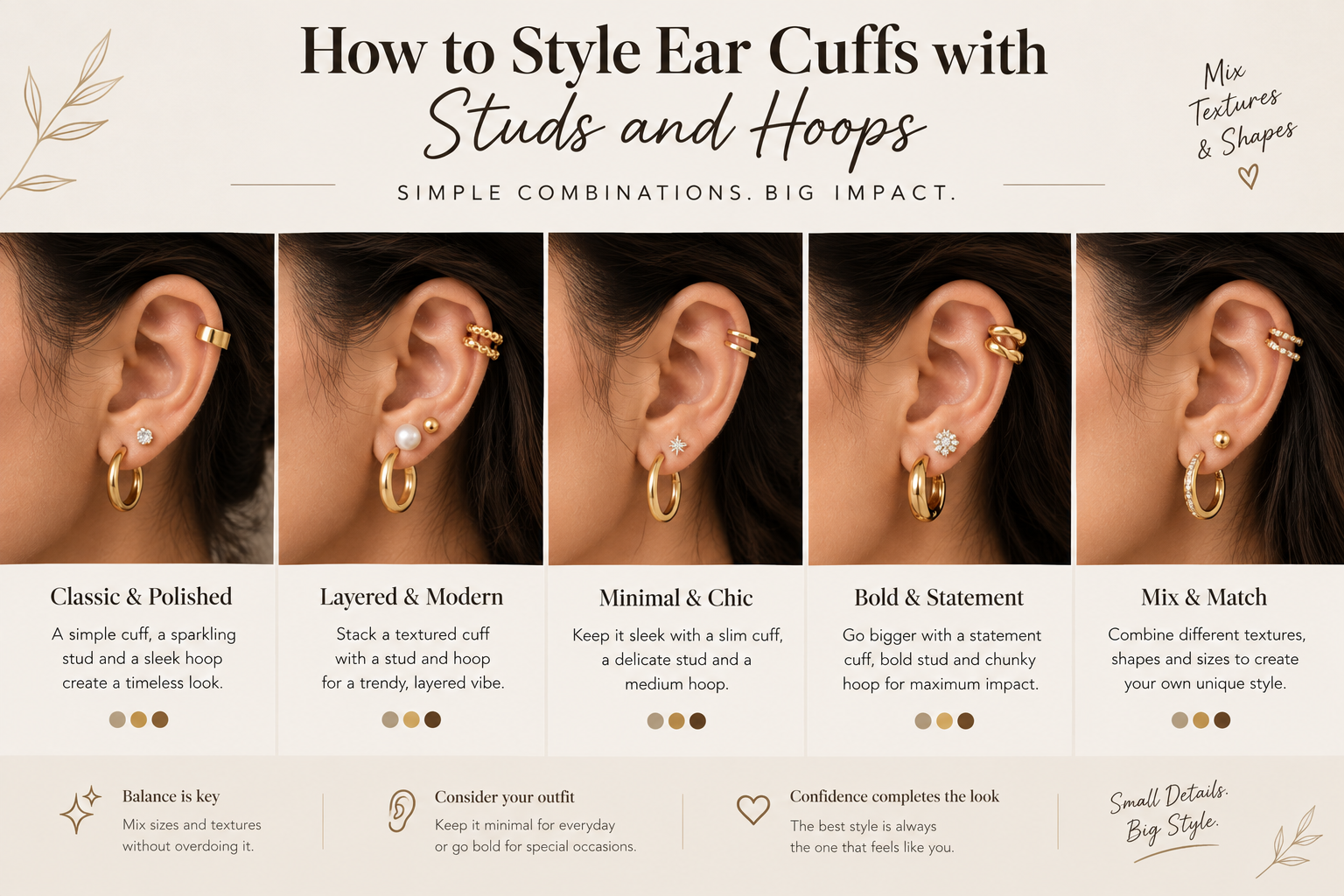

An ear cuff works best as the "top layer" of an ear look — placed on the cartilage above studs or hoops worn lower on the ear — with size graduating smaller as it moves upward and metal tone kept consistent across every piece. That single principle covers most of what's called a "curated ear": rather than treating the cuff, studs, and hoops as separate accessories, the combination is styled as one composition with a clear hierarchy.
The Basic Styling Principle
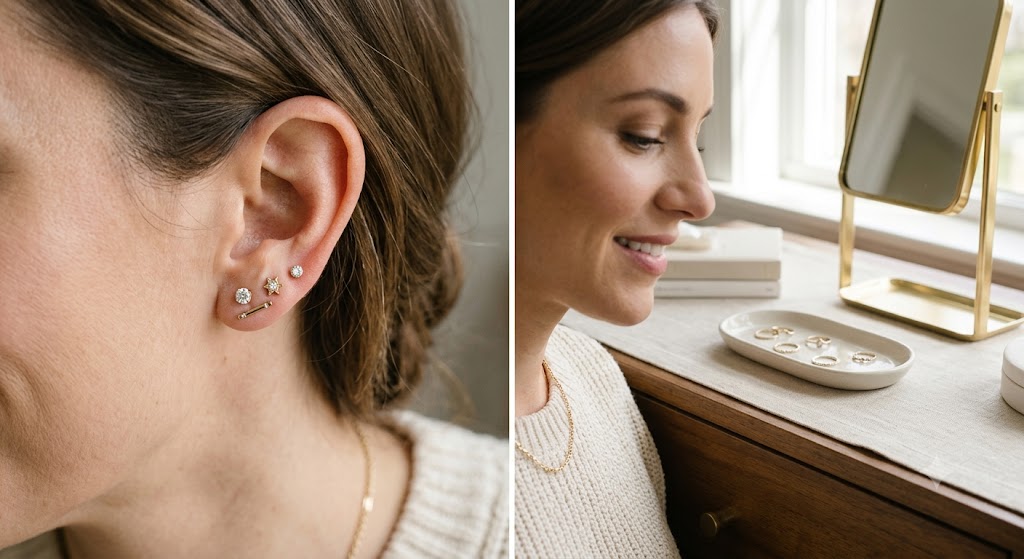
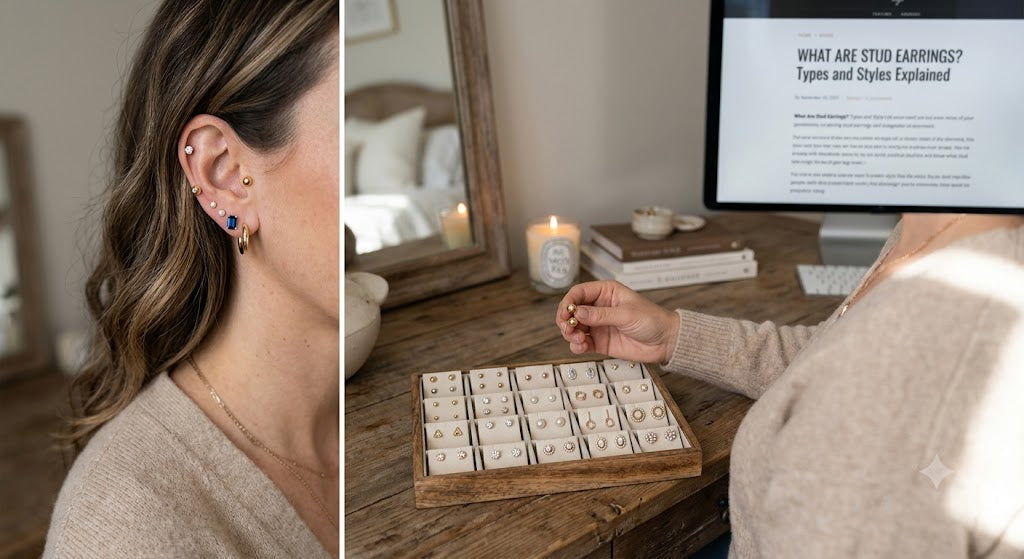
Think of the ear in zones rather than individual pieces. The ear cuff sits highest, on the cartilage, and reads as the most detailed or statement piece. Below it, on the lobe, studs or hoops anchor the look with a simpler, smaller shape. This top-to-bottom hierarchy — bolder above, simpler below — is what makes a stack read as intentional rather than random.
Metal Tone and Texture
Keep metal tone consistent across the cuff, studs, and hoops — gold with gold, or a deliberate mixed-metal look worn consciously rather than by accident. Where variation should happen instead is texture and shape: a smooth cuff against a textured stud, or a plain hoop against an embellished cuff, keeps the stack visually interesting without looking mismatched. Repeating the exact same shape and finish across every piece tends to look flat rather than curated.
Pairing Formulas

-
Single cuff, simple studs. One cartilage cuff paired with plain gold-plated studs is the most versatile combination — understated enough for daily wear, detailed enough to read as styled rather than bare.
-
Cuff with graduated mini hoops. Start with a slightly larger cuff on the cartilage, then use smaller hoops moving down toward the lobe — the same graduated-size logic used across curated ear stacking generally.
-
Multiple cuffs, one statement hoop. Two or three smaller cuffs stacked along the cartilage, balanced by a single, simpler hoop on the lobe, shifts the visual weight upward instead of down.
-
One hoop, one stud. For a lower-key look, a single small hoop and a single stud on the same ear, topped with one cuff, keeps the composition to three pieces total — enough for detail without crowding the ear.
Styling for Non-Pierced Ears
Every combination above assumes at least one piercing for the lobe piece, but the same layered look works entirely piercing-free too. A lobe cuff — the type of ear cuff built to wrap the earlobe itself rather than the cartilage, covered in what ear cuffs are — can stand in for a stud or hoop at the bottom of the stack, while a helix or conch cuff takes the top position. This is the version of the curated-ear look built specifically for anyone without piercings at all, rather than a workaround for people who already have them.
Placement Zones
-
Helix (upper-outer rim): the most common cuff placement and the natural "top" of the stack.
-
Conch (mid-ear): a bolder, more statement-level placement for a cuff meant to anchor the whole look rather than sit quietly above it.
-
Lobe: where studs, hoops, and lobe cuffs sit, forming the base of the composition.
Getting a cuff to sit securely in any of these zones comes down to fit, covered in more detail in how to wear an ear cuff without it slipping off.
Common Styling Mistakes

-
Two statement pieces competing. A bold conch cuff and an equally bold statement hoop on the same ear fight for attention rather than working together — pick one piece to lead.
-
No negative space. Filling every part of the ear with jewellery, with no gap between pieces, tends to read as cluttered rather than curated; a little visible ear between pieces keeps each one legible.
-
Mismatched metal tone. A gold cuff with silver studs is the fastest way to make an otherwise well-chosen combination look accidental rather than styled.
Frequently Asked Questions
Should an ear cuff be bigger or smaller than the studs below it?
Generally the cuff can carry more visual detail or size than the studs beneath it, since it sits at the top of the stack's hierarchy — but consistency in metal tone matters more than exact size matching.
Can ear cuffs be styled without any piercings at all?
Yes — pairing a cartilage cuff with a lobe cuff builds the same layered look using only piercing-free pieces.
How many pieces make a stack look curated instead of cluttered?
Three pieces on one ear — one cuff plus two lobe pieces, or two cuffs plus one lobe piece — is usually enough to read as intentional without crowding the ear.
Do the cuff and hoop need to be the exact same metal shade?
They should read as the same metal family (all gold-toned, for instance) even if the finishes differ slightly — exact shade matching matters less than avoiding an obvious gold-versus-silver clash.
Pieces for building a layered look sit across the ear cuffs collection, the hoop earrings collection, and the studs collection.