Cart
0
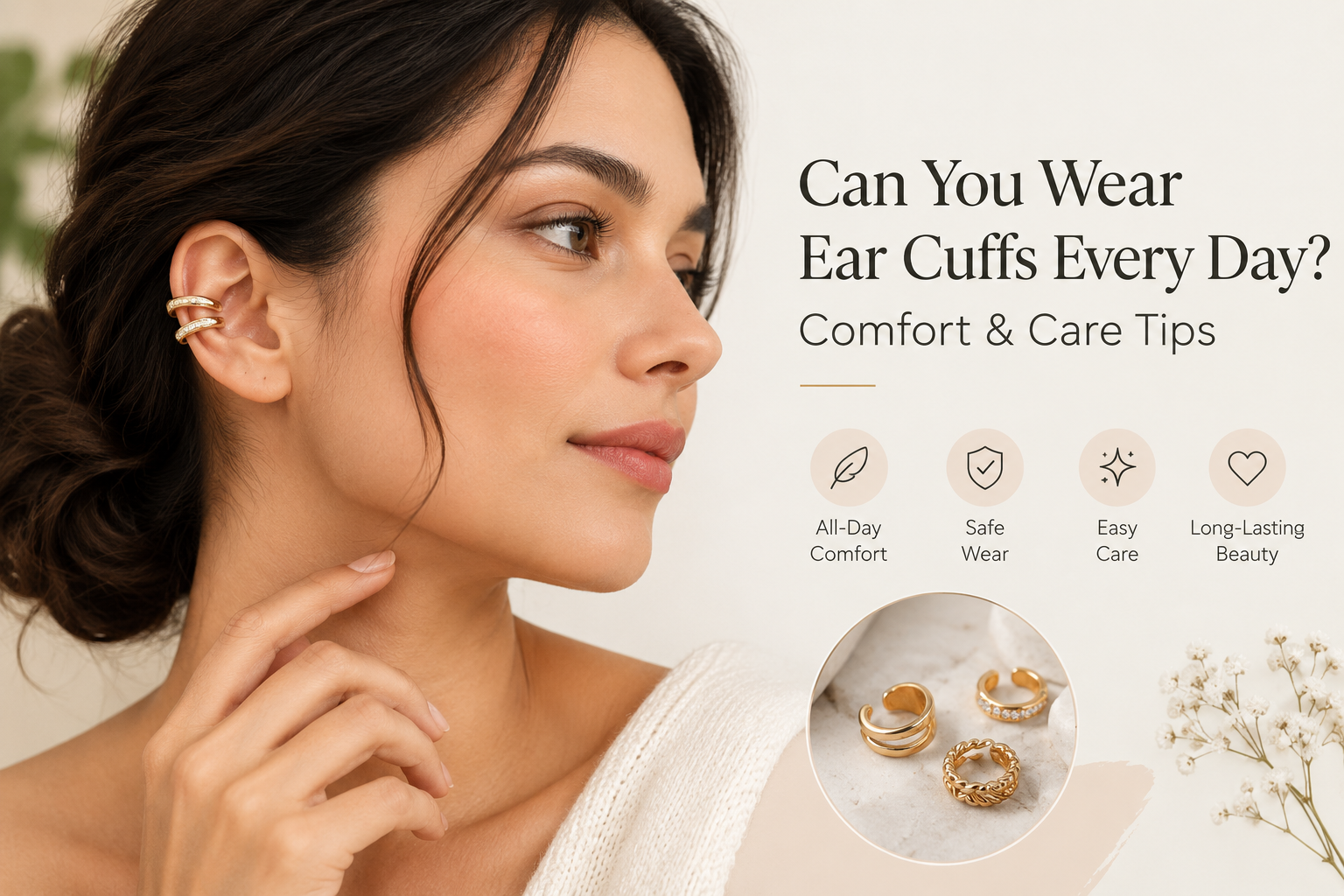

Yes, a well-fitted, lightweight ear cuff can generally be worn every day without issue. The caveats are what matter: it should come off for sleep, showering, swimming, and vigorous exercise, and a cuff that's too heavy or too tight for its placement will cause soreness regardless of how well it's made. Daily wear is really a question of fit and routine, not of ear cuffs as a category being safe or unsafe.
What Makes an Ear Cuff Comfortable for Daily Wear
Three factors decide whether a cuff holds up to being worn all day, every day:
-
Weight. A lighter cuff puts less sustained pressure on the cartilage over the course of a day than a heavier, more embellished design. For daily wear specifically, a simpler, lighter piece generally outperforms a statement design meant for occasional use.
-
Fit. A cuff sized correctly for its placement — snug without pinching — distributes pressure evenly. One that's too tight concentrates pressure at a single point on the cartilage, which is what causes soreness with extended wear, following the same fit principles covered in how to wear an ear cuff without it slipping off.
-
Placement. The helix, being the thinnest part of the cartilage, is generally the most forgiving placement for daily wear; thicker, more statement-oriented conch placements are more likely to feel like a commitment by the end of a long day.
When to Take an Ear Cuff Off

-
Sleeping. Lying on a cuff, particularly side-sleeping, presses the band into the cartilage and can bend it out of shape overnight. Removing it before bed protects both comfort and the cuff's fit the next day.
-
Showering. Repeated water exposure isn't ideal for any plated jewellery, ear cuffs included — the same reasoning behind general gold-plated jewellery care.
-
Swimming. Chlorine and salt water are harder on plated finishes than everyday water exposure, so this is one of the more important times to remove a cuff rather than risk it.
-
Vigorous exercise. Sweat, combined with movement that can knock a cuff out of position, makes workouts a reasonable time to leave a cuff off, even if you'd otherwise wear it all day.
-
Applying hair or skincare products. Sprays, oils, and styling products can leave residue on the inside of the band, which affects both grip and finish over time — it's generally easier to put a cuff on after hair and makeup rather than before.
Signs Your Ear Cuff Doesn't Fit Right
-
Soreness after a short time wearing it, rather than only after many hours, usually means the band is too tight for that spot on the ear.
-
A visible indentation line after removing it that takes a while to fade suggests the fit is tighter than it needs to be for comfortable daily wear.
-
Needing to constantly readjust it through the day points to a band that's too loose for that placement rather than too tight — see how to wear an ear cuff without it slipping off for fit adjustments.
Giving Your Ears a Break
Even with a comfortable, well-fitted cuff, alternating which ear it's worn on, or taking the occasional day off entirely, gives the skin and cartilage a rest from constant contact — the same general principle behind rotating any piece of jewellery worn daily. Anyone with a history of skin sensitivity to certain metals should review general guidance on earrings for sensitive ears before committing to daily wear with a new piece.
Caring for an Everyday Ear Cuff

-
Wipe it down after wear with a soft, dry cloth to remove oils and product residue before storing it.
-
Store it separately from other jewellery so the band doesn't get scratched by contact with other pieces, particularly if it has a textured or gemstone finish.
-
Follow standard gold-plated care for anything beyond a daily wipe-down — full guidance is available on our jewellery care page.
-
Check the band's shape periodically. Since daily wear involves repeated opening and closing, an occasional check that the band still sits evenly helps catch fit issues before they cause discomfort.
Frequently Asked Questions
Is it bad to wear an ear cuff every day?
Not inherently — a lightweight, well-fitted cuff worn on a forgiving placement like the helix is generally fine for daily wear, provided it comes off for sleep and water exposure.
Can you sleep in an ear cuff?
It's not recommended. Sleeping, especially on your side, presses the band against the cartilage and can bend it out of shape over time.
Do ear cuffs damage your ears?
A properly fitted, appropriately weighted cuff shouldn't cause lasting damage. Discomfort or marks usually point to a fit that's too tight rather than an inherent risk of wearing a cuff at all.
Should I take my ear cuff off to shower?
It's a good habit for any plated jewellery, ear cuffs included, since repeated water exposure affects plated finishes over time.
Lightweight, daily-wear-friendly styles are available within the ear cuffs collection.