Cart
0
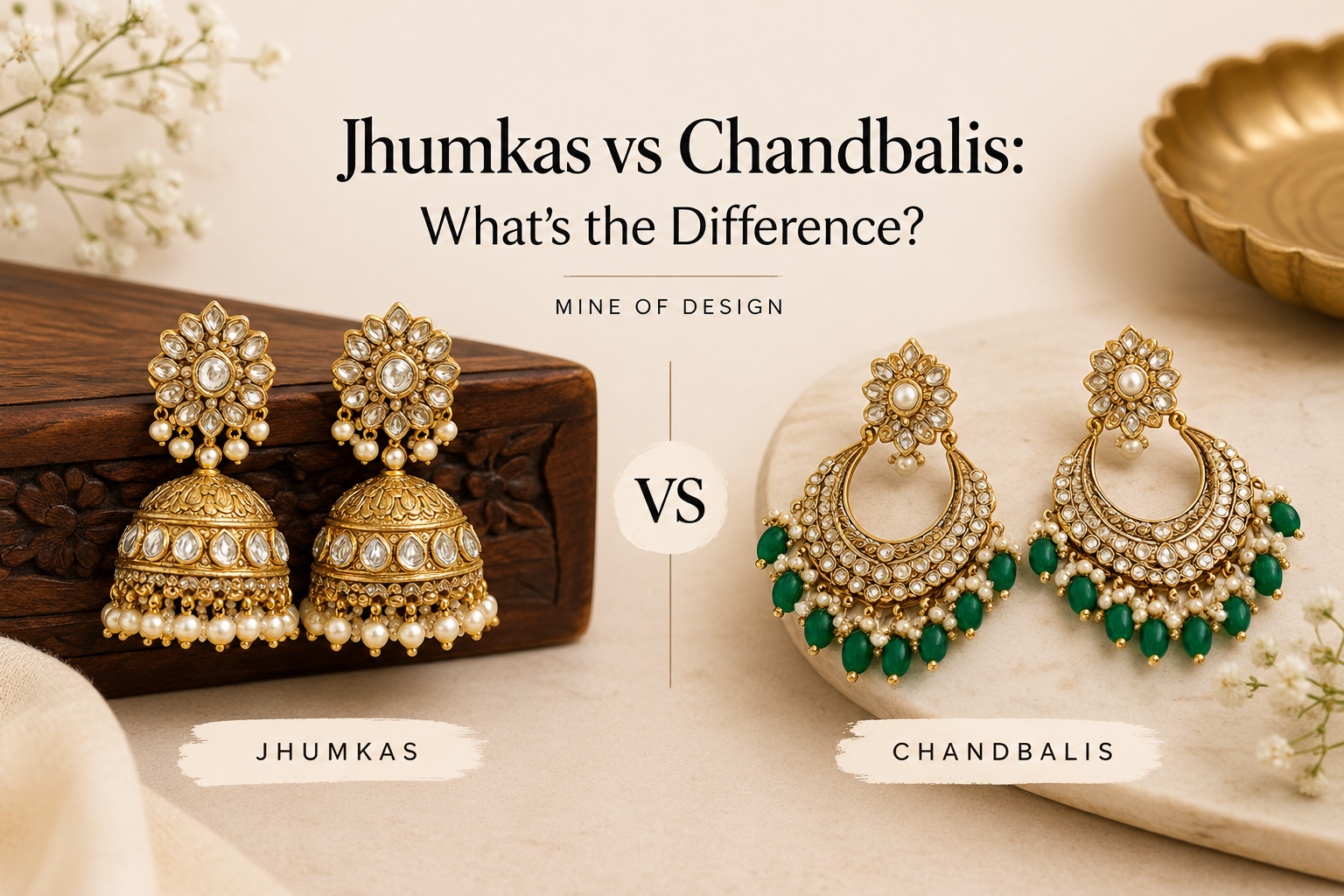
 A jhumka has a domed or bell-shaped top that hangs vertically below the earlobe and swings with movement. A chandbali has a flat, crescent or half-moon-shaped top that sits wide and horizontal against the ear, with little to no movement. Both are traditional Indian earring families, but the shape difference drives almost everything else — how each style is worn, which face shapes it flatters, and which occasions it suits best.
Origin: Temple Jewellery vs Mughal Courts

The jhumka traces its design to South Indian temple sculpture from the Chola and Pallava dynasties, where the bell shape referenced ghungroo and temple bell imagery tied to devotion and rhythm.
The chandbali follows a different lineage. The name comes from chand (moon) and baliyan (earrings) in Hindi, and the style is associated with Mughal and Rajput court jewellery rather than temple tradition. Its curved, arc-like form is a direct reference to the crescent moon, which is why chandbali designs are wider and rounder than a jhumka's vertical drop.
Shape and Structure, Side by Side
|
Jhumka |
Chandbali |
|
|
Top shape |
Domed or bowl-shaped |
Crescent or half-moon |
|
Orientation |
Hangs vertically below the ear |
Sits wide, horizontal against the ear |
|
Movement |
Swings and moves with the wearer |
Structured, largely static |
|
Typical embellishment |
Fringe, beads, or layered drops |
Meenakari, kundan, or polki along the arc |
|
Visual effect |
Elongates and draws the eye downward |
Frames and widens the face |
Which Face Shape Suits Which Style
Because a jhumka's drop is vertical, it tends to elongate the face — a useful effect for round or square face shapes, where added length is flattering. A chandbali's horizontal arc does the opposite: it frames and widens, which typically suits oval or heart-shaped faces better, since those face shapes have more length to balance against.
Neither rule is absolute — hoop earrings and face shape follow a similar logic of vertical versus horizontal emphasis, and the same principle carries over when choosing between jhumkas and chandbalis.
Which Occasion Suits Which Style

-
Haldi and mehendi: lightweight jhumkas are generally the more practical pick — comfortable for hours of sitting, dancing, or hand art, and festive without being heavy.
-
Sangeet and cocktail events: both work. A bold chandbali makes a strong standalone statement against a lehenga, while an oversized jhumka in a bright colour photographs just as well.
-
Wedding and reception: structured, kundan or polki chandbalis suit a more composed, formal bridal look; a statement jhumka suits a look built around movement and swing. Either fits within a broader bridal jewellery set.
-
Everyday festive wear: smaller gold-toned jhumkas tend to be the more versatile everyday choice, in line with the same sizing logic covered under statement versus everyday earrings.
Styling Differences

A jhumka's movement means it pairs well with sarees and lehengas across almost any neckline, and the size-to-outfit matching covered in styling jhumkas with sarees and lehengas applies directly.
A chandbali's flat, wide shape works best when there's a clear neckline to frame — a plain or moderately embellished blouse lets the earring's arc read clearly, whereas a heavily worked neckline competes with it. Because chandbalis sit closer to the face and don't move, they generally pair better with a simple or absent necklace, the same balancing principle used in statement earring styling.
Comfort and Weight
Chandbalis, especially in gold or heavy kundan work, tend to sit further from the earlobe's natural pivot point, which can make them feel heavier than a jhumka of similar size. Anyone choosing between the two for an all-day event is better served checking backing type and distributed weight first — covered in wearing heavy earrings without pain.
Frequently Asked Questions
Is a chandbali a type of jhumka?
No. They're related Indian earring families but structurally distinct — a jhumka is domed and hangs vertically, while a chandbali is crescent-shaped and sits horizontally.
Which is better for a bride, jhumka or chandbali?
Both are common bridal choices. A chandbali suits a structured, formal look and an oval or heart-shaped face; a jhumka suits a look built around movement and pairs well with a round or square face shape.
Can a jhumka and chandbali be combined in one earring?
Yes — hybrid "chandbali jhumka" designs exist, combining a crescent top with a bell-shaped drop, though structurally they borrow from both families rather than being a distinct third category.
Which is more comfortable for long events?
Jhumkas are generally lighter and better balanced for extended wear, though this varies by material and size within each style.
Both styles are represented within the jhumka earrings collection.