Cart
0
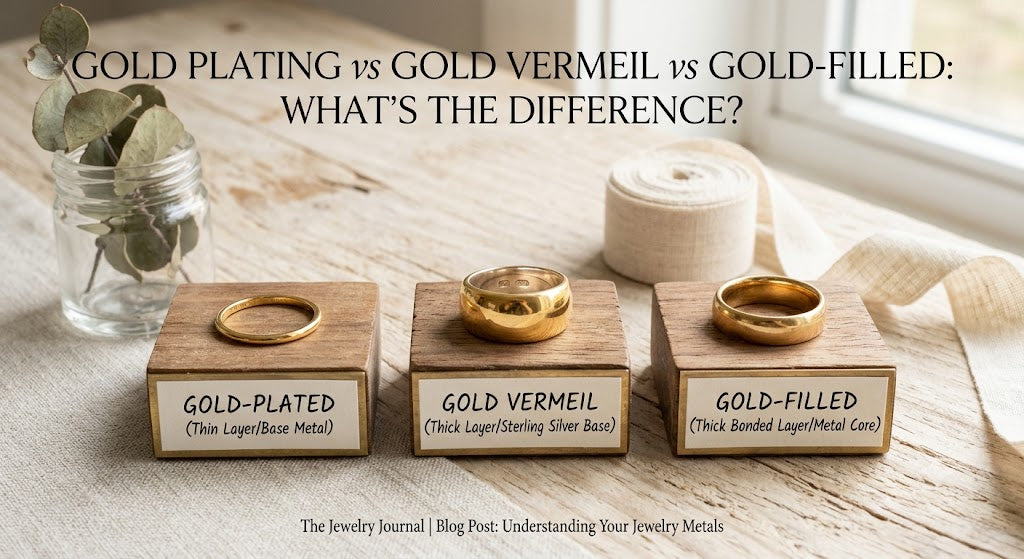

Gold plating, gold vermeil and gold-filled are three different ways of putting a layer of gold over a cheaper core metal. Gold plating is a thin gold layer applied over any base metal. Gold vermeil is a stricter form of plating that requires a sterling silver base and a thicker gold layer. Gold-filled is a separate process in which a thick layer of karat gold is bonded to a base metal with heat and pressure, and the gold must make up at least 1/20 of the piece's total weight.
None of the three is solid gold. All three are layered metals, and the difference between them comes down to four attributes: the base metal, how the gold is applied, how much gold there is, and what the label is allowed to say.
Gold-Layered Jewellery: The Category All Three Belong To
Layered gold jewellery has a core metal that gives the piece its shape and a gold surface that gives it its colour. The core is the structure. The gold is the finish. The three terms describe how that finish is attached and how much of it there is.
The definitions below follow the US Federal Trade Commission's Jewelry Guides, which are the most widely cited reference for these terms. They are guidelines used in the US market, not an Indian standard, so a seller in India can use the words more loosely. That is one reason the terms are worth understanding before you buy.
|
Attribute |
Gold Plated |
Gold Vermeil |
Gold-Filled |
|
How gold is applied |
Electroplating (or mechanical application) |
Electroplating |
Mechanical bonding with heat and pressure |
|
Base metal |
Any metal |
Sterling silver (925) only |
Brass, copper or other base metal |
|
Minimum gold quality (US guide) |
10k |
10k |
10k (14k is common) |
|
Minimum gold amount |
Layer equal to 0.175 microns of fine gold |
Layer of at least 2.5 microns |
At least 1/20 (5%) of total piece weight |
|
Layer thickness |
Thinnest |
Thicker than standard plating |
Thickest of the three |
|
Common label |
Gold Plated, GP |
Vermeil, often with a 925 stamp |
Gold Filled, often written as 1/20 14K GF |
|
Typical price |
Lowest |
Middle |
Highest of the three |
What Is Gold Plating?

Gold plating is the process of depositing a thin layer of gold onto the surface of a base metal. In electroplating, the piece is placed in a gold-bearing solution and an electric current moves gold atoms onto its surface. The gold layer is thin, and the base metal underneath sets the shape, weight and strength of the piece.
Three attributes define gold plating:
-
Base metal: unrestricted. Brass, copper, sterling silver and other alloys are all used.
-
Gold layer: the US guide sets a floor of 10k gold at a thickness equal to 0.175 microns of fine gold. Many pieces carry more than the floor, but the floor is the only fixed number.
-
Design freedom: the plating solution coats any shape, so intricate jhumkas, carved pendants, kundan settings and textured hoops can all be plated.
That design freedom is why plating dominates fashion jewellery. It lets a brand produce detailed, lightweight designs at an accessible price. Gold-plated earrings are built on this process, and the full method is covered in the guide to how gold plating works.
What Is Gold Vermeil?

Gold vermeil is gold plating with stricter rules. It is electroplated like standard plating, but the US guide requires three things: a sterling silver base, gold of at least 10k, and a gold layer of at least 2.5 microns. The guide also bars a layer of another metal, such as nickel, between the silver and the gold.
The practical result is a piece that is silver at its core and gold on its surface, with a thicker gold layer than most standard plating. Vermeil is usually priced above plated jewellery because it uses sterling silver and more gold.
Vermeil is a subset of plating, not a separate process. Every vermeil piece is gold plated. Not every gold-plated piece is vermeil.
What Is Gold-Filled Jewellery?

Gold-filled jewellery is made by bonding a layer of karat gold to a base metal core using heat and pressure. No electric current is involved. Under the US guide, the gold must be at least 10k and must make up at least 1/20, or 5 percent, of the total weight of the piece. Most gold-filled jewellery uses 14k gold, and the label is usually written as 1/20 14K gold filled.
Gold-filled is measured by weight, not by a micron figure. That weight requirement produces a gold layer that is far thicker than plating. Because the gold arrives as sheet or wire that is bonded to the core, gold-filled suits simple shapes such as chains, plain bands, wire hoops and minimalist pendants. Highly detailed, carved or stone-set designs are harder to make this way, which is why they are usually plated.
Gold-filled is not solid gold. It contains a small share of gold by total weight, and the rest of the piece is base metal.
How the Three Compare on Durability
All three finishes wear over time. A gold layer sits on top of a different metal, and friction, sweat, perfume, and rubbing against fabric or other jewellery remove gold gradually. The comparison below describes the relationship between the three, not a promised lifespan.
-
Gold-filled wears most slowly, because its gold layer is the thickest.
-
Gold vermeil sits in the middle, because the required layer is thicker than basic plating.
-
Gold plating wears fastest, because the layer is the thinnest.
Thickness is not the only factor. How often a piece is worn, how it is stored, and whether it meets water, sweat and cosmetics all change how quickly the finish fades. Lifespan figures published by sellers are estimates and vary widely, so treat any exact number with caution. Care habits matter for every layered metal, and the guide on caring for gold-plated earrings and the jewellery care page explain what to do.
How the Three Compare on Skin Sensitivity
Skin reactions to jewellery usually come from the metal that touches the skin. With layered jewellery, that metal can be the base metal if the gold layer wears through. Neither the word plated, vermeil nor gold-filled guarantees that a piece is safe for sensitive skin.
Two points follow from the definitions:
-
The US guide bars an intervening layer such as nickel under vermeil, and vermeil's base is sterling silver, so its core metal is known.
-
Plated and gold-filled pieces can use a range of base metals, so the core is not guaranteed by the term alone.
If you have sensitive skin, ask the seller what the base metal is rather than relying on the finish name.
How the Three Compare on Price and Value
Price follows the amount of gold and the base metal. Gold plating costs least because it uses the least gold and any base metal. Vermeil costs more because it uses sterling silver and a thicker layer. Gold-filled usually costs the most of the three because it contains the most gold by weight.
Value depends on what you need from the piece:
-
Plating gives the most design variety for the money. It is the usual choice for fashion, festive and occasion jewellery where the design matters most.
-
Vermeil gives a silver core and a thicker finish for pieces worn often, at a middle price.
-
Gold-filled gives the thickest gold for simple, daily-wear designs, at the highest price of the three.
For a comparison against the real thing, see gold-plated vs solid gold earrings.
Which One Should You Choose?
Choose by how the piece will be worn and what design you want.
|
If you want |
Choose |
Reason |
|
Detailed designs such as jhumkas, kundan or statement earrings |
Gold plating |
The process coats intricate shapes |
|
Festive or wedding jewellery worn on occasions |
Gold plating |
Design variety and price matter more than years of daily wear |
|
A silver core with a thicker gold finish |
Gold vermeil |
Sterling silver base and a minimum 2.5 micron layer |
|
Simple pieces worn daily |
Gold-filled |
Thickest gold layer, best suited to plain shapes |
|
The lowest cost to try a trend |
Gold plating |
Least gold, lowest price |
When the priority is a wide range of designs at an accessible price, gold-plated earrings are the category that delivers it.
How to Read a Jewellery Label
Labels tell you which of the three you are buying. Look for these markers:
-
Gold Plated, Gold Electroplated or GP means a thin gold layer over any base metal.
-
Vermeil, usually with a 925 stamp, means gold over sterling silver.
-
1/20 14K Gold Filled or GF means the gold-filled standard, with the fraction and karat shown.
-
Gold-toned, gold finish or gold look is not a defined term in the guide, so ask what the finish actually is.
A seller who calls a piece vermeil should be able to tell you the base metal and gold layer. A seller who calls a piece gold-filled should be able to give you the fraction and the karat.
Frequently Asked Questions
Is gold vermeil the same as gold plated?
Gold vermeil is a type of gold plating, but not all gold plating is vermeil. Vermeil must have a sterling silver base, gold of at least 10k, and a layer of at least 2.5 microns. Standard gold plating has no base metal restriction and a much lower minimum thickness.
Is gold-filled real gold?
Gold-filled contains real karat gold, but it is not solid gold. The gold makes up at least 1/20 of the piece's weight, and the remainder is base metal.
Which lasts longest: plated, vermeil or gold-filled?
Gold-filled has the thickest gold layer, so it generally wears most slowly. Vermeil is next and plating is last. Wear habits and care change the outcome for all three.
Is gold-filled better than gold vermeil?
Gold-filled has more gold by weight, while vermeil has a sterling silver core. Neither is better in every case. Gold-filled suits simple daily pieces, and vermeil suits buyers who want a silver base and a thicker finish.
Is gold plating poor quality?
No. Gold plating is a standard method for making fashion jewellery with detailed designs at an accessible price. It has the thinnest gold layer of the three, so it benefits most from careful wear and storage.
Which is best for sensitive skin?
The finish name does not decide this. The base metal underneath does. Ask the seller to identify the base metal of any layered piece.
Gold plating is a thin gold layer over any base metal, gold vermeil is plating over sterling silver with a thicker minimum layer, and gold-filled is a thick karat gold layer bonded to a base metal by heat and pressure. Plating offers the widest design range and the lowest price, vermeil sits in the middle, and gold-filled holds the most gold. Plated designs for festive, wedding and everyday wear are what the gold-plated earrings collection is built around.